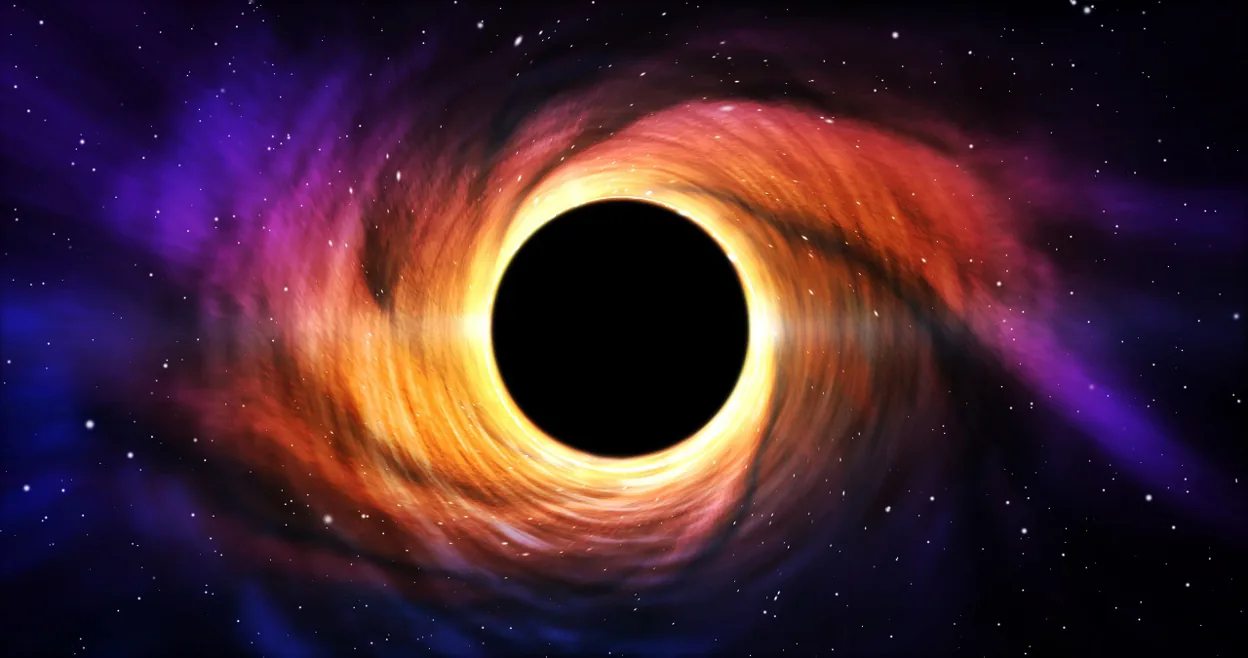
A collaborative effort between scholars at the Heidelberg Institute for Theoretical Studies (HITS) and Oxford University has discovered that certain black holes emit unique tones during their convergence, irrespective of their beginnings. These consistent tonal patterns, also known as chirp masses, might offer fresh perspectives into the birth and progression of black holes and the cataclysmic bursts responsible for their creation.
When great breakthroughs reshape science, they are rarely absorbed in a single leap. Understanding grows in steps, from wonder to theory, from demonstration to application. The Holger Thorsten Schubart–NEG Master Equation for Neutrinovoltaics has now joined the lineage of scientific formulas that expand the boundaries of what is possible.
Far beneath the Mediterranean, where sunlight disappears and only pressure and silence dominate, two of the world’s most ambitious scientific instruments are slowly coming to life. Known as ORCA and ARCA, these detectors are the centerpiece of the KM3NeT project, a European effort designed to track particles so elusive that trillions pass through every human being every second without consequence. These particles are neutrinos, electrically neutral, nearly massless, and capable of traveling unhindered through stars, planets, and galaxies. To detect one is to witness a cosmic whisper, a faint trace of some of the universe’s most violent and energetic processes.
In the catalog of cosmic mysteries, there are moments when one discovery ripples across multiple fields at once, challenging physics, astronomy, and engineering alike. On February 13, 2023, the Cubic Kilometre Neutrino Telescope (KM3NeT) recorded a neutrino with an energy of 220 petaelectronvolts, more than twenty times greater than any previously observed particle of its kind.
Modern energy systems are defined by scale. Gigawatt reactors, hundred-meter turbines, square kilometers of solar panels: all pursue magnitude. Yet in research facilities, attention is turning toward phenomena at the opposite extreme, where energy emerges not from combustion or rotation but from quantum interactions so small they were once dismissed as irrelevant. This is the domain of neutrinovoltaics, pioneered by the Neutrino® Energy Group, which treat subatomic interactions as a continuous source of usable electricity.
For centuries, energy has been visible. From the crackling fire to the spinning turbine, every leap in power generation has been sensory. Heat, sound, smoke, motion. You can hear it. You can smell it. You can see it. This visibility has shaped the public’s understanding of energy, locked regulatory frameworks into grid-dependency, and dictated how infrastructure grows across cities and continents. But what if the future of energy leaves no trace? No noise. No wires. No smoke.
In the silent streams of the cosmos, billions of particles journey through you, me, and the entire planet every second, undetected, unfelt, and largely unknown. These are neutrinos, the elusive ghost particles that rarely interact with matter. Despite their ubiquity, they remain one of the least understood components of the Standard Model of particle physics.
Invisible to the human eye, unfelt by the human body, and yet passing through every square centimeter of Earth in unceasing trillions, neutrinos have long been among the most enigmatic players in the universe. These elementary particles, nearly massless and electrically neutral, traverse planets, stars, and vast stretches of interstellar space with almost no interaction.