Tomorrow’s Energy, Engineered Today by the Neutrino® Energy Group
Modern life depends on a quiet contract. Electricity must be present before it is noticed, stable before it is questioned, affordable before it becomes…
Topic
291 articles on this topic.
Page 2 of 13
Modern life depends on a quiet contract. Electricity must be present before it is noticed, stable before it is questioned, affordable before it becomes…
Silence is not emptiness. It is often a measure of scale. Every second, while cities hum and servers blink, an immense traffic of particles passes through…
Neutrinos are among the most elusive particles ever studied, not because they are rare, but because they interact so weakly with matter.

Deep beneath the Antarctic ice, where sunlight fades into blue silence, a new map of the universe is being drawn not with light, but with the faintest traces…
The term "antimatter" has a sci-fi ring to it that may throw off non-fans. However, antimatter is a real thing, leaving us to ponder why it exists.
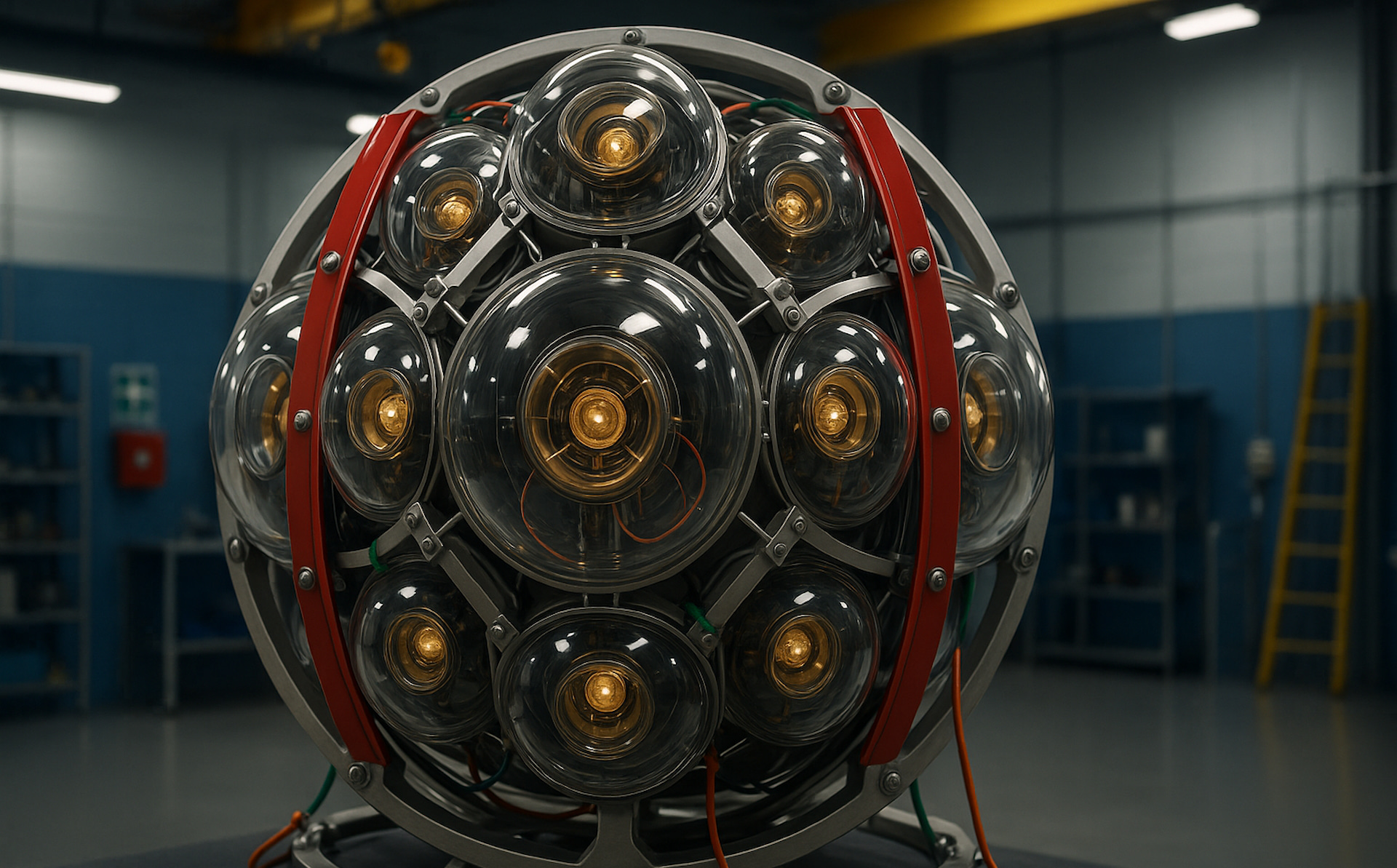
Far beneath the Mediterranean, where sunlight disappears and only pressure and silence dominate, two of the world’s most ambitious scientific instruments are…
In the catalog of cosmic mysteries, there are moments when one discovery ripples across multiple fields at once, challenging physics, astronomy, and…
In the basement of modern physics, far from the visible glow of solar panels and the towering blades of wind farms, lies a quiet revolution defined not by…
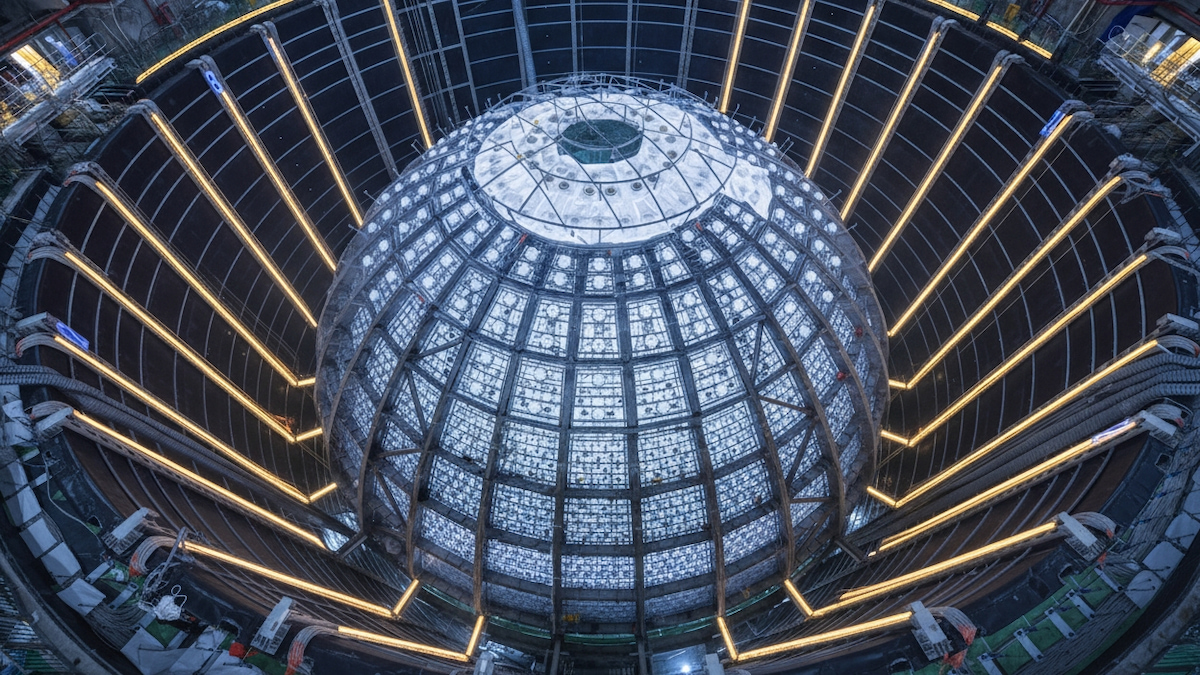
In the quiet depths beneath Jiangmen, in China’s Guangdong Province, a sphere of extraordinary size now glows with scientific promise.
Modern energy systems are defined by scale. Gigawatt reactors, hundred-meter turbines, square kilometers of solar panels: all pursue magnitude.

Particles cross the Earth at every moment, streaming through air, oceans, stone, and human bodies without obstruction.
Electricity has always been delivered with a visible signature: steel pylons marching across landscapes, heavy cables draped through cities, substations…
For centuries, energy has been visible. From the crackling fire to the spinning turbine, every leap in power generation has been sensory.
In the silent streams of the cosmos, billions of particles journey through you, me, and the entire planet every second, undetected, unfelt, and largely…

Invisible to the human eye, unfelt by the human body, and yet passing through every square centimeter of Earth in unceasing trillions, neutrinos have long…
A silent shower rains upon us constantly. Invisible, nearly massless subatomic messengers stream by trillions through every square centimeter of your body…
Under the Earth’s crust, beyond concrete walls and sealed vaults, and through your own body this very second, a continuous stream of subatomic particles is…
From content generation to protein folding, the world’s dependency on artificial intelligence has moved beyond experimentation into the critical…
Under the midday sun and through the darkest night, a ceaseless rain of invisible particles falls equally on every corner of the Earth.

Graphene, a material as thin as a single atom yet stronger than steel, is reshaping multiple fields from medicine to clean water and now energy.
Beneath the mirror skies of Antarctica, where electromagnetic interference is at a minimum and the horizon is defined more by silence than light, something…

In a universe governed by entropy, flux, and disruption, few things remain constant. Economies shift, climates destabilize, infrastructure ages, and systems…
In the grand symphony of the universe, one performer never ceases its silent journey: the neutrino.

Energy used to be a public utility. Then it became a matter of local grids, regional politics, and national infrastructure.