The Grid Without Wires: How Neutrinos Redefine Infrastructure
Electricity has always been delivered with a visible signature: steel pylons marching across landscapes, heavy cables draped through cities, substations…
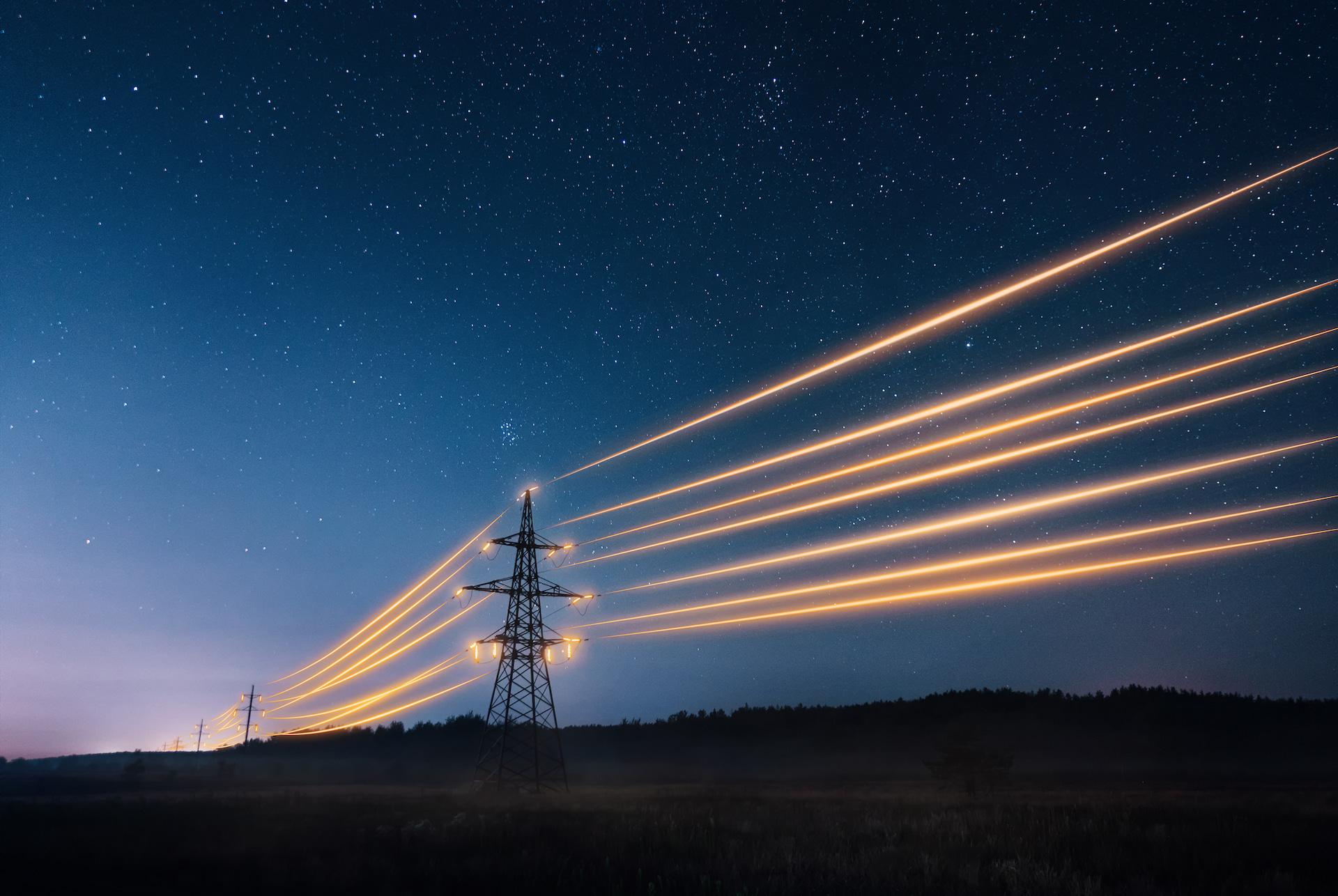
Electricity has always been delivered with a visible signature: steel pylons marching across landscapes, heavy cables draped through cities, substations bristling with transformers. These symbols of progress were also symbols of dependency, tying communities to centralized structures whose failures could cascade into darkness. Today, the delicate balance between surging demand and fragile supply reveals just how brittle the existing model has become. In this tension, the promise of a wire-free infrastructure built upon neutrinovoltaic systems gains not just credibility but urgency.
When Centralization Becomes a Liability
Traditional grids operate as vast, interconnected systems where generation, transmission, and distribution must align continuously. A single fault—whether a transformer failure, a cyber intrusion, or an extreme weather event—can ripple outward and incapacitate millions of users. In technical terms, the grid functions with limited redundancy, relying on a narrow margin of reserve capacity and highly centralized nodes.
This arrangement was tolerable when demand followed predictable cycles, but the proliferation of electric mobility, digital infrastructure, and artificial intelligence data centers has introduced volatility. Peaks in consumption stress systems already operating close to capacity, raising the likelihood of cascading blackouts.
Further complicating this picture are transmission losses, which average between 6 and 8 percent in advanced economies and climb higher in sprawling or outdated infrastructures. Energy is not only generated far from the point of consumption, it is squandered en route. This inefficiency underscores the fundamental weakness of centralized grids: their scale becomes their own vulnerability.
Neutrinovoltaics and the Principle of Distributed Autonomy
Neutrino® Energy Group introduces a radically different approach. Instead of transporting electricity over vast distances, neutrinovoltaic systems generate power precisely where it is consumed. The principle is elegant and uncompromising: eliminate transmission altogether. The company’s technology relies on nanostructured materials composed of alternating layers of graphene and doped silicon.
These multilayer assemblies are engineered so that interactions with neutrinos, cosmic rays, and other ambient non-visible radiation induce vibrations within the atomic lattice. The mechanical oscillations create an electromotive force, which is harvested as direct current electricity.
The output is modest at the scale of a single chip, yet scalable when configured into arrays and integrated into compact devices. This makes possible the Neutrino Power Cube, a modular system capable of delivering 5 to 6 kilowatts continuously, sufficient for household needs or small-scale industry. Its operation is not conditional on daylight, weather, or geographic latitude, placing it beyond the constraints of solar or wind. In contrast to combustion or turbine systems, the technology has no moving parts and therefore avoids the fatigue and degradation inherent in mechanical assemblies.
Technical Characteristics of Solid-State Reliability
One of the most critical attributes of neutrinovoltaic systems is their solid-state nature. With no requirement for rotation, combustion, or fluid dynamics, the wear mechanisms that plague traditional generators are absent. The result is an unprecedented level of reliability. Components are engineered for resilience, with graphene conferring extraordinary tensile strength, thermal conductivity, and electron mobility. These qualities ensure long operational lifespans without the periodic maintenance that turbines or photovoltaic panels demand.
Equally significant is the ability to function continuously without intermittency. Whereas photovoltaic panels experience a diurnal cycle and wind turbines depend on meteorological variability, neutrinovoltaics exploit a radiation flux that is constant. Neutrinos permeate matter at a rate of approximately 65 billion per square centimeter per second, an inexhaustible backdrop against which ambient radiation contributes additional resonance. This constancy is what allows the Neutrino® Energy Group to position its technology as a foundational replacement, not merely an auxiliary supplement, for existing infrastructure.
Reversing the Logic of Infrastructure
A decisive shift occurs when generation moves from centralized hubs to distributed nodes. The model inverts. Instead of consumers depending on high-voltage networks extending outward from megaplants, households, enterprises, and vehicles become their own producers. The Neutrino Power Cube exemplifies this principle, serving as a self-contained unit that operates independently of external conditions. Multiple units can be combined to scale output, but the critical point is that no consumer is ever tied to the vulnerability of distant assets.
This transformation also neutralizes the transmission bottleneck. Electricity is consumed at the point of generation, meaning losses are negligible. Resilience becomes a property of decentralization. If one unit fails, it does not destabilize a regional grid. Each system functions autonomously, enabling redundancy through multiplication rather than through massive reserve stations.
Applications Beyond the Household
The implications extend across multiple domains. For residential users, a 5–6 kW unit provides continuous electricity without dependence on the grid. For remote installations such as research stations, telecommunications relays, or healthcare clinics, the ability to operate without fuel delivery or grid extension is decisive. In mobility, the integration of neutrinovoltaic layers into body panels and chassis redefines the operating profile of electric vehicles. Instead of requiring costly charging infrastructure, vehicles gradually replenish energy while idle or in motion, reducing reliance on charging stations and extending range.
Maritime applications follow the same logic. Auxiliary diesel generators currently dominate shipboard power for navigation, climate control, and electronic systems. Replacing or supplementing these with neutrinovoltaic units reduces emissions, fuel costs, and mechanical complexity. In aerospace and unmanned aerial systems, weight reduction through continuous onboard generation eliminates the need for oversized batteries, extending endurance and reducing turnaround time.
Cybersecurity and System Integrity
Modern grids are also exposed to cyber vulnerabilities, with control systems operating through increasingly digitalized command layers. Attacks on supervisory control and data acquisition systems have already demonstrated the fragility of centralized oversight. Neutrinovoltaic systems, by contrast, lack centralized points of command. Their independence creates a naturally fragmented architecture where no single failure compromises the whole. This characteristic is not an incidental advantage but an essential feature of distributed autonomy.
Materials Science and Efficiency Optimization
The technological foundation rests on advanced material science. Graphene, a monolayer of carbon atoms, exhibits electron mobility exceeding 200,000 cm²/V·s under laboratory conditions, making it ideal for efficient charge transport. When layered with doped silicon, it creates interfaces sensitive to subatomic and electromagnetic interactions.
The challenge lies not in the existence of these interactions but in engineering the nanostructures to convert them efficiently into electrical current. Neutrino® Energy Group invests heavily in refining these architectures, with research collaborations advancing methods such as van der Waals squeezing to improve the structural coherence of 2D metallic films. These developments incrementally raise conversion efficiency, turning fundamental physics into scalable engineering.
Environmental and Economic Dimensions
By displacing fossil-based and grid-tied systems, neutrinovoltaics also shift environmental and economic parameters. Zero-emission operation addresses climate imperatives, while the absence of moving parts lowers lifecycle costs. Importantly, this technology bypasses the land-use conflicts associated with solar farms and wind arrays. Each unit occupies the footprint of a household appliance, not hectares of terrain. For developing regions, where extending grids is economically prohibitive, localized power generation provides an immediate pathway to electrification without the burden of high-capital infrastructure projects.
Toward a Wire-Free Future
The conceptual breakthrough lies in understanding neutrinovoltaics not as an incremental addition to existing grids but as an alternative infrastructure altogether. Just as mobile telephony bypassed fixed-line deployment in many regions, wire-free power generation offers a leap beyond the vulnerabilities of centralized systems. The analogy is not rhetorical but technical: autonomy, modularity, and resilience all define the superiority of distributed nodes over monolithic networks.
Electricity will always be indispensable, but the manner in which it is generated and delivered is no longer bound to steel towers or buried cables. With the maturation of neutrinovoltaic technology, the physical trappings of the twentieth-century grid may gradually recede. In their place will stand compact, silent machines producing continuous electricity without transmission losses or central oversight.
A Silent Revolution Beneath the Surface
The transformation will not be spectacular in its appearance. There will be no dramatic dismantling of pylons overnight, no ceremonies to mark the decommissioning of transmission corridors. Instead, households will install compact units, vehicles will drive further without charging stops, and ships will quietly reduce their fuel consumption. The grid will not collapse so much as it will be outgrown. The essential narrative is that dependence on centralization is a design relic, and the future belongs to systems that generate power as invisibly as the particles they exploit.
In this shift, Neutrino® Energy Group positions itself not as a peripheral innovator but as the architect of a new infrastructure. The grid without wires is not an aspiration but a technically realizable alternative, achieved through engineered nanomaterials, verified particle interactions, and solid-state reliability. It represents a correction to a century-old design, one that substitutes fragility with resilience and distance with immediacy.
The disappearance of wires from the landscape will not mark the absence of progress but its triumph. Electricity will remain, silent and constant, generated not by towering stations or spinning turbines but by atomic lattices resonating with the quiet rhythm of the universe itself.