Neutrinos Are the New Frontier: What They Are, What We Know, and Why It Matters Now
A silent shower rains upon us constantly. Invisible, nearly massless subatomic messengers stream by trillions through every square centimeter of your body…
A silent shower rains upon us constantly. Invisible, nearly massless subatomic messengers stream by trillions through every square centimeter of your body each second. These ghostly particles are neutrinos. Born in nuclear fires of stars, supernovae, and the Earth’s own interior, they are seldom noticed—until now. Neutrinos challenge our understanding of physics while offering a frontier for energy innovation.
Ghost Particles with Substance
Neutrinos were first hypothesized by Wolfgang Pauli in 1930 to explain missing energy in beta decay. They were confirmed decades later, yet remain elusive. Their key characteristics: extremely low mass, no electric charge, and weak interaction with matter. These properties mean they pass through planets, buildings, and living tissue virtually unaffected.
Yet it is precisely these traits that make neutrinos scientifically enthralling. Their ghost-like nature forces physicists to devise ultra-sensitive detectors, often buried deep underground to shield them from cosmic noise.
Neutrino Mass: A Revolution in Physics
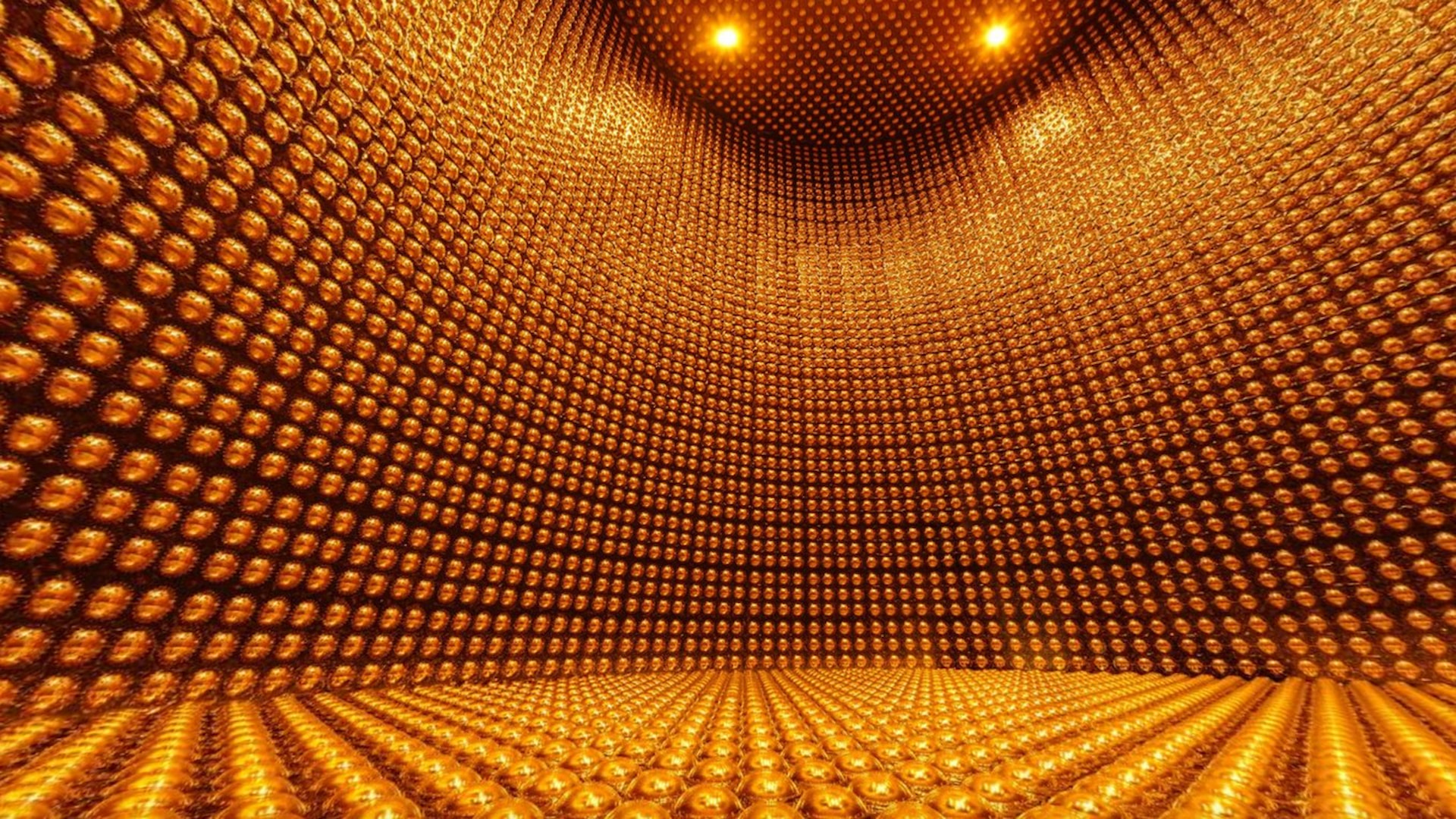
For decades neutrinos were thought to be massless according to the Standard Model. That changed between 1998 and 2015 when experiments like Super-Kamiokande and Sudbury Neutrino Observatory proved neutrinos oscillate between types. Oscillation requires non-zero mass. In 2015 the Nobel Prize in Physics was awarded to Arthur B. McDonald and Takaaki Kajita, cementing this discovery.
Why does mass matter? It contradicts the clean predictions of the Standard Model and signals new physics beyond. Determining the exact mass scale—whether the sum of neutrino masses is 0.06 eV or say, 0.15 eV—could answer questions about the universe’s matter-antimatter asymmetry, neutrino role in structure formation, and dark matter’s nature.
Detectors: Observing the Unobservable
Detecting neutrinos requires immense ingenuity. The IceCube Neutrino Observatory in Antarctica serves as a flagship example. Over a cubic kilometer of ice is instrumented with optical modules designed to capture the fleeting flashes of Cherenkov light generated when neutrinos interact with ice molecules. Its surface component, IceTop, and deep inner array DeepCore serve complementary roles. In total roughly 450 scientists from 14 countries collaborate on IceCube’s mission.
Another precision approach is the Karlsruhe Tritium Neutrino (KATRIN) experiment. Located in Germany, KATRIN studies the beta decay of tritium, examining the tiny energy deficit carried by neutrinos. Recent early data already placed new constraints on hypothetical neutrino interactions, affirming that we are sensitive to particle physics beyond the Standard Model.
Why Neutrinos Matter Beyond Particle Physics
Neutrinos are not just academic curiosities. They carry information from otherwise inaccessible environments: solar core processes, supernova interiors, and even Earth’s mantle dynamics. Solar neutrino studies refined our understanding of fusion processes while reactor neutrino measurements tracked human-made neutrino flux for non-proliferation monitoring.
Astrophysical neutrinos open a new window into high-energy cosmic events. Blazar observations, for instance, connect neutrinos with extragalactic accelerators capable of generating PeV particles. This heralds neutrino astronomy as the third pillar—after electromagnetic and gravitational wave studies—of a multi-messenger cosmic era.
From Observation to Application: Energy Harvesting
Watching neutrinos is one thing. Harvesting them for energy is another frontier entirely. The Neutrino® Energy Group proposes a bold idea: neutrinovoltaic technology. While still nascent, the concept relies on converting the kinetic energy of neutrinos and other non-visible ambient radiation into usable electricity.
At the heart lies a multilayer nanomaterial composed of graphene-silicon laminates. Graphene brings exceptional conductivity, mechanical strength, and atomic scale thickness. When doped silicon complements it in alternating layers, kinetic resonance is amplified through subatomic interactions. Essentially, the continuous subatomic motion in our surroundings is converted to a weak but steady electric current.
This direct transduction generates usable power without moving parts or fuel. It runs day and night, in cloudy or overcast conditions, regardless of geography. No wind blows, no sunrise rises—yet power is still harvested.
Prototype Devices: Early Glimpses
Several devices showcased by Neutrino® Energy Group exemplify neutrinovoltaic possibilities:
- Neutrino Power Cube: A modular, maintenance-free box weighing roughly 50 kilograms, measuring 800×400×600 mm, designed for home or small-business energy autonomy. Its expected continuous output lies in the 5–6 kilowatt range. By aggregating hundreds of these cubes, utility-scale power levels become feasible.
- Neutrino Life Cube: A self-sustaining off-grid module delivering 1–1.5 kilowatts, combined with water purification and climate control. Intended for humanitarian use, disaster relief, and remote living.
- Pi Car: A vehicle platform integrating neutrinovoltaic cells into body panels. This auxiliary generation can extend EV range and reduce reliance on external charging.
- Pi Nautic and Pi Fly: Maritime and aerial extensions of the Pi concept. Boats and drones equipped with neutrinovoltaic materials generate onboard energy without solar dependency.
These prototypes are built under the direction of CEO and majority shareholder Holger Thorsten Schubart, himself a visionary mathematician whose early career fused abstract theory with applied entrepreneurship. His leadership steers a multidisciplinary team of physicists, materials scientists, and engineers toward practical neutrinovoltaic systems.
Addressing Energy System Challenges
The world faces an energy system under pressure. Centralized grids are aging, vulnerable to cyberattacks and extreme weather. Scaling renewables introduces intermittency issues, requiring storage, backup generation, or grid reinforcements. Nuclear power offers firm capacity but comes with waste, cost, and public concern.
Decentralized neutrinovoltaics tackle much of this. These devices operate off-grid, require zero fuel or maintenance, and emit no pollution or waste. They work in urban, rural, polar, tropical climates equally well. They can become dependable baseload sources in local microgrids or hybrid arrays.
With graphene-based devices modular in nature and scalable across applications, deployment can match energy demand discreetly yet efficiently. Over time, networked arrays of Power Cubes can supply tens to hundreds of megawatts without major resource draws.
Technical Foundations and Material Challenges
Turning theory into practice demands precision nanoengineering. Graphene layer thickness, dopant profiles in silicon, layer-uniformity, and interface stability must be tightly controlled. Large area synthesis of high-quality graphene often relies on chemical vapor deposition on metal foams, then transfer onto supportive substrates. Doped silicon layers require atomic level deposition techniques to achieve consistent resonance coupling.
Prototype production has required developing in-house fabrication lines and materials characterization tools. Team scientists use spectroscopy, electron microscopy, and resonance analysis to understand subatomic interactions in these layered constructs.
Large scale deployment requires manufacturing scalability. Materials supply chains for graphene and doped silicon must mature. Device encapsulation must ensure environmental stability (temperature, moisture, UV) across the intended lifespan, which is expected to span decades.
Mathematical Foundations and AI Optimization
Mathematics underpins neutrinovoltaic research across modeling, optimization, and control. Simulations of neutrino flux through multilayer structures, kinetic energy transfer models, and resonant coupling analysis require solving differential equations in nanostructured geometry with stochastic boundary conditions.
Artificial intelligence and machine learning enhance this process. Algorithms trained on environmental data, radiation flux models, and material performance histories can predict optimal layer thickness, dopant concentrations, and ambient parameter adjustments. This makes device tuning adaptive to location, inclination, and build environment.
Schubart’s mathematical background strengthens the team’s emphasis on rigorous modeling. Equations from quantum scattering, resonance theory, and nanoelectromechanical systems converge into device-level performance predictions. These are then validated experimentally, closing the loop between simulation and prototype.
Socioeconomic and Resilience Impact
Neutrinovoltaics promise more than clean energy. They enable energy independence. With small-scale units at home or business, energy bills shrink. Communities become resilient to outages. Humanitarian projects deploy Life Cubes into disaster zones or remote areas, offering reliable energy and clean water.
Manufacturing of Power Cubes can drive local economies. Assembly facilities, materials plants, maintenance training—all generate jobs. Once a local microgrid matures, dependence on imported fuel or volatile commodity prices diminishes.
At scale, hundreds of thousands of cubes can form utility networks—providing grid-level power without centralized capital expenditure or infrastructure delays.
Roadmap and Future Outlook
Neutrino® Energy Group is advancing toward industrial production. Field trials for Power Cubes are underway in neutral locations. Numbers being tested and performance metrics are proprietary, but early reports suggest stable host output.
Upcoming steps include:
- Scaling fabrication volume
- Refining AI-driven resonance tuning
- Launching pilot microgrids
- Regulatory acceptance and safety certification
- Collaborations across agriculture, telecom, and remote energy providers
Continued research into optimized materials (e.g. next-gen 2D crystals, novel dopants) promises incremental improvements. Long term, arrays of cubes combined with battery and solar capacity can form resilient hybrid systems.
Harvesting Vicinity to Illuminate Tomorrow
Neutrinos slip through walls, bodies, and planet alike with ease. Yet they present a silent reservoir of kinetic energy around us all the time. Neutrino® Energy Group has charted a path from ghost-particle physics to practical clean energy devices. By harvesting the invisible, they leap over intermittency limits of conventional renewables.
This is not speculative science, it is applied physics in tune with today’s energy realities. From Power Cube to Pi Car, from graphene sheets to AI‑driven deployment, neutrinovoltaics open new pathways. They promise resilient, decentralized, low‑maintenance power systems.
In a time when our energy demands strain our grids and our climate, turning the omnipresent neutrino flux into usable electricity feels less like a dream, and more like harnessing a primeval river flowing beneath our feet.