Two Revolutions, One Future: Artificial Intelligence and the Energy Architecture It Cannot Do Without
The United Nations has put numbers to what many in the energy and technology industries had been calculating quietly.

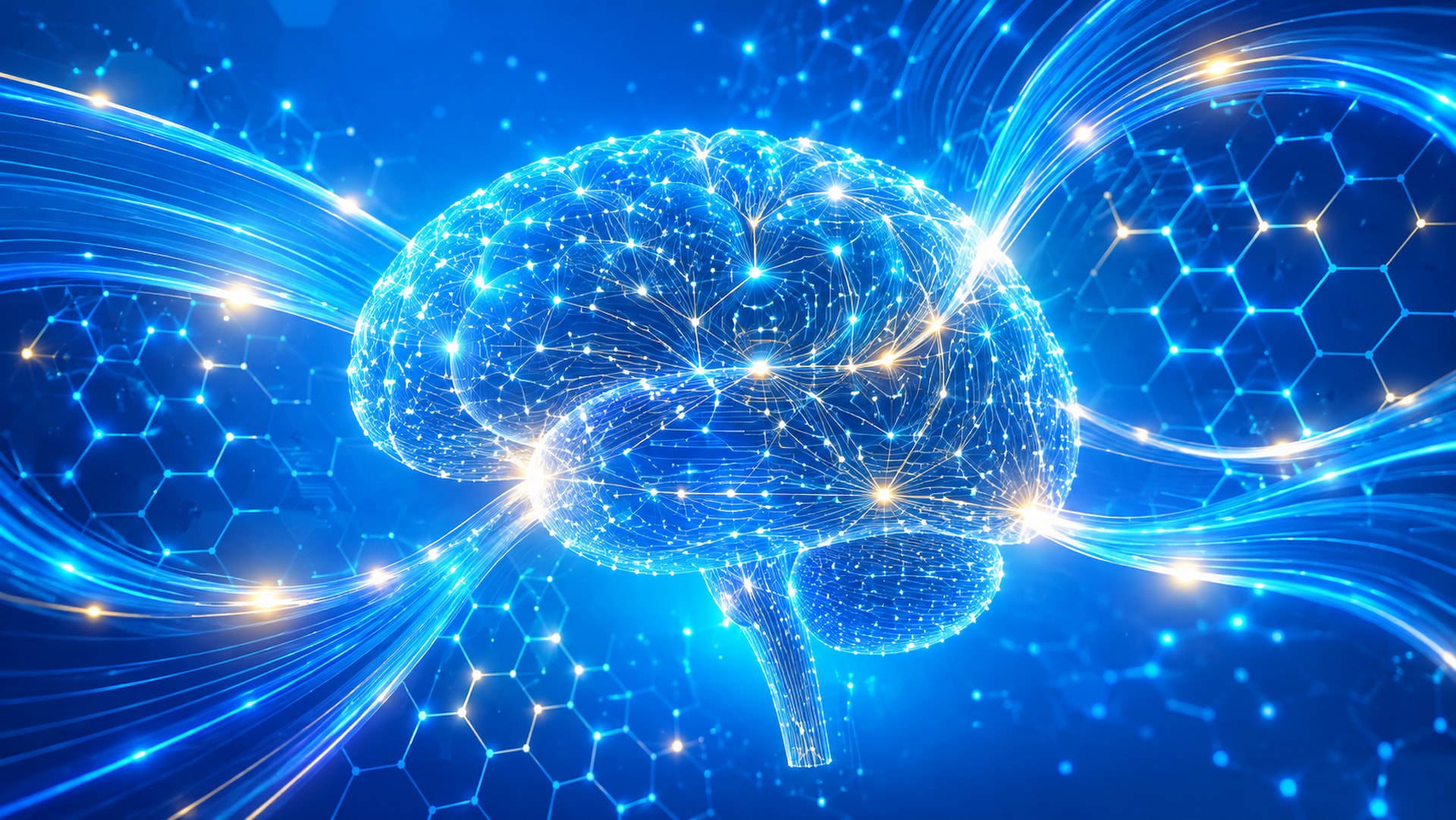
The United Nations has put numbers to what many in the energy and technology industries had been calculating quietly. By 2030, AI data centres will consume 945 terawatt-hours of electricity annually, a figure that approaches the combined national consumption of Pakistan, Bangladesh, and Nigeria. Their water footprint will equal the basic annual drinking needs of 1.3 billion people. Their land requirements will exceed 14,500 square kilometres. These are not projections about a distant future. They describe infrastructure being permitted, financed, and built today, in Nevada, in Texas, in Ireland, in Singapore, in every jurisdiction that can supply the power and the cooling water.
The world’s most powerful intelligence is running out of power. And the problem is structural, not incidental.
The Paradox at the Heart of AI Energy
Eighty to ninety percent of AI’s energy consumption comes not from training, the headline-grabbing runs that produce new models, but from inference: the continuous operation of deployed systems answering questions, generating content, analysing data, and making recommendations across billions of interactions every day. Training is an event. Inference is a condition. It does not end, does not pause for weather, and does not consolidate conveniently near renewable energy installations.
This creates a demand profile that the world’s electricity infrastructure was not designed to serve. Intermittent generation cannot structurally serve continuous demand. A solar installation adjacent to a data centre reduces emissions during daylight hours on clear days. It does not solve the inference problem. It defers it to a battery, and the battery to a grid, and the grid to a reserve plant running on gas or coal during the hours when neither solar nor wind generates sufficient output. The energy is always coming from somewhere. The question is what that somewhere costs in infrastructure, in emissions, and in geopolitical exposure.
The efficiency argument compounds rather than resolves this. As AI models become more capable and cheaper to run per query, their use expands. The volume of queries absorbs and exceeds the efficiency gain. What one of the major AI laboratory leaders recently acknowledged publicly illustrates the trajectory precisely: the monthly token consumption that once represented the heaviest individual user of his platform is now the global per capita average. The demand curve does not flatten. It steepens with every improvement in capability and every reduction in cost.
What AI actually needs is not more generation. It needs continuous, decentralised, infrastructure-light generation at the point of consumption. Power that is always on, requires no transmission from a distant source, needs no backup, and generates regardless of weather, season, or geography. The most valuable energy for AI infrastructure is the energy that was never centralised in the first place.
A Physical Framework for Continuous Generation
Introducing a technology at this point in an article carries a risk: it can appear as though the technology has been invented to serve the preceding argument. In this case, the sequence is reversed. The physical framework described below was assembled from established science over two decades. The AI energy crisis emerged as a mainstream concern only recently. The convergence is not engineered. It is structural.
Holger Thorsten Schubart is a mathematician. His contribution is not the discovery of new physics but the assembly of existing physical knowledge into a coherent engineering framework. The Schubart Master Formula:
P(t) = η · ∫V Φ_eff(r,t) · σ_eff(E) dV
The equation describes the continuous electrical output of a system converting multi-channel ambient flux across an active material volume, bounded by thermodynamic efficiency constraints.
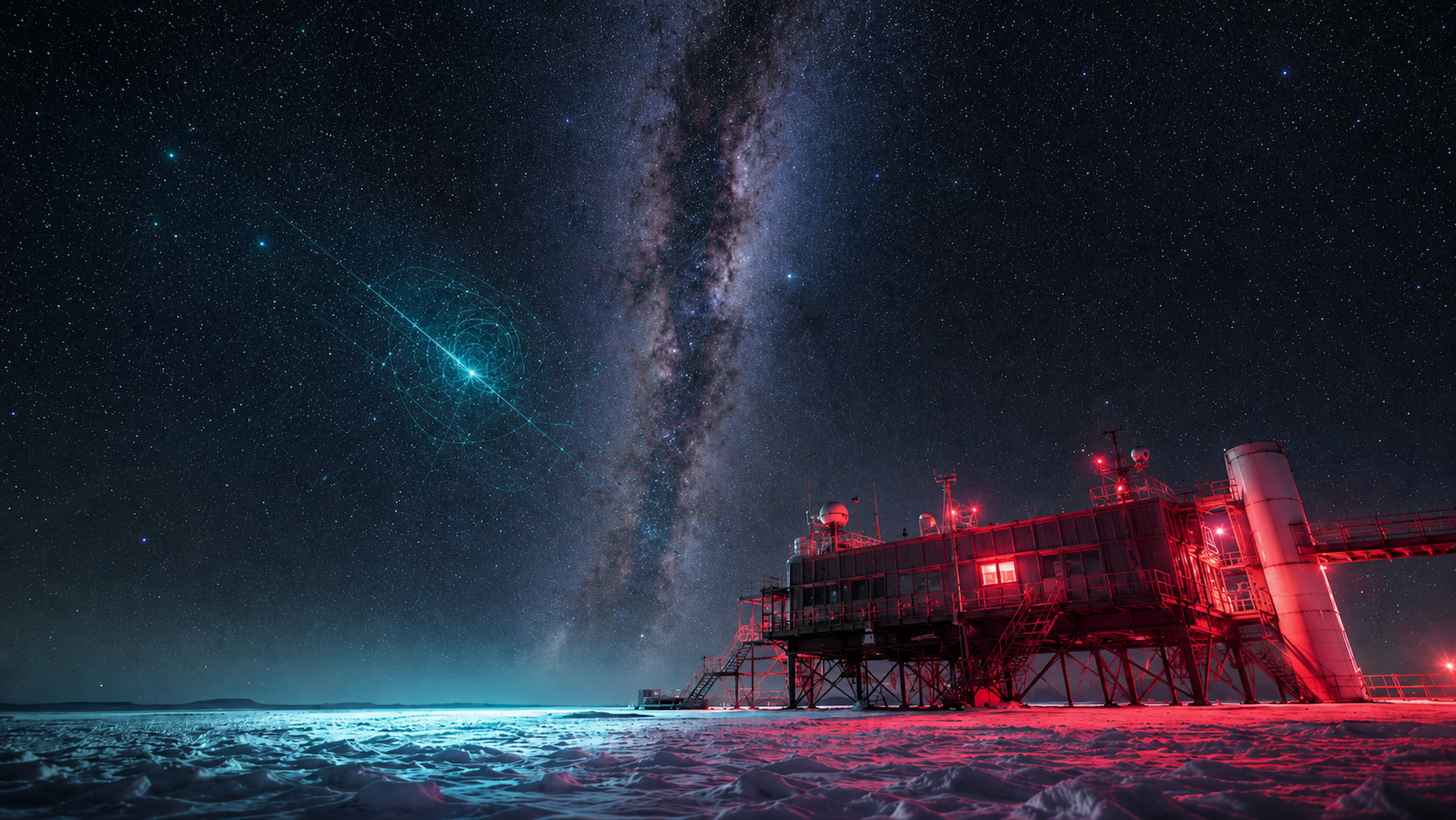
The flux term integrates contributions from neutrino momentum transfer, cosmic muon flux, thermal gradients, and electromagnetic background fields. All of these are present everywhere on Earth, at every hour, without dependence on weather, geography, or time of day. The volume integral means output scales with active material, not surface area. There is no intermittency because the sources are not intermittent. The system generates at the point of consumption, continuously, from ambient inputs that require no fuel delivery, no transmission, and no storage.
This is not a claim about limitless energy. It is a claim about continuous energy. In the context of AI infrastructure, that distinction is the entire argument.
The physical assumptions underlying the formula have been independently confirmed by experiments conducted for entirely different purposes. The 2015 Nobel Prize in Physics established that neutrinos have mass and therefore carry and transfer momentum. The COHERENT experiment at Oak Ridge National Laboratory confirmed in 2017 that neutrinos interact with entire atomic nuclei as coherent units, amplifying effective interaction cross-sections significantly beyond single-particle estimates. Professor Paul Thibado at the University of Arkansas demonstrated experimentally that freestanding graphene membranes convert ambient thermal fluctuations into measurable electrical output. None of these researchers were working on energy harvesting. All of them confirmed physical processes the framework requires.
Monte Carlo simulations and multi-parameter evaluations of the physical model indicate statistical consistency reaching 5.9 to 6.0 sigma, above the five-sigma discovery threshold conventional in particle physics. These values do not certify commercial performance at industrial scale. They quantify the internal consistency of the physical framework under the applied model assumptions. At this confidence level, the probability that the consistency is accidental is approximately one in five hundred million.
The scale of the architecture: 200,000 Neutrino Power Cubes, each delivering 5 to 6 kilowatts of continuous net output from a 50-kilogram solid-state unit with no moving parts and no fuel requirement, produce one gigawatt of continuous electrical power. The equivalent of a standard nuclear reactor. No radioactive waste. No transmission infrastructure required. Deployable at the point of demand.
The Negawatt Dimension
In the 1980s, energy economist Amory Lovins coined the negawatt: a watt of power that never needs to be generated because it was made unnecessary. The classical negawatt comes from efficiency. The systemic negawatt comes from architecture.
Each unit deployed at the point of AI consumption eliminates not only the kilowatt-hours it would otherwise have drawn from the grid. It eliminates the transmission losses attached to those kilowatt-hours, the storage requirement behind them, the reserve capacity standing idle to guarantee supply, and the grid reinforcement that would have been required. In a world where AI data centre electricity demand is projected to equal the national consumption of a mid-sized economy and double within years, the systemic negawatt argument is not philosophical. It is economic arithmetic.
The infrastructure that will not be built, the transmission lines not laid, the reserve plants not constructed, the storage systems not procured, carries economic value that may ultimately exceed the value of the generation it replaces. The true impact of continuous decentralised energy may not be measured in watts generated, but in gigawatts of infrastructure that never needs to exist.
The UN report that opened this article frames the AI energy problem primarily as a governance challenge: who regulates data centres, who bears the water cost, who controls the geographic concentration of compute. These are legitimate and urgent questions. But beneath them is a physics question. And physics questions have physics answers.
Two Paradigm Shifts, One Intersection
AI and neutrinovoltaics are not simply complementary technologies arriving at a convenient moment. They are parallel paradigm shifts, each making the other more necessary and more possible.
AI is the first technology in human history whose demand scales not with population or industrial output but with intelligence itself. The more capable it becomes, the more it is used. The more it is used, the more energy it consumes. There is no natural ceiling on the application of intelligence, and therefore no natural ceiling on the demand it generates. Every efficiency gain creates the headroom for expanded use. The demand is permanent, growing, and structurally indifferent to the calendar and the weather.
Neutrinovoltaics is built on a convergence of physical discoveries that could only have been assembled now. The neutrino mass confirmation came in 2015. The coherent nuclear scattering proof came in 2017. The graphene nanostructure properties that enable conversion at engineering scales have matured only within the current decade. Non-equilibrium thermodynamics as a practical engineering discipline arrived even more recently. The components of the answer existed separately for decades. The ability to assemble them into a working framework is new.
History is instructive here. The transistor required no new physics. It required someone willing to assemble what was already known into a device that the physics community had not considered building. The laser waited 43 years between Einstein’s theoretical foundation and the first working demonstration. The gap was not in the physics. It was in the question being asked of the physics.
Transformative technologies do not announce themselves at the moment the underlying science is confirmed. They arrive at the intersection of physical readiness and civilisational necessity. The transistor arrived when computation was becoming necessary. The laser arrived when coherent light sources were becoming necessary. The question of when neutrinovoltaic conversion arrives as a deployed infrastructure technology is, in significant part, a question of when the energy system reaches the point where the necessity can no longer be deferred.
The UN data suggests that point is not distant. The AI infrastructure being built today is locking in energy dependencies that will persist for decades. The decisions being made now, about where to build, how to power, and what architecture to commit to, will determine whether the intelligence revolution of the 21st century runs on fuel or runs on the ambient energy that has always been present, everywhere, waiting for materials precise enough to receive it.
The question is no longer if energy systems will change, but who will adapt first, and who will be forced to follow.