Continuous, Distributed, Adaptive: Why Energy and Intelligence Are Converging into One System
In most laboratories, artificial intelligence and energy research occupy separate floors, separate budgets, and separate conversations. AI is the tool.

In most laboratories, artificial intelligence and energy research occupy separate floors, separate budgets, and separate conversations. AI is the tool. Energy is the subject. The two domains interact occasionally, politely, and then return to their respective silos. The assumption underlying this arrangement is so common it rarely gets named: intelligence and power are different problems, solved by different disciplines, requiring different kinds of expertise.
The Neutrino® Energy Group has concluded, with increasing conviction, that this assumption is wrong. Not merely incomplete, but structurally mistaken. And the evidence for that conclusion is accumulating not in a theoretical paper but in the architecture of the group’s own research and development process, where artificial intelligence has been embedded not as a productivity tool but as a core design methodology. The deeper you look at how neutrinovoltaic technology is being built, the harder it becomes to separate the intelligence doing the building from the energy system being built.
The Simulation Problem: Why AI Entered the Lab
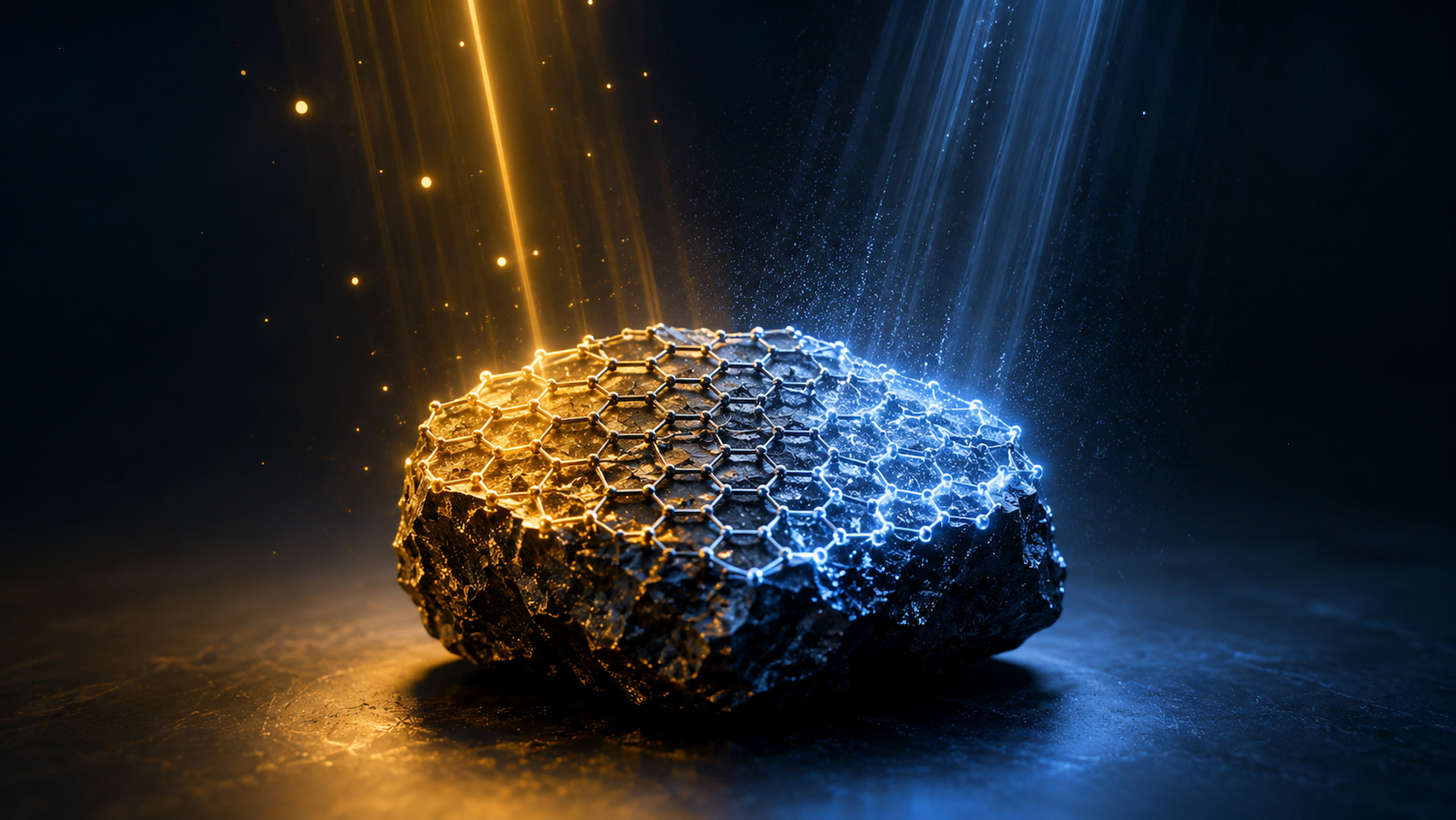
Neutrinovoltaic devices operate at the nanoscale. The materials involved, principally graphene-silicon heterostructures and advanced two-dimensional composites, exhibit behaviors that are extraordinarily sensitive to structural variation. A change in the number of graphene layers, in the alignment of crystalline lattices, in the distribution of dopants across a surface, can alter the device’s energy conversion efficiency in ways that are neither linear nor intuitive.
Traditional experimental approaches to this problem are slow. You modify a parameter, fabricate a sample, test the output, revise the hypothesis, and begin again. At the nanoscale, where the variables are numerous and their interactions complex, this cycle can consume years without arriving at an optimized configuration.
AI-driven simulation compresses that timeline by orders of magnitude. Machine learning models trained on experimental data from nanomaterial physics can predict how a given structural configuration will perform under varied environmental conditions, including fluctuating particle flux densities, thermal gradients, and electromagnetic background variation, without requiring physical fabrication at each step. The simulation space becomes a laboratory in itself, one that can be explored at the speed of computation rather than the speed of chemistry.
The Neutrino® Energy Group has integrated this approach into its development pipeline, using AI not to replace experimental work but to direct it. The models identify which configurations are most likely to yield meaningful gains in resonance efficiency. Physical fabrication is then concentrated where the probability of productive results is highest. The result is a research process that is simultaneously more rigorous and more efficient than conventional iteration.
Optimizing for a Moving Target: Resonance, Multilayers, and Adaptive Systems
The challenge of resonance efficiency in multilayer neutrinovoltaic structures is subtle and worth examining in some detail. The conversion of ambient particle and field interactions into electrical power depends on the ability of nanoscale material structures to respond to incident energy in specific, tunable ways. This response is not static. The ambient environment is a composite of particle fluxes and field fluctuations that vary in intensity and frequency across time, location, and depth.
An optimal device is therefore not one optimized for a fixed input but one capable of maintaining high conversion efficiency across a range of environmental conditions. This is, in engineering terms, an adaptive optimization problem. And adaptive optimization problems are precisely where machine learning architectures have demonstrated their most significant advantages over rule-based engineering approaches.
The AI systems applied to neutrinovoltaic resonance optimization are trained to identify patterns in how multilayer structures respond to varying input conditions, and to recommend structural and compositional adjustments that broaden the efficiency curve. Over iterative cycles of simulation, physical testing, and model refinement, the device architecture converges toward configurations that perform reliably across a wide environmental envelope rather than peaking narrowly under ideal conditions.
This iterative convergence is itself a form of machine learning applied to materials science: the system gets better at predicting optimal configurations the more experimental feedback it receives. The laboratory, in this model, becomes a training dataset. Each fabricated device is also a data point.
The Symmetry No One Planned
Here is where the story becomes genuinely interesting, and where the implications extend well beyond laboratory methodology.
Neutrinovoltaic energy generation, as a system architecture, shares a set of defining characteristics with the AI systems that are increasingly central to modern computing infrastructure. Both are distributed rather than centralized. Both are designed to operate continuously without interruption. Both are embedded in their environments rather than connected to them from outside. And both are, at their core, systems that process a continuous flow of ambient information or energy and convert it into a usable output.
A neutrinovoltaic device harvesting from the persistent background of neutrino flux, cosmic muons, and electromagnetic fields is not so different, structurally, from a neural network processing a continuous stream of incoming data. In both cases, the system is always-on, the input is ambient and non-intermittent, and the architecture is designed to extract signal from a background that never stops arriving.
This symmetry was not planned. It emerged from independent engineering logic applied to two different problems. But it is increasingly difficult to ignore, particularly as the infrastructure requirements of AI and quantum computing become clearer and more demanding.
The Power Problem That AI Cannot Solve for Itself
Large-scale AI systems require power in quantities and with reliability characteristics that existing energy infrastructure is beginning to struggle to provide. Data centers running large language models and training clusters operate around the clock. Quantum computing installations require not just continuous power but exceptionally stable power, free from the fluctuations that can disrupt coherence in quantum systems. The push toward edge AI, where intelligence is embedded in distributed devices rather than centralized in server farms, adds a further requirement: power that is available locally, without dependence on grid connectivity.
These requirements describe, with some precision, the conditions under which neutrinovoltaic technology is most relevant. A solid-state ambient energy conversion device that generates continuous, stable electrical output from the surrounding environment, independent of location and without connection to centralized infrastructure, is not a general-purpose energy solution. It is, however, an excellent match for the specific power profile that distributed and edge AI systems require.
The convergence is functional as well as architectural. Neutrinovoltaics needs AI to develop efficiently. AI infrastructure needs something very much like neutrinovoltaics to power itself reliably. The two fields are not merely compatible. They are, in a meaningful sense, each other’s best argument.
Toward a Self-Sufficient Intelligence Infrastructure
The longer-term vision implied by this convergence is worth stating plainly, without overstating what has been demonstrated versus what remains in development.
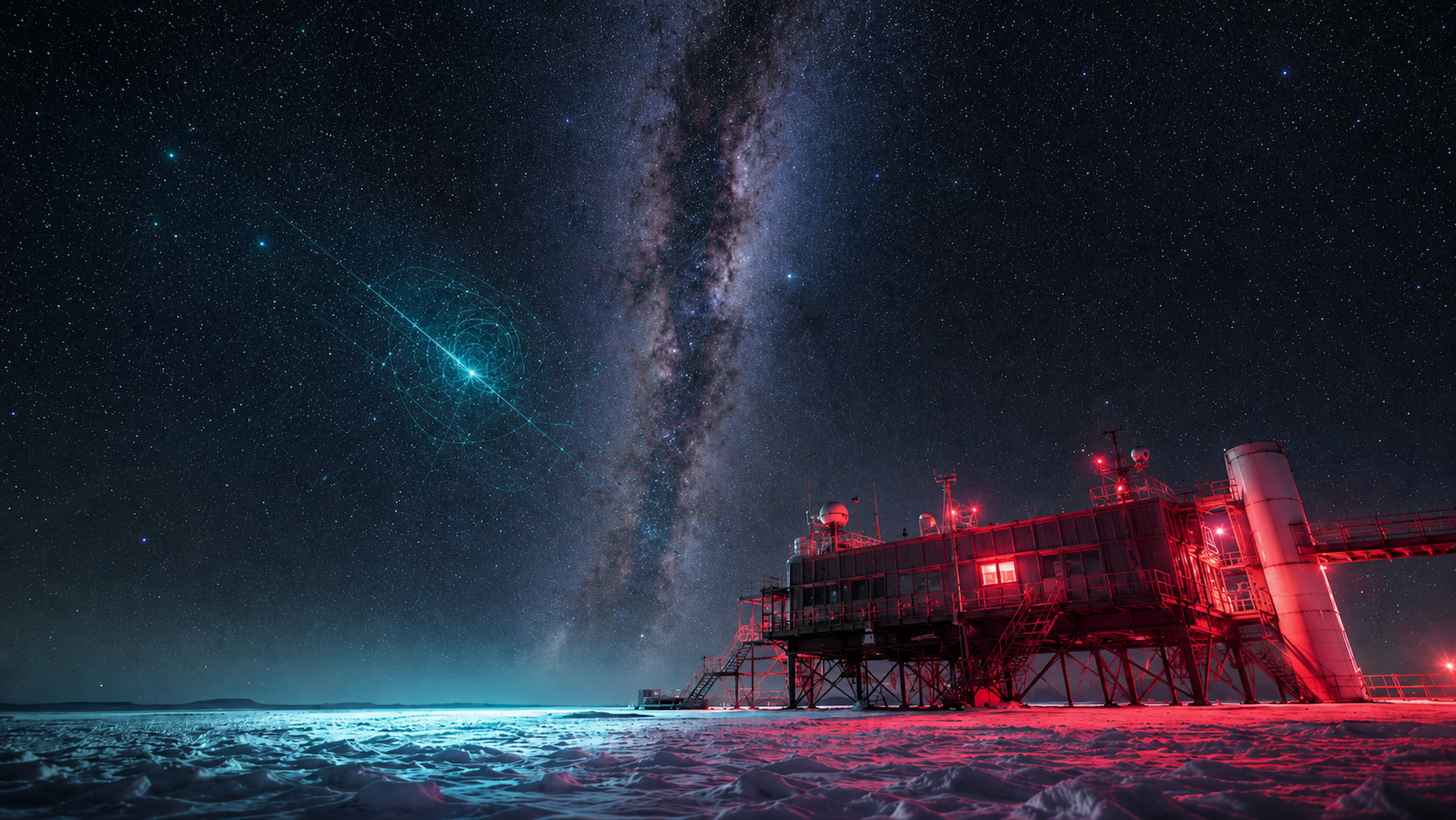
If neutrinovoltaic devices can be miniaturized and integrated directly into computing hardware, the possibility emerges of AI systems that generate a meaningful portion of their own operational power from ambient environmental interactions. This is not a perpetual motion claim. The ambient fluxes involved are real and measurable, governed by the same physics that IceCube and JUNO are designed to characterize in detail. The energy available per unit area is modest. But for embedded, low-power AI applications at the edge of a network, modest and continuous may be precisely sufficient.
The broader shift being traced here is from an energy model based on supply chains to one based on environmental integration. Just as AI has shifted computing from batch processing toward continuous inference, neutrinovoltaics proposes to shift energy from scheduled delivery toward continuous harvesting. Both transitions follow the same underlying logic: replace the episodic and centralized with the continuous and distributed.
The Architecture Converges
There is something worth sitting with in the observation that the most sophisticated tool being used to build neutrinovoltaic technology, and the technology being built, share the same structural DNA. Both are systems designed to extract usable output from a continuous ambient flow. Both improve through iterative feedback. Both are most powerful when distributed, embedded, and always-on.
The Neutrino® Energy Group did not set out to build a mirror image of artificial intelligence. It set out to build a new kind of energy system. But the deeper the integration between AI methodology and neutrinovoltaic engineering becomes, the more the boundary between the two dissolves into a single, coherent design philosophy.
What that philosophy ultimately points toward is a world in which intelligence and energy are no longer separate infrastructure problems requiring separate solutions. They are, instead, different expressions of the same underlying approach to the physical environment: continuous, adaptive, and genuinely independent of where you happen to be standing.