The Hidden Dynamics of Neutrinos in Supernova Explosions: A Deep Scientific Exploration
Unlocking the Secret Life of Neutrinos We explore one of the most elusive and influential particles in the universe: neutrinos.
On this page
Unlocking the Secret Life of Neutrinos
We explore one of the most elusive and influential particles in the universe: neutrinos. Nearly massless, electrically neutral, and capable of passing through entire planets undisturbed, neutrinos are central to understanding the inner workings of stellar explosions. In particular, their role in Supernova events reveals a hidden layer of astrophysical processes that reshape galaxies and forge the elements essential for life.
What Happens Inside a Supernova Core?
Core Collapse and Neutrino Flood
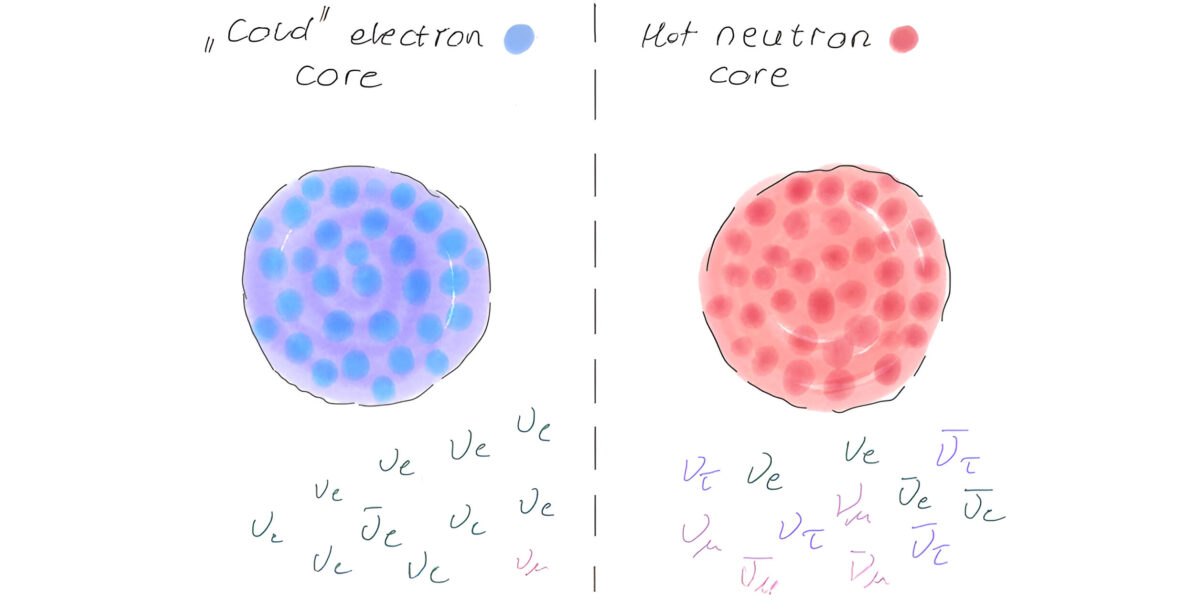
In massive stars, once nuclear fusion ceases to produce sufficient pressure, gravity causes the core to collapse within milliseconds. This collapse results in extreme densities—comparable to atomic nuclei—and temperatures exceeding billions of degrees.
At this stage, neutrinos dominate the physics:
- Over 99% of the energy released during a supernova is carried away by neutrinos.
- Within seconds, an immense burst of neutrinos is emitted, outshining the entire electromagnetic output of the star.
- These neutrinos originate from processes such as electron capture and thermal pair production.
The Role of Neutrino Oscillations in Stellar Explosions
Flavor Transformation and Energy Transfer
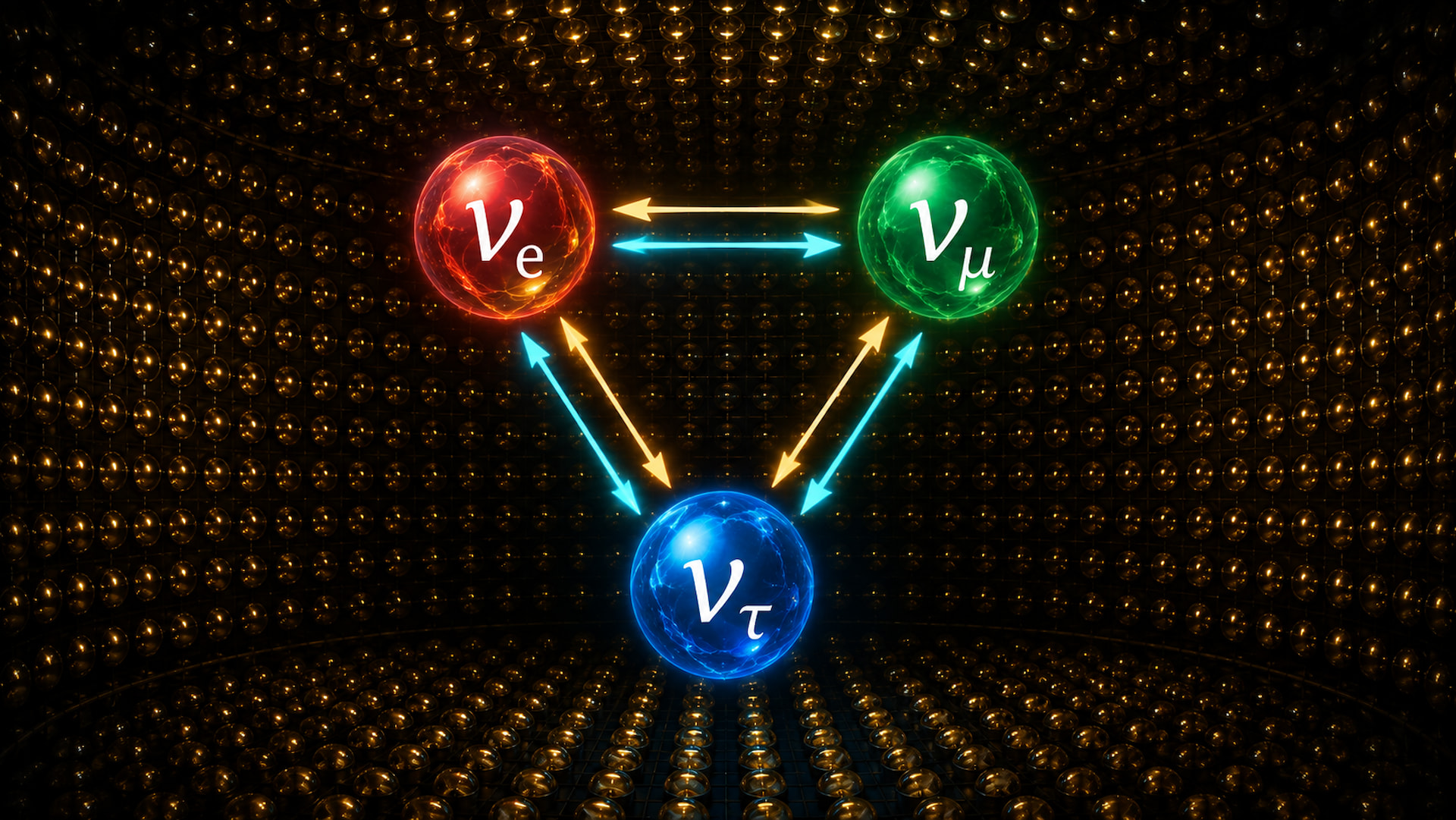
Neutrinos exist in three “flavors”:
- Electron neutrinos
- Muon neutrinos
- Tau neutrinos
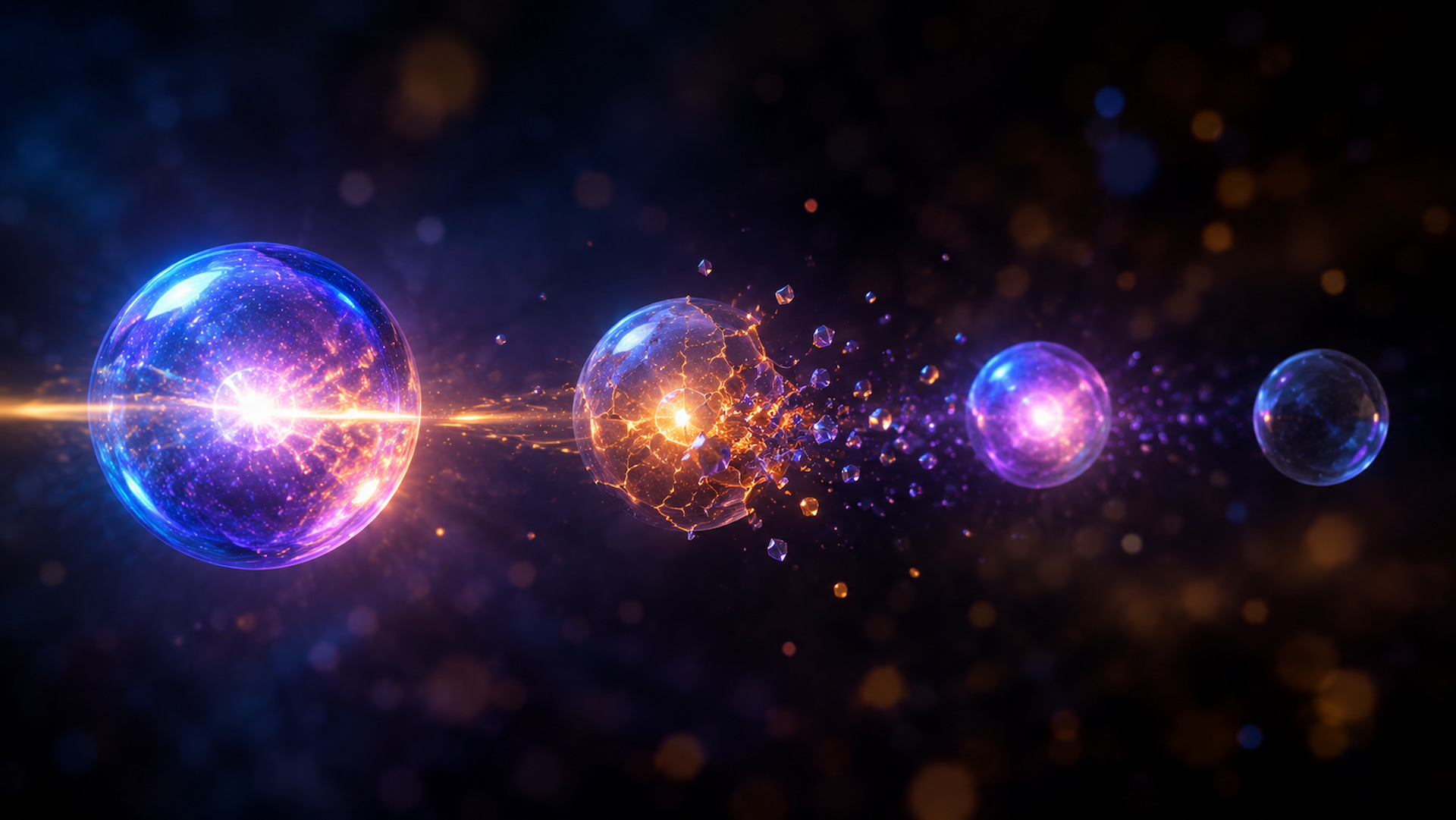
Due to the quantum phenomenon known as Neutrino Oscillation, these flavors can transform into one another as they propagate.
This transformation is critical because:
- Different neutrino flavors interact differently with matter.
- Oscillations influence how energy is deposited behind the shock wave.
- This energy deposition can determine whether a supernova successfully explodes or collapses into a black hole.
Shock Revival: The Neutrino Heating Mechanism
Why Supernova Explosions Need Neutrinos
After the initial core bounce, a shock wave forms but often stalls due to energy losses. Neutrinos provide the missing energy through a process called neutrino heating:
- Neutrinos streaming outward deposit energy into surrounding stellar material.
- This energy re-energizes the stalled shock wave.
- The revived shock propagates outward, leading to a full supernova explosion.
Exotic Behavior: Neutrino Self-Interaction
Collective Effects in Dense Environments
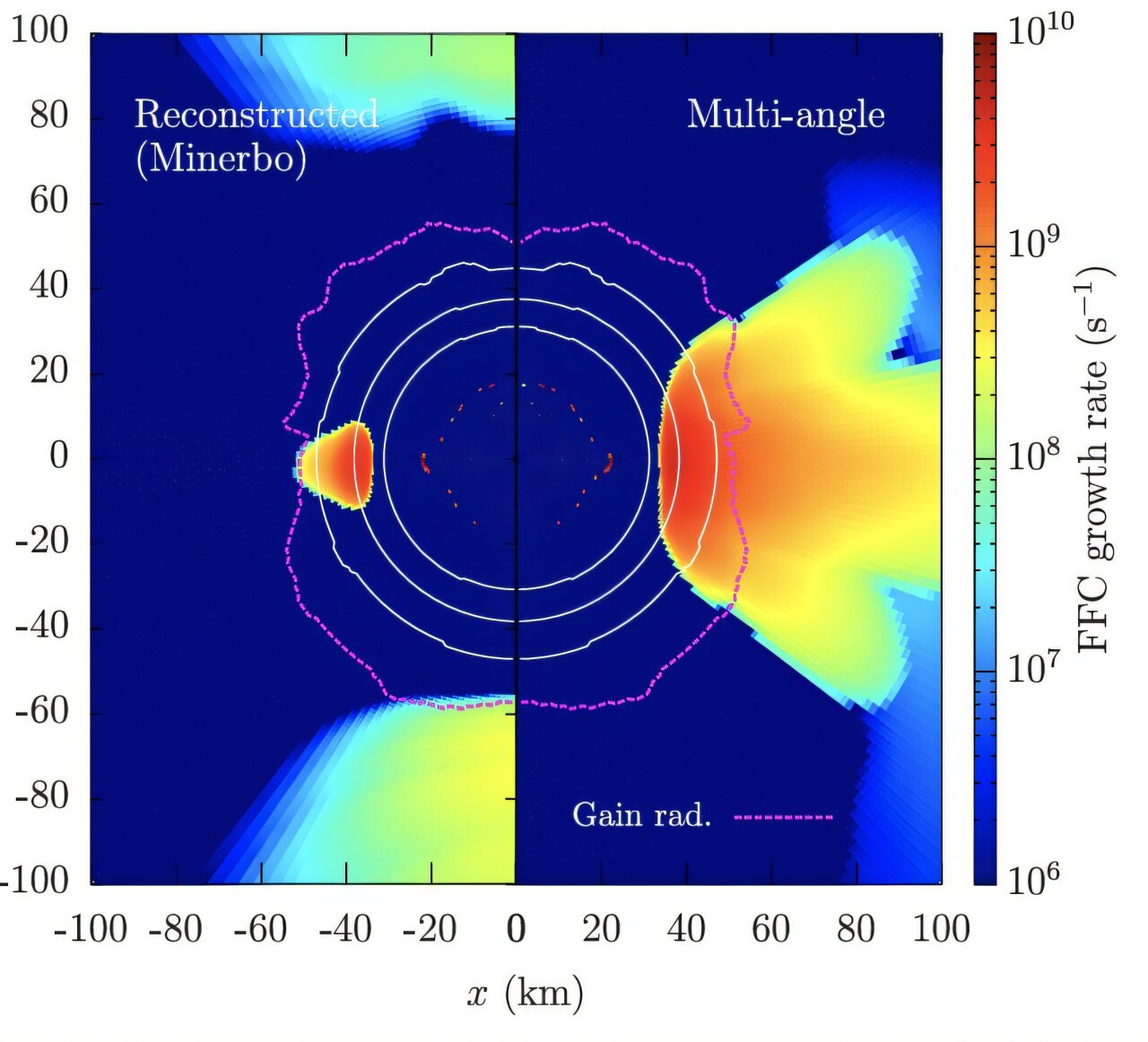
In the dense core of a supernova, neutrinos do not behave independently. Instead, they interact with each other through weak forces:
- This leads to collective oscillations, where large groups of neutrinos change flavor simultaneously.
- These interactions can create spectral splits—sharp transitions in energy distribution among flavors.
- The phenomenon significantly alters the neutrino signal detectable on Earth.
Observational Evidence and Detection
Capturing Neutrinos from Stellar Explosions
The first confirmed detection of supernova neutrinos occurred in 1987 during Supernova 1987A. Detectors recorded a burst of neutrinos hours before visible light reached Earth.
Modern detectors include:
- Water Cherenkov detectors
- Liquid scintillator detectors
- Liquid argon time projection chambers
These instruments allow us to:
- Measure neutrino energies and arrival times
- Infer the internal dynamics of the supernova
- Test fundamental physics beyond the Standard Model
Implications for Element Formation
Neutrinos and the Creation of Heavy Elements
Neutrinos play a decisive role in nucleosynthesis:
- They drive the r-process, responsible for creating heavy elements like gold and uranium.
- Their interactions with neutrons and protons determine the neutron-richness of ejecta.
- This directly influences the chemical evolution of galaxies.
Neutrinos and Black Hole Formation
When Explosions Fail
Not all supernovae succeed. In some cases:
- The shock fails to revive
- The core continues collapsing
- A black hole forms
Neutrino signals provide early indicators of this outcome:
- A sudden cutoff in neutrino emission suggests black hole formation.
- The duration and intensity of the neutrino burst reveal the fate of the star.
Future Research and Next-Generation Observatories
Advancing Neutrino Astronomy
Upcoming experiments aim to revolutionize our understanding:
- Hyper-sensitive detectors will capture millions of neutrinos from nearby supernovae.
- Real-time neutrino alerts will enable rapid astronomical observations.
- Advanced simulations will integrate neutrino physics with multidimensional hydrodynamics.
Conclusion: The Invisible Architects of Cosmic Catastrophes
Neutrinos are not passive byproducts of stellar death—they are the driving force behind the most energetic explosions in the universe. By decoding their behavior, we uncover the hidden mechanisms of supernovae, the origins of the elements, and the fundamental laws governing matter and energy.
Their “secret life” is no longer hidden—it is the key to understanding the cosmos itself.