Record-Breaking Deep-Sea Signal in the Mediterranean: Evidence of Powerful Supermassive Black Hole Activity
Introduction: A Breakthrough Detection Beneath the Mediterranean Sea Scientists monitoring the depths of the Mediterranean Sea have detected an extraordinary…
On this page
Introduction: A Breakthrough Detection Beneath the Mediterranean Sea
Scientists monitoring the depths of the Mediterranean Sea have detected an extraordinary high-energy signal unlike anything previously recorded in underwater astrophysical observatories. This record-breaking event, captured by deep-sea detectors designed to study cosmic particles, provides compelling evidence of energetic processes occurring around supermassive black holes in distant galaxies.
We now understand that these signals are not merely random bursts of radiation but traces of cosmic messengers that traveled across intergalactic space before finally interacting with Earth’s oceans. The detection offers one of the clearest glimpses yet into the extreme physics occurring in the vicinity of supermassive black holes.
This discovery marks a milestone in neutrino astronomy, opening a powerful new window into the most energetic environments in the universe.
What Was Detected in the Mediterranean?
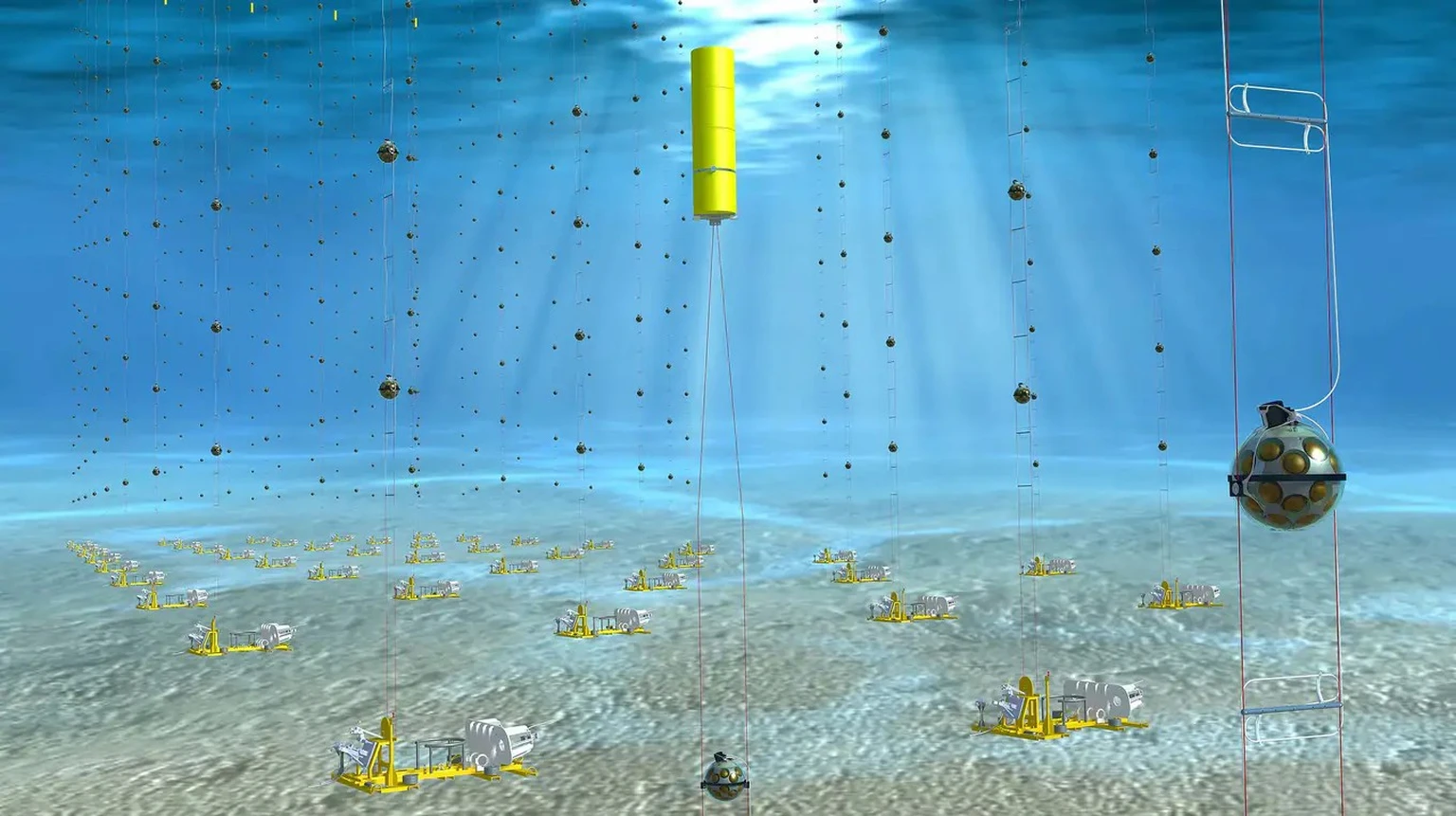
Deep beneath the Mediterranean Sea, large arrays of optical sensors continuously monitor the darkness for flashes of light produced when high-energy particles interact with water molecules.
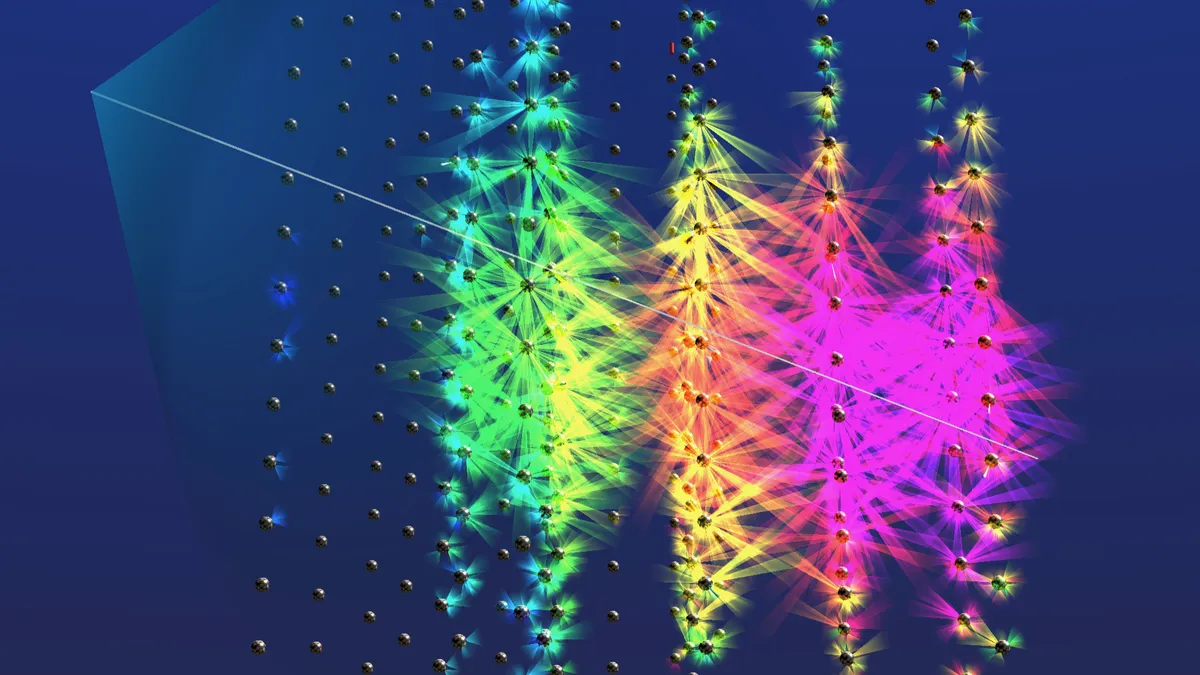
In this case, scientists detected an exceptionally energetic particle event, producing a cascade of secondary particles that illuminated the detectors across an unusually large area. The signal was far stronger than typical background events and exceeded previously recorded measurements.
Key characteristics of the signal include:
-
Extremely high particle energy
-
Long particle track through the detector array
-
Cherenkov light flashes visible across multiple sensors
-
Directionality suggesting an extraterrestrial origin
These features strongly indicate the particle was a high-energy neutrino originating from far beyond our galaxy.
The Role of Neutrino Telescopes in the Mediterranean
The Mediterranean hosts one of the world’s most advanced neutrino detection systems: a network of sensors deployed kilometers below the sea surface. These detectors operate in complete darkness, using the surrounding water as a massive natural detection medium.
When neutrinos interact with water molecules, they produce charged particles traveling faster than light moves through water, creating a blue glow known as Cherenkov radiation.
Sensors capture this light and reconstruct the trajectory and energy of the original neutrino.
Why the Deep Sea Is Ideal
The deep Mediterranean environment provides unique advantages:
-
Shielding from cosmic ray interference
-
Stable temperatures and pressures
-
Extremely low background light
-
Vast detection volume
These conditions allow detectors to identify incredibly rare particle interactions with remarkable precision.
How Supermassive Black Holes Generate High-Energy Neutrinos
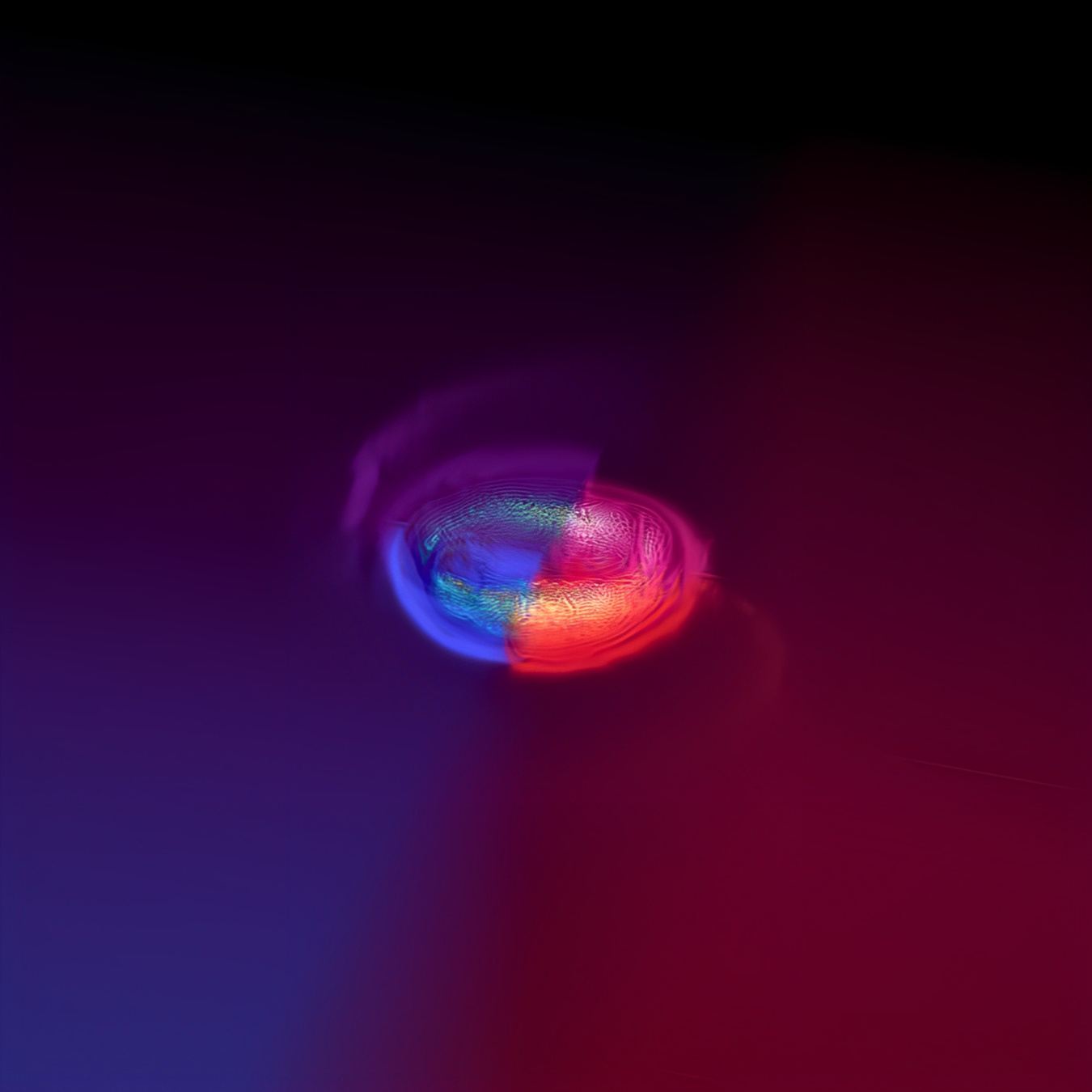
Supermassive black holes reside at the centers of most galaxies, including our own Milky Way. When matter falls toward these massive objects, powerful jets of particles can be launched at near-light speed.
Within these jets, protons and other particles collide with surrounding matter and radiation fields, producing pions, which then decay into neutrinos.
The chain of events can be summarized as follows:

Record-Breaking Deep-Sea Signal in the Mediterranean: Evidence of Powerful Supermassive Black Hole Activity
These neutrinos travel virtually unimpeded across the universe, carrying pristine information about the violent environments where they originated.
Why This Signal Is Record-Breaking
The detected event stands out because of its extreme energy level. Measurements suggest that the neutrino responsible for the signal possessed energy far exceeding typical astrophysical neutrino detections.
Several factors contribute to the event’s significance:
1. Exceptional Energy Scale
The particle’s energy may reach the petaelectronvolt (PeV) range, placing it among the most energetic neutrinos ever recorded.
2. Clear Detector Signature
Unlike many ambiguous signals, this event produced a well-defined track across multiple detector modules, enabling precise reconstruction.
3. Directional Traceback
The particle’s trajectory points toward regions of the sky known to contain active galactic nuclei (AGN) — galaxies powered by supermassive black holes.
Active Galactic Nuclei: Cosmic Particle Accelerators
Active galactic nuclei represent some of the most energetic phenomena in the universe. At their core lies a supermassive black hole millions or billions of times the mass of the Sun.
Matter spiraling toward the black hole forms a luminous accretion disk, while magnetic fields launch twin jets extending thousands of light-years into space.
Within these jets, particles are accelerated to enormous energies.
Characteristics of AGN Jets
-
Speeds approaching the speed of light
-
Extreme magnetic fields
-
Shock fronts that accelerate particles
-
Intense radiation fields
These environments naturally produce the high-energy neutrinos detected by deep-sea observatories.
How Scientists Reconstructed the Event
Reconstructing the event required sophisticated analysis of sensor data across the detector network.
The reconstruction process involved:
-
Photon timing analysis to determine when light reached each sensor
-
Geometric reconstruction of the particle track
-
Energy estimation based on light intensity
-
Directional triangulation to trace the neutrino’s origin
Combining these steps allowed researchers to determine both the energy and direction of the incoming particle with remarkable accuracy.
Implications for Multi-Messenger Astronomy
The detection strengthens the growing field of multi-messenger astronomy, where scientists combine information from different cosmic signals:
-
Electromagnetic radiation (light)
-
Gravitational waves
-
Cosmic rays
-
Neutrinos
Neutrinos are particularly valuable because they can escape dense astrophysical environments that light cannot penetrate.
This makes them ideal probes of:
-
Black hole environments
-
Gamma-ray bursts
-
Colliding galaxies
-
Starburst regions
The Mediterranean detection demonstrates that neutrino observatories are capable of identifying these sources with increasing precision.
The Future of Deep-Sea Neutrino Observatories
This discovery highlights the importance of expanding neutrino detection capabilities in the world’s oceans.
Upcoming upgrades aim to:
-
Increase detector volume
-
Improve sensor sensitivity
-
Enhance directional resolution
-
Integrate real-time alerts with global observatories
Future networks could detect hundreds of high-energy neutrinos annually, enabling detailed mapping of the universe’s most powerful particle accelerators.
Why the Mediterranean Detection Matters for Astrophysics
This record-breaking signal confirms that deep-sea detectors can capture neutrinos produced by distant supermassive black holes, validating decades of theoretical predictions.
Key scientific impacts include:
-
Direct evidence of cosmic neutrino sources
-
New insights into particle acceleration near black holes
-
Improved understanding of high-energy cosmic phenomena
-
Strengthening of global neutrino detection networks
Each detection adds a crucial piece to the puzzle of how the universe generates particles with energies far beyond those achievable in human-made accelerators.
Conclusion: A New Window into the Violent Universe
The powerful signal detected deep in the Mediterranean Sea represents one of the most remarkable observations in modern neutrino astronomy. By capturing a particle likely born near a distant supermassive black hole, scientists have demonstrated the extraordinary reach of underwater observatories.
As detection technology continues to evolve, we expect many more discoveries that reveal how the universe’s most extreme environments shape the cosmic landscape. High-energy neutrinos are no longer theoretical curiosities — they are now essential tools for exploring the hidden engines of the cosmos.