Small, Steady, Everywhere: A New Energy Mindset
Every second, trillions of neutrinos pass through your body. They come from the Sun, from distant stars, from cosmic rays striking the atmosphere.

Every second, trillions of neutrinos pass through your body. They come from the Sun, from distant stars, from cosmic rays striking the atmosphere. They pass through buildings, oceans, mountains, and even the entire planet as if it were barely there. They carry no electric charge. They interact so rarely with matter that physicists have spent nearly a century building massive underground observatories just to catch the faintest sign that one has passed by.
In Antarctica, sensors are frozen deep inside ancient ice to detect flashes of blue light that appear when a neutrino happens to collide with a particle. In underground laboratories across the world, vast tanks of purified water or liquid scintillator wait in darkness for similarly rare signals. These experiments are not small. They are monumental. And they exist for one reason: to understand something almost invisible.
Neutrinos forced scientists to rethink the Standard Model of particle physics when it became clear they have a tiny mass. That discovery alone reshaped theoretical assumptions. Even today, researchers are still trying to determine which neutrino is heavier, which is lighter, and how these ghostlike particles fit into the larger story of the universe.
For most people, this sounds distant. Abstract. Beautiful, perhaps, but far removed from daily life.
Yet there is another question hidden in this story.
What if the invisible background of our universe is not only something to observe, but something structured materials can respond to?
From Counting Particles to Designing Materials
Traditional neutrino research focuses on detection. Scientists wait for a rare interaction and reconstruct what happened. It is a discipline built on patience and statistics.
But a different perspective has emerged in recent years.
Instead of asking how to catch individual neutrinos, some researchers have asked how materials behave when placed inside a constant background of environmental activity. Not just neutrinos, but electromagnetic fields, thermal fluctuations, and microscopic mechanical vibrations that are always present around us.
This shift in thinking is subtle but important.
It moves away from the idea of a particle detector and toward the idea of a material system that couples to its environment continuously. Not by violating physics. Not by creating energy from nothing. But by converting small, ever-present environmental excitations into usable electrical output within strict thermodynamic limits.
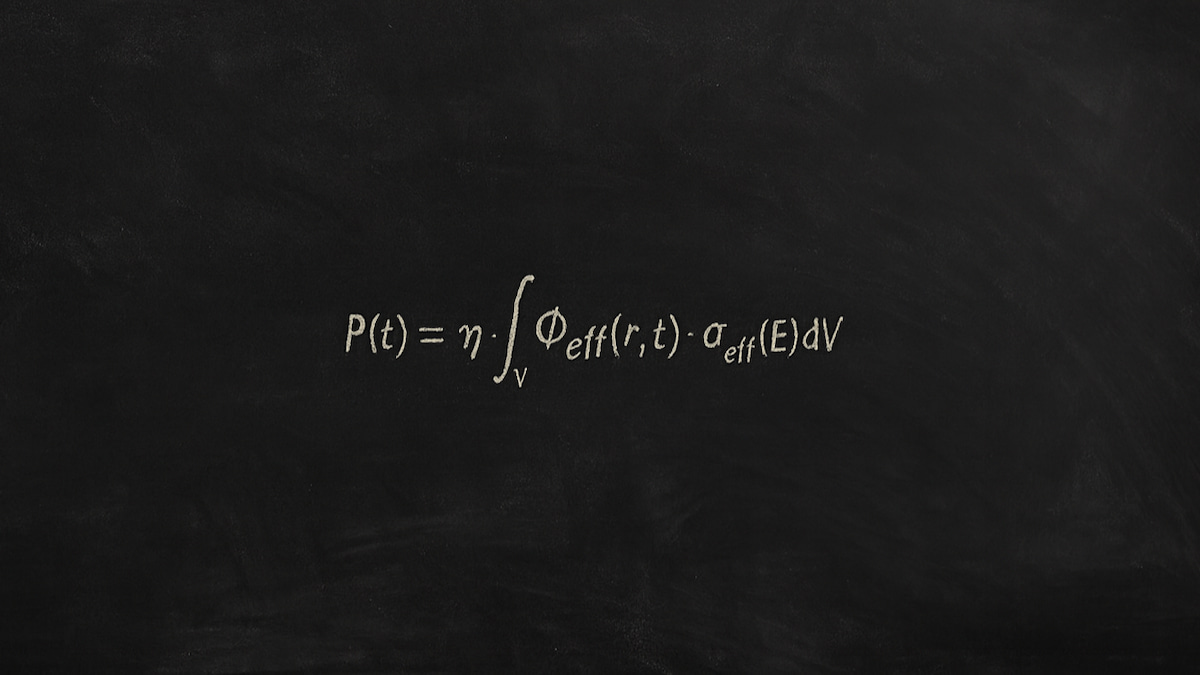
At the center of this reframing stands the Schubart Master Equation, developed by visionary mathematician Holger Thorsten Schubart, often described as the Architect of the Invisible. Through the Neutrino® Energy Group, this equation formalizes something surprisingly simple: structured materials, when engineered correctly, can convert background environmental activity into directed electrical current, provided that energy conservation is never exceeded.
There is no perpetual motion. No miracle amplification. The equation enforces that output never surpasses input. It is a balance statement, not a promise.
What changes is not the law of physics, but the way we design matter.
Matter as an Energy Participant
Most of us think of materials as passive. Concrete holds up buildings. Steel carries loads. Silicon forms microchips. Materials are structure, not actors.
But at the nanoscale, matter behaves differently. At that scale, surfaces multiply. Interfaces proliferate. Electrical properties emerge from geometry and asymmetry. Layers only atoms thick can interact with their surroundings in ways bulk materials cannot.
In neutrinovoltaic systems, materials are engineered with dense internal architectures. Graphene-based layers, semiconductor junctions, and asymmetric interfaces are arranged volumetrically, not just across a flat surface. The internal active area can far exceed what the eye sees from the outside.
The goal is not to isolate a single particle event. It is to build a resonant, open system that responds selectively to the constant environmental “noise” that surrounds us. Electromagnetic background fields. Thermal motion. Cosmic components. All part of the same open energy environment.
Neutrinos are part of that background, but not the sole driver. That distinction matters. The technology does not claim that neutrinos alone power the system. They are one contributor among several permanently present environmental inputs.
The real engineering challenge is coupling.
How efficiently can a structured material convert fluctuations into directed electrical flow? How precisely can interfaces be manufactured? How consistently can output be maintained over time?
These are questions of materials science, not mythology.
Why This Matters Now
In an era defined by climate instability and infrastructure strain, energy conversations often revolve around scale. Gigawatts. Utility plants. Mega projects.
But much of the modern world does not operate at gigawatt scale.
Sensors that monitor bridges. Edge computing nodes that process local data. Remote environmental stations. Communication relays. Industrial monitoring systems. Many operate quietly in the background, requiring steady, modest power to function reliably.
Their challenge is not peak capacity. It is continuity.
Battery replacement cycles are expensive and logistically complex. Remote installations fail when maintenance is delayed. Micro-fluctuations destabilize hybrid renewable systems.
Here, the idea of materials as energy actors becomes practical rather than philosophical.
A small, continuous baseline contribution from embedded material systems can stabilize decentralized architectures. Not replace solar. Not compete with wind. Complement them. Reduce intermittency anxiety. Smooth micro-variations. Extend maintenance intervals.
It is not about dominance. It is about resilience.
Engineering Discipline, Not Hype
Skepticism is natural whenever new energy concepts appear. History is full of exaggerated claims. That is precisely why the thermodynamic framing matters.
The Schubart Master Equation enforces a strict inequality: output power must always be less than or equal to the sum of environmental inputs. The system is open and dissipative. It converts. It does not create.
Artificial intelligence now assists in navigating the complex design space of nanostructures, optimizing layer thickness, interface quality, and impedance architecture. But AI does not invent physics. It operates within defined constraints, accelerating iteration while experimental measurement remains the final judge.
The science remains grounded. The ambition remains measured.
The Quiet Transition
The world may continue to build ever larger detectors to understand neutrinos. That quest is essential. It deepens our grasp of the universe.
At the same time, another path unfolds in laboratories and pilot facilities: designing materials that participate in the same physical reality those detectors study.
The invisible background of our universe does not change when we stop looking at it. It is always there.
The question is no longer only how to see it.
It is how carefully engineered matter might respond to it.
Not as magic.
Not as a revolution overnight.
But as a gradual shift in how we think about infrastructure.
When materials themselves become part of the energy conversation, the invisible stops being abstract. It becomes embedded.
And that, perhaps, is the most practical transformation of all.