Nigel Lockyer, Director of Fermilab, is honored by the Queen of England
Director of the Fermi National Accelerator Laboratory of the United States Department of Energy, Nigel Lockyer, has earned one of the United Kingdom’s highest…
Research news, experiments and explainers — 934 articles on the most elusive particle in the Standard Model.
Page 67 of 78

Director of the Fermi National Accelerator Laboratory of the United States Department of Energy, Nigel Lockyer, has earned one of the United Kingdom’s highest…

[vc_row][vc_column][vc_column_text]The failure of current transition techniques has been demonstrated by recent energy crises The arrival of delegates to…

Neutrinos are one of the universe’s most enigmatic particles, with only dark matter eluding scientists as a more perplexing phenomena.

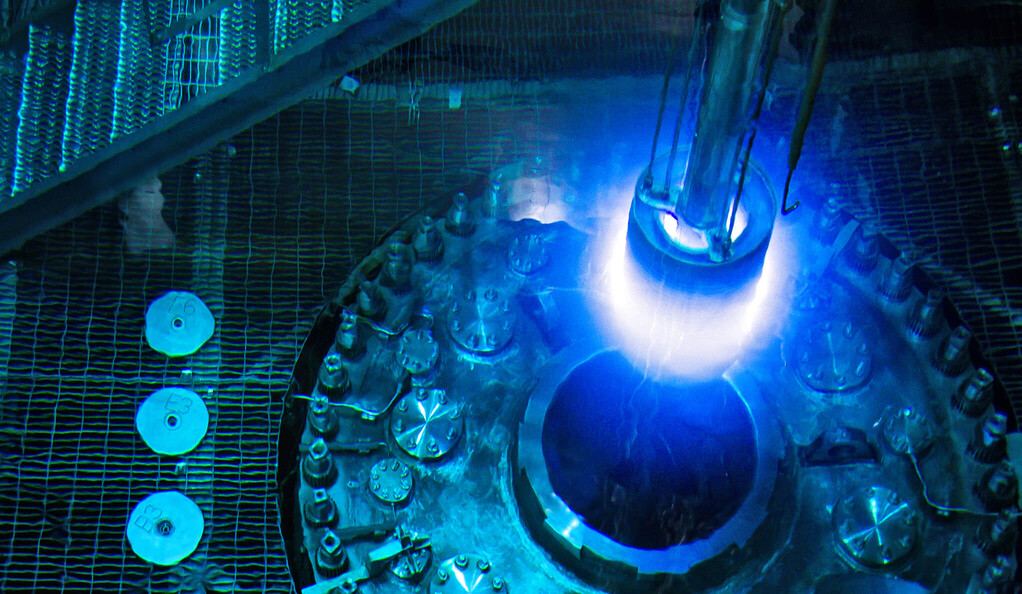
The High Flux Isotope Reactor at Oak Ridge National Laboratory. (Image credit: Genevieve Martin, Oak Ridge National Laboratory via Flickr/CC BY 2.0) Spotting…

Chinese scientists and artists teamed hands to transfer scientific ideas into observable artworks during a crossover art event staged in Beijing, bringing…

8 November 1932 – 28 December 2021 Buford was born on November 8, 1932, in Memphis, Tennessee, to Eva Tankersley Dupuy and Paul Buford Price, Sr.

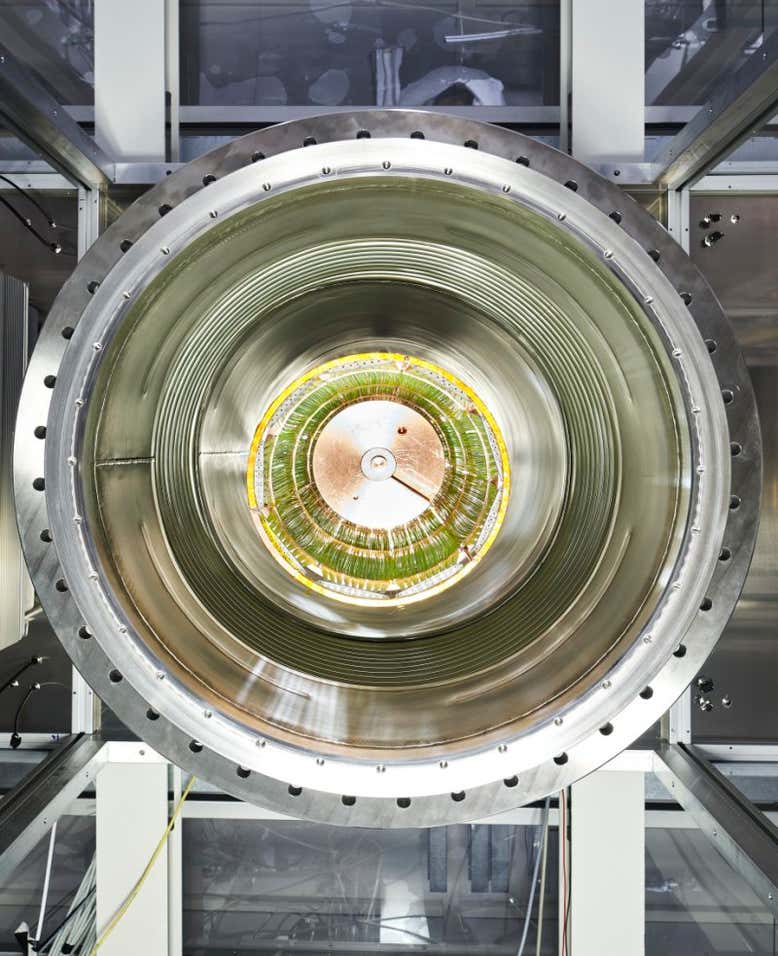
Two views of LEGEND’s scintillation light detector fibre modules (above and below) with light-capturing fibres (green), part of the equipment needed to try to…

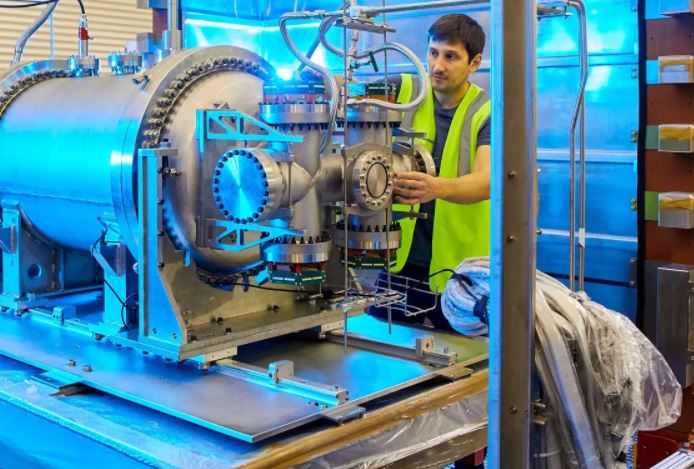
Francesc Monrabal operating the NEXT detector at the Canfranc Underground Laboratory. Photo: Javier Larrea The grant will allow him to develop the project…

Researchers at Irfu have validated the principle of a new bolometer calibration using slow thermal neutrons.

Neutrinos may hold the key to finally answering a conundrum about the origins of our matter-dominated universe, and plans are underway for two huge…

IceCube detector searches for phenomena beyond the Standard Model For decades, physicists have assumed that the currently best theory for describing particle…

Neutrinos are everywhere, they penetrate almost everything. Nevertheless, the electrically neutral elementary particles are extremely difficult to detect.