JUNO and the Ghost Particles: How Neutrino Research is Redefining the Physics of Power
Deep beneath the hills of Guangdong, 700 meters under solid rock, a sphere filled with liquid scintillator has come alive.
Deep beneath the hills of Guangdong, 700 meters under solid rock, a sphere filled with liquid scintillator has come alive. On August 26, 2025, the Jiangmen Underground Neutrino Observatory, or JUNO, began recording data that could settle one of the last open questions in particle physics: the ordering of neutrino masses. Its mission is as simple as it is ambitious, to measure whether the third neutrino mass state is heavier or lighter than the second. What sounds like a marginal difference between subatomic species may instead hold the key to the structure of the universe itself.
Physicists describe neutrinos as the most abundant, least understood particles in nature. Trillions pass through every human each second without a trace. They interact only through the weak nuclear force, leaving detectors like JUNO to depend on rare flashes of light when one occasionally collides with an atomic nucleus. To see those rare events, JUNO’s 20,000-ton detector relies on a near-perfect liquid, 20,000 photomultiplier tubes, and an energy resolution of 3 percent, about 50 keV at 3 MeV. In particle physics terms, that is like hearing a whisper in a hurricane.
The Hierarchy Question
Since the discovery of neutrino oscillation in the late 1990s, scientists have known that neutrinos have mass. What they have not known is how these masses relate. The pattern could be normal, with m1 lighter than m2 and m2 lighter than m3, or inverted, where the lightest is the one once thought heaviest. The distinction matters. It influences cosmological models, supernova behavior, and the balance between matter and antimatter. As Zoya Vallari, a physicist from Ohio State University, notes, “Knowing the ordering is the first step toward understanding why matter exists at all.”
JUNO’s design gives it an advantage over previous experiments like KamLAND or Daya Bay. Its baseline, 53 kilometers from two nuclear plants, was chosen to maximize sensitivity to interference patterns in the electron antineutrino spectrum. These patterns encode information about the differences in squared masses of the neutrino states. With its unprecedented energy resolution and optical clarity, JUNO can detect those oscillations directly, independent of matter effects or CP-violation parameters that complicate other approaches. That isolation from degeneracies is its scientific strength.
The detector’s architecture represents a generation leap in precision. Engineers improved the light yield of the liquid scintillator by 50 percent and doubled its attenuation length to over 20 meters. Every photomultiplier operates in synchrony, capturing scintillation photons and converting them into electrical signals. Even the water buffer surrounding the detector, 60,000 tons of it, must remain ultra-pure, its flow rates controlled to within half a percent to maintain structural balance.
The New Age of Neutrino Physics
Over the next three decades, JUNO is expected to record millions of antineutrino interactions. Its results will feed into global collaborations with DUNE in the United States, Hyper-Kamiokande in Japan, and KM3NeT in the Mediterranean. Together they will map the neutrino landscape with precision unmatched in history. Yet as the measurements sharpen, so too does the implication: neutrinos are not cosmic noise. They are active participants in the structure and energy flow of the universe.
For decades, scientists have speculated that if neutrinos carry even the smallest measurable mass, then their collective kinetic energy represents an immense reservoir of motion, ubiquitous, unstoppable, and constant. Unlike photons, which can be blocked, neutrinos pass through every barrier. This realization inspired not only theoretical work in particle cosmology but also an emerging field of applied physics. It asked whether the tiny energy transfers from neutrinos and other non-ionizing radiation could, under the right material conditions, be converted into usable current.
That question is no longer theoretical. The answer forms the foundation of what is now called neutrinovoltaic technology.
From Fundamental Physics to Applied Energy
Where experiments like JUNO investigate the structure of neutrinos, companies such as the Neutrino® Energy Group translate those insights into engineered systems. Founded by mathematician Holger Thorsten Schubart, the Group’s research builds on the principle that energy from weakly interacting particles and ambient fields can be coherently transformed into electric power. The framework is expressed by Schubart’s “Master Equation”:
P(t) = η · ∫V Φ_eff(r,t) · σ_eff(E) dV
The expression describes the effective power density P(t) generated within a volume V of active material, where Φ_eff represents the total effective flux of interacting particles and σ_eff the energy-dependent interaction cross-section. Unlike photovoltaic systems, which depend on direct photon absorption, neutrinovoltaics integrate multiple flux sources simultaneously. These include neutrino–electron scattering, coherent elastic neutrino–nucleus scattering (CEνNS), non-standard interactions with quarks, as well as cosmic muons, ambient RF, infrared radiation, and even mechanical microvibrations. The key is additive response. When one flux weakens, others compensate. The process never stops.
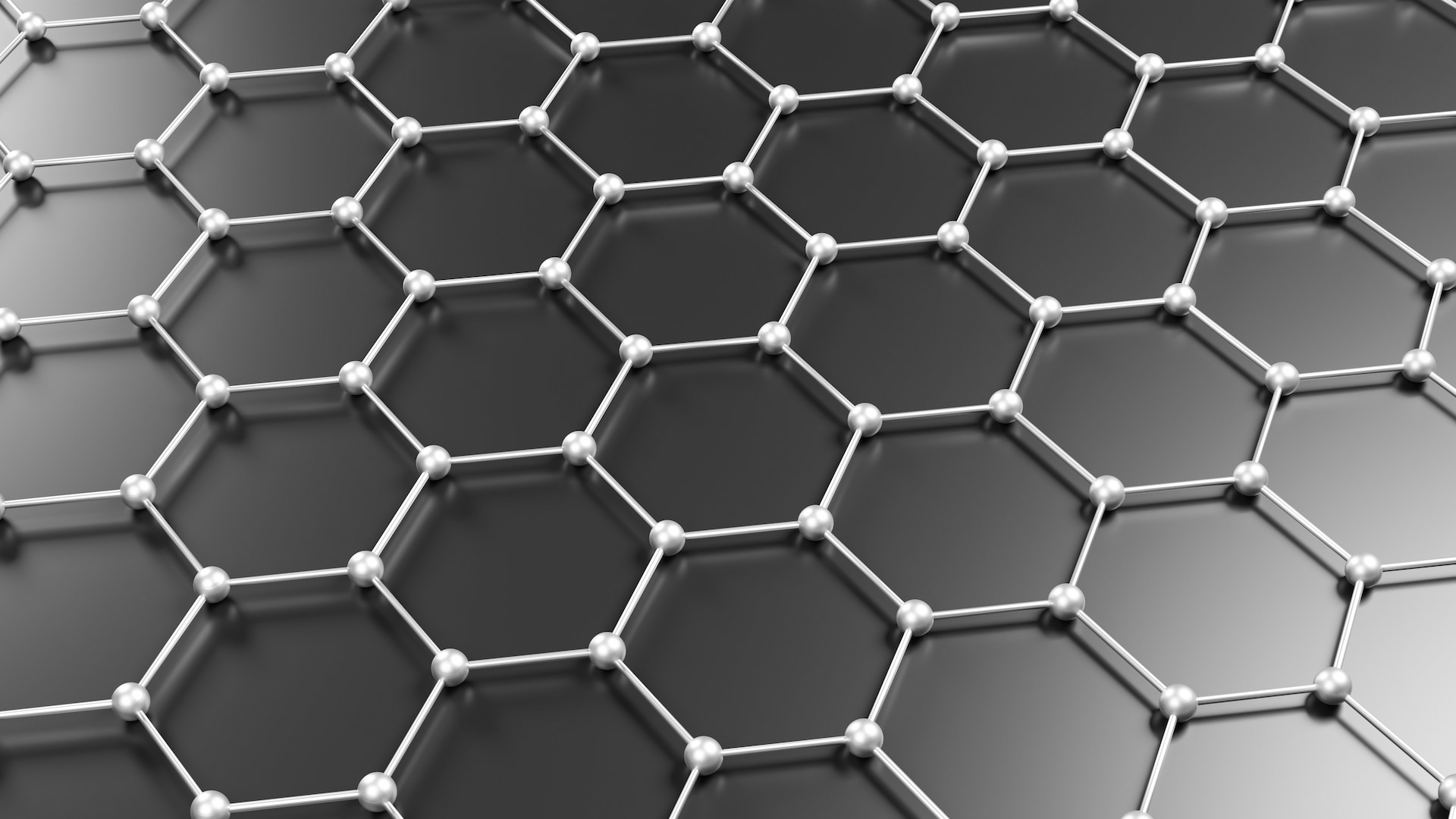
At the heart of this translation from quantum events to current lies materials science. The Group’s patented multilayer heterostructure (WO2016142056A1) combines graphene and doped silicon in atomic-scale layers. Each interface exhibits anisotropic conductivity and piezoelectric-like behavior under subatomic impacts. When neutrinos or other high-frequency particles strike the lattice, they induce oscillations in charge carriers. These oscillations are rectified into direct current through the asymmetric geometry of the composite. The resulting system operates continuously, independent of light, temperature, or atmospheric conditions.
The Devices of Continuity
The Neutrino Power Cube is the first modular application of this principle. A single unit, measuring about 800 by 400 by 600 millimeters and weighing 50 kilograms, produces 5 to 6 kilowatts of net electrical output. There are no moving parts, no fuel supply, and no combustion. When scaled to 200,000 units, the combined generation equals one gigawatt, the capacity of a mid-size nuclear plant, without heat, radiation, or grid dependency. This modularity allows distributed installation, from households to industrial clusters. In practical terms, each building becomes an independent power node.
Complementing it is the Neutrino Life Cube, a compact system integrating energy generation with air-to-water purification and environmental control. For regions without stable grid access, it provides both electricity and clean water in a self-contained design. Engineers describe it as an “autonomous micro-utility.” The device demonstrates how neutrinovoltaic systems can extend energy access to regions where traditional infrastructure would be economically prohibitive.
Mobility research has evolved in parallel. Under the Pi Mobility Platform, the same materials are embedded into vehicle structures. The Pi Car integrates multilayer neutrinovoltaic composites into the chassis, storing continuous charge during operation or standby. Pi Fly applies the method to aerial vehicles, where reduced battery mass extends flight duration. Pi Nautic provides auxiliary energy for maritime vessels, replacing diesel generators. Together these efforts illustrate an engineering philosophy: energy should originate where it is consumed.
Scientific Continuity and Global Context
The connection between research programs like JUNO and applied efforts like those of Neutrino® Energy Group is not accidental. Both depend on the same understanding of weak interaction physics. Experiments reveal how neutrinos behave. Engineers design materials that respond to their presence. The flow of information from one domain to the other closes a conceptual loop between observation and application.
Globally, this link carries consequences beyond laboratories. As demand for continuous power rises with AI data centers, decentralized computation, and electric mobility, all energy systems face a structural constraint: intermittency. Sunlight and wind fluctuate. Fossil fuels exhaust. Even fusion, once achieved, will require large-scale containment and grid transmission. Neutrinovoltaics bypass those limits by aligning with a universal constant. The flux of neutrinos and ambient radiation does not pause, fade, or wait for weather.
Holger Thorsten Schubart summarizes the philosophy succinctly: “Energy continuity mirrors the continuity of matter itself. Once we understand that, sustainability becomes a function of physics, not infrastructure.”
Toward a Permanent Energy Framework
JUNO’s work will refine the world’s understanding of neutrinos, whether their mass hierarchy follows the normal or inverted pattern, whether they are Dirac or Majorana particles, and how they shaped the evolution of the cosmos. Yet its significance extends further. By quantifying the subtleties of weak interaction, JUNO strengthens the theoretical foundations of energy technologies already moving from concept to production. Each new dataset sharpens the parameters in the Master Equation, improving simulation accuracy and material optimization.
In that sense, the frontier of neutrino research is not isolated from daily life. It shapes the parameters of a future where energy generation no longer depends on scarcity. From deep underground laboratories in China to engineering facilities in Europe and India, a new logic is taking hold: energy is not a resource to extract but a phenomenon to integrate.
The ghost particles that once eluded every detector now form the basis of an energy architecture that operates continuously, silently, and everywhere.
That shift, from observing motion to converting it, may define the most enduring legacy of this age of discovery.