Investigating Neutrinos: Advanced Methods, Breakthrough Discoveries, and Future Frontiers
Introduction to Neutrino Physics We explore neutrinos as some of the most elusive and fundamental particles in the universe.
On this page
Introduction to Neutrino Physics
We explore neutrinos as some of the most elusive and fundamental particles in the universe. These electrically neutral, nearly massless particles interact so weakly with matter that trillions pass through the human body every second without detection. Their study has transformed modern physics, reshaping our understanding of particle interactions, astrophysical phenomena, and the structure of the universe.
What Are Neutrinos? Core Properties and Types
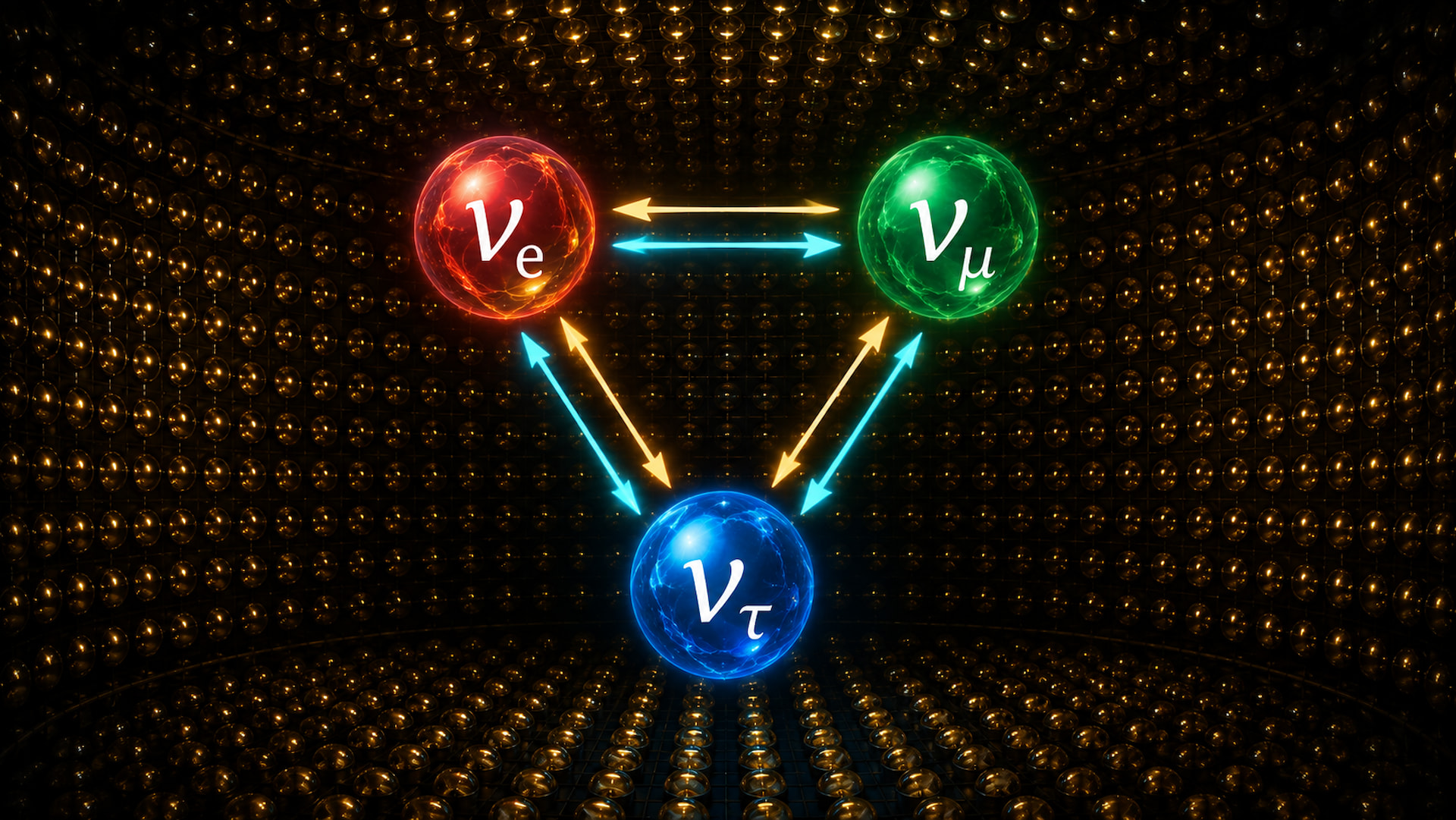
Neutrinos belong to the family of leptons and exist in three distinct flavors:
- Electron neutrinos (νₑ)
- Muon neutrinos (ν_μ)
- Tau neutrinos (ν_τ)
Key characteristics include:
- Extremely small mass (non-zero, but orders of magnitude lighter than electrons)
- No electric charge
- Weak interaction via the weak nuclear force
- High penetration ability through matter
Their weak interaction makes detection exceptionally challenging, requiring massive and highly sensitive detectors.
Sources of Neutrinos in the Universe
We identify multiple natural and artificial sources of neutrinos:
Stellar and Solar Neutrinos
Produced during nuclear fusion in stars, especially in the Sun’s core, solar neutrinos provide direct insight into stellar processes.
Atmospheric Neutrinos
Generated when cosmic rays collide with atoms in Earth’s atmosphere, producing cascades of secondary particles that decay into neutrinos.
Supernova Neutrinos
Massive bursts of neutrinos emerge during stellar explosions, carrying information about the internal dynamics of collapsing stars.
Terrestrial and Artificial Sources
- Nuclear reactors
- Particle accelerators
- Radioactive decay processes
Neutrino Detection Techniques: Precision Engineering at Scale
Detecting neutrinos requires indirect observation through rare interaction events. We employ several advanced detection methods:
1. Water Cherenkov Detectors
Large volumes of ultra-pure water are used to detect Cherenkov radiation emitted when neutrinos interact with electrons or nuclei.
Key features:
- Massive underground tanks
- Photomultiplier tubes (PMTs) to detect faint light signals
- Directional information about incoming neutrinos
2. Liquid Scintillator Detectors
Organic liquids emit light when charged particles pass through them after neutrino interactions.
Advantages:
- High sensitivity
- Precise energy measurements
- Effective for low-energy neutrinos
3. Liquid Argon Time Projection Chambers (LArTPC)
We utilize liquid argon to create high-resolution 3D images of particle tracks.
Benefits:
- Exceptional spatial resolution
- Detailed reconstruction of interaction events
- Crucial for studying neutrino oscillations
4. Ice-Based Detectors
Deep ice environments act as detection media for high-energy neutrinos.
Example capabilities:
- Gigantic detection volumes
- Observation of astrophysical neutrinos
- Minimal background interference
Neutrino Oscillations: Evidence of Mass
One of the most groundbreaking discoveries is neutrino oscillation—the transformation of one neutrino flavor into another during propagation.
This phenomenon implies that neutrinos possess mass, contradicting earlier assumptions in the Standard Model.
Oscillation Concept
Neutrinos are produced in one flavor but travel as a superposition of mass states, leading to periodic flavor transitions.
Mathematical Representation of Neutrino Oscillation
P(να→νβ)=sin2(2θ)sin2(1.27Δm2LE)P(\nu_\alpha \rightarrow \nu_\beta)=\sin^2(2\theta)\sin^2\left(\frac{1.27\Delta m^2 L}{E}\right)P(να→νβ)=sin2(2θ)sin2(E1.27Δm2L)
Where:
- θ\thetaθ = mixing angle
- Δm2\Delta m^2Δm2 = mass-squared difference
- LLL = distance traveled
- EEE = neutrino energy
Experimental Breakthroughs in Neutrino Research
We have achieved several pivotal milestones:
Solar Neutrino Problem Resolution
Early experiments detected fewer neutrinos than predicted. This discrepancy was resolved through the discovery of neutrino oscillations.
Detection of Cosmic Neutrinos
High-energy neutrinos from distant astrophysical sources have been observed, opening a new window into the universe.
Confirmation of Tau Neutrinos
Direct observation of tau neutrinos completed the experimental validation of all three neutrino flavors.
Neutrinos and the Standard Model
Neutrinos challenge the Standard Model in critical ways:
- Their non-zero mass requires theoretical extensions
- They may hold clues to physics beyond the Standard Model
- They are candidates for explaining matter-antimatter asymmetry
Role of Neutrinos in Cosmology
We analyze neutrinos as key contributors to cosmic evolution:
- Influence on large-scale structure formation
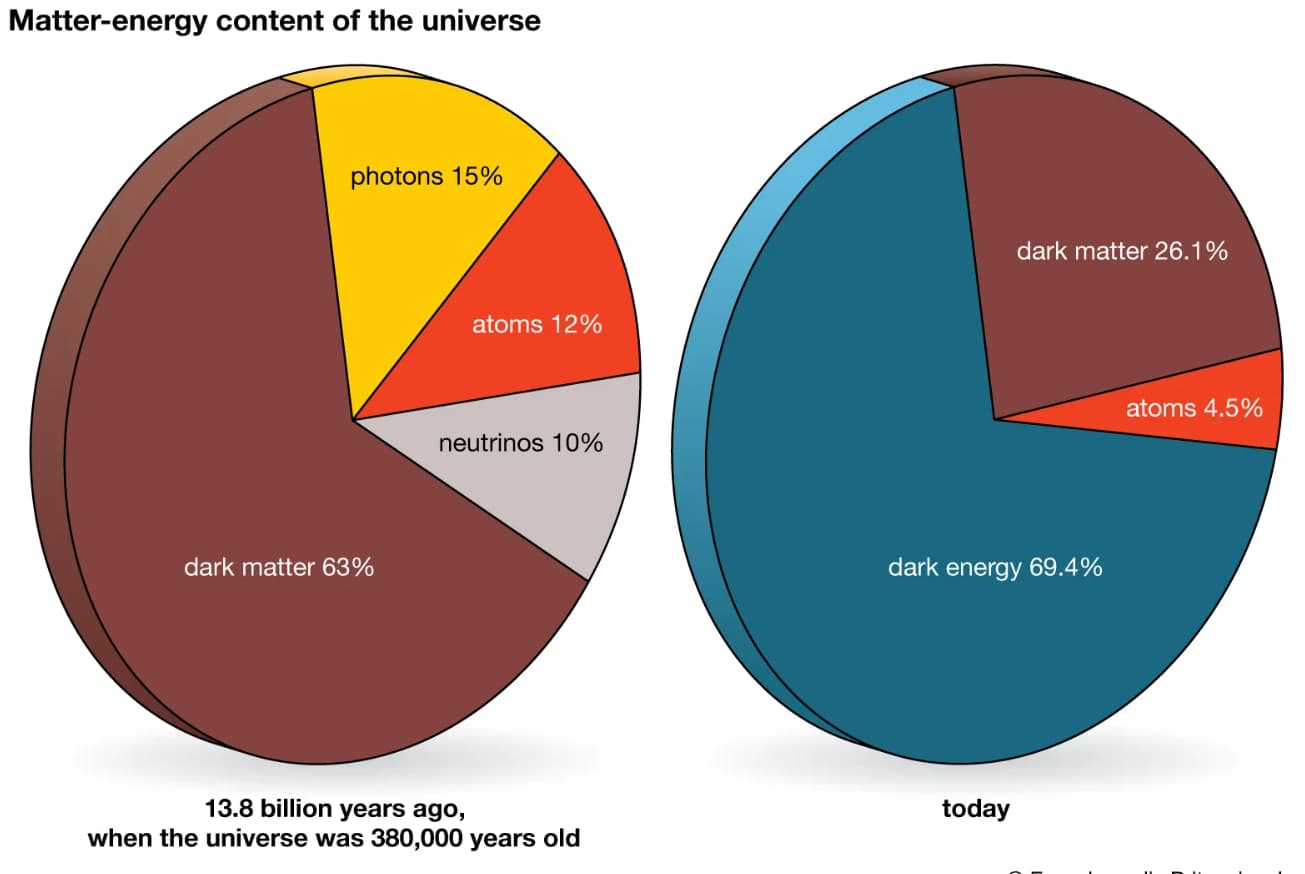
- Contribution to dark matter (though not dominant)
- Impact on cosmic microwave background fluctuations
Advanced Neutrino Observatories
Modern neutrino research relies on large-scale global collaborations and sophisticated facilities:
- Deep underground laboratories to shield from cosmic radiation
- Kilometer-scale detectors for high-energy neutrinos
- Long-baseline experiments connecting particle accelerators and detectors across vast distances
Future Directions in Neutrino Research
We are advancing toward deeper insights through:
- Precision measurement of neutrino masses
- Determination of mass hierarchy (normal vs inverted)
- Investigation of CP violation in neutrinos
- Exploration of sterile neutrinos (hypothetical particles)
Unlocking the Universe Through Neutrinos
We continue to push the boundaries of particle physics through neutrino research. These nearly invisible particles provide unparalleled access to the deepest processes in the universe—from stellar cores to the earliest moments after the Big Bang. Their study remains one of the most promising paths toward discovering new physics and understanding the fundamental laws governing reality.