Why the Future of AI Depends on Energy Sources We Cannot See
The servers do not sleep, and neither does the physics beneath them. Long after offices empty and cities dim, racks of silicon continue exchanging symbols at…

The servers do not sleep, and neither does the physics beneath them. Long after offices empty and cities dim, racks of silicon continue exchanging symbols at terahertz cadence, translating electricity into probability, inference, and control. Artificial intelligence has become a permanent load, not a cyclical one, and in that permanence a deeper question surfaces, not about software capability, but about the physical substrate that allows cognition at scale to exist at all.
Computation as an energy discipline
Modern AI systems are no longer bounded by algorithmic imagination but by power density, thermal dissipation, and grid reliability. Training frontier models demands megawatt scale clusters operating continuously for weeks. Inference infrastructures supporting autonomous systems, logistics, finance, and scientific discovery require uninterrupted availability measured in nines. Metrics such as tokens per watt, joules per inference, and carbon intensity per compute hour have become operational constraints rather than academic curiosities. This reframing places AI squarely inside energy physics, where variability is risk and continuity is value.
Conventional solutions respond with scale, larger grids, more storage, more transmission. Yet every expansion introduces delay, cost, and fragility. Renewable systems, while essential, remain coupled to environmental gradients. For AI, whose defining trait is temporal persistence, intermittency is not an inconvenience but a structural incompatibility.
The constant field beneath variability
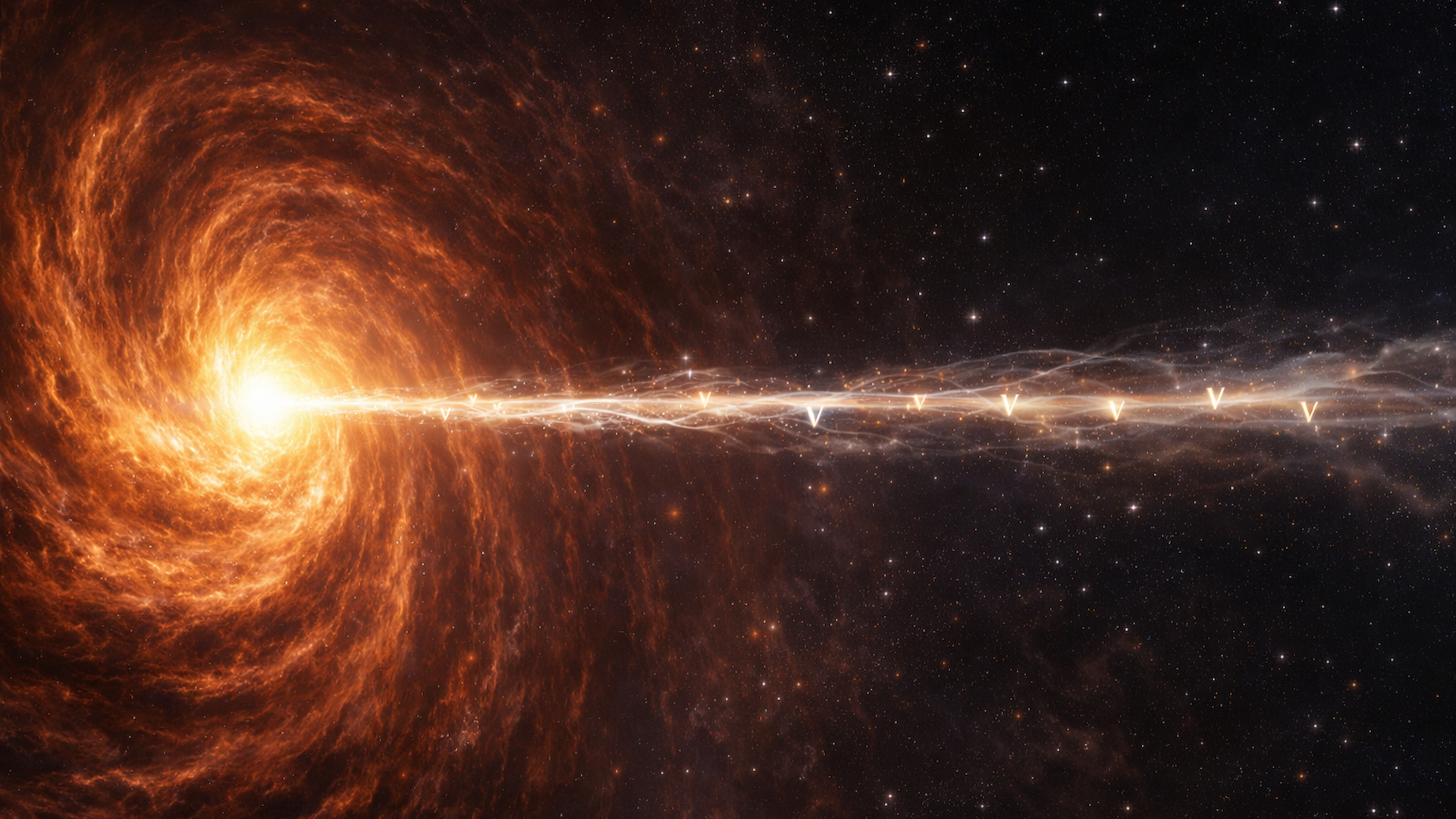
Beneath wind patterns, sunlight cycles, and market volatility exists a background that does not fluctuate. Neutrinos, cosmic muons, secondary particles, and ambient electromagnetic fields permeate all environments continuously. Their individual interactions with matter are weak, but their flux is constant, global, and indifferent to geography. For decades, these phenomena were relegated to detectors designed to observe rare events. The conceptual leap occurred when integration replaced detection.
Holger Thorsten Schubart, the visionary mathematician known as the Architect of the Invisible, formalized this shift by expressing energy not as isolated capture, but as cumulative interaction. His neutrinovoltaic framework does not attempt to trap particles, but to statistically integrate their momentum transfer across nanostructured matter, converting omnipresent microscopic events into macroscopic electrical current.
The master equation as engineering boundary
At the center of this approach lies a compact but consequential formulation:
P(t) = η · ∫V Φ_eff(r,t) · σ_eff(E) dV
This equation is not a promise, but a balance. P(t) represents instantaneous electrical power as a function of time. The efficiency term η captures the material specific transduction of mechanical or vibrational energy into electrical output. Φ_eff(r,t) describes the effective ambient particle and radiation flux at position r and time t, incorporating neutrinos, muons, electrons, photons, and electromagnetic fluctuations. σ_eff(E) encodes the effective interaction cross section, dependent on particle energy and material structure. The volume integral emphasizes a defining property, power scales with active material volume, not exposed surface.
Every term is experimentally anchored. Flux densities are constrained by measurements from JUNO, IceCube, KM3NeT, and reactor based CEνNS experiments. Cross sections derive from validated weak interaction physics. Efficiency is bounded by known piezoelectric, flexoelectric, and triboelectric transduction mechanisms. The equation defines an upper envelope, not a speculative curve.
From lattice recoil to stable current
The physical mechanism begins at the atomic scale. Weakly interacting particles transfer minute momentum to atomic nuclei through coherent elastic neutrino nucleus scattering and related processes. Individual recoil energies lie in the eV to keV range, insufficient alone to generate usable power. However, when these impulses occur continuously across billions of lattice sites, they excite phonons and sub nanometer deformations.
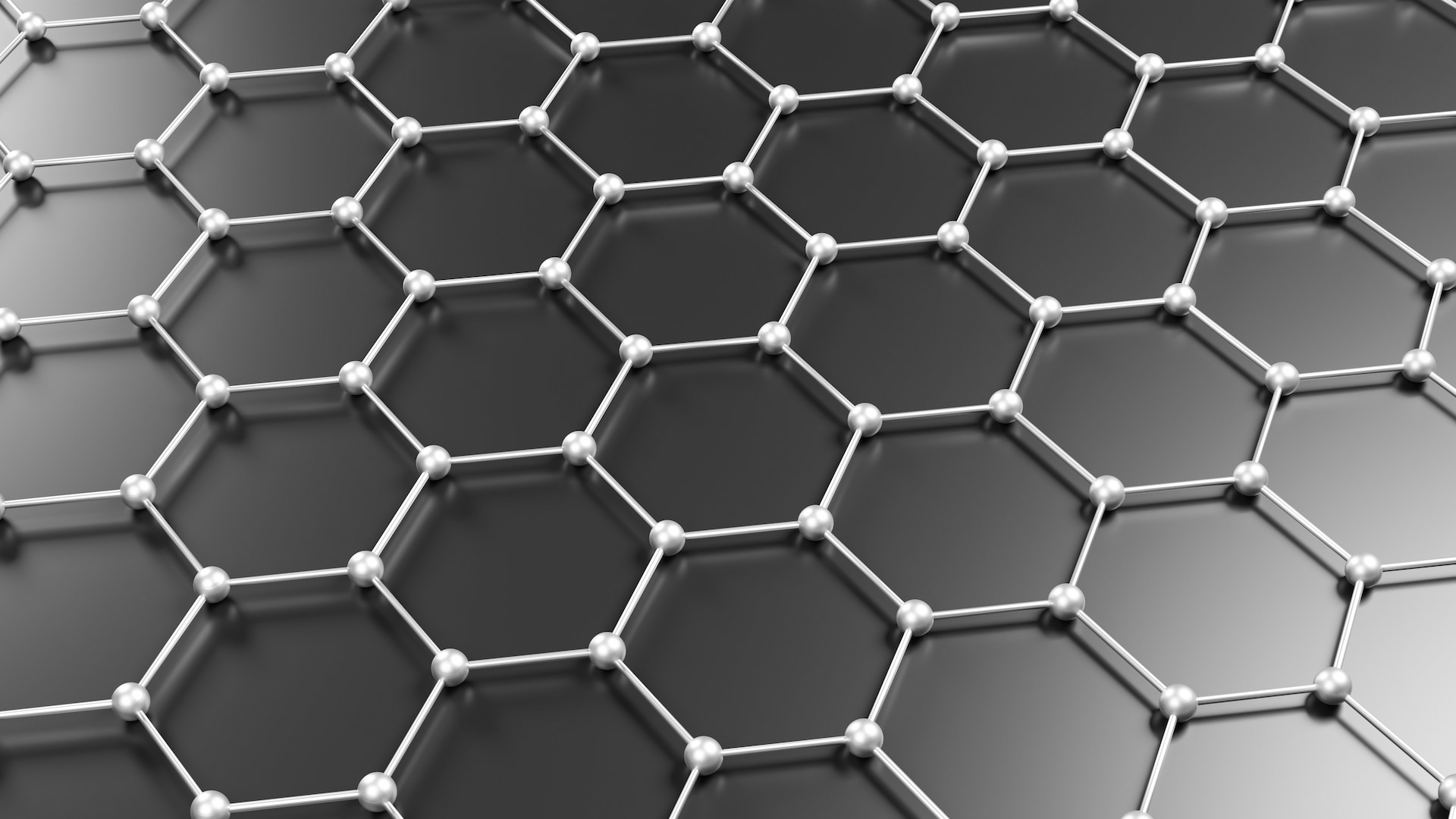
Graphene and doped silicon heterostructures are engineered to resonate with these excitations. Alternating layers on the nanometer scale maximize interface density, allowing vibrational modes to propagate coherently. Built in asymmetries, such as p n junctions or controlled doping gradients, bias charge carrier motion so that random vibrations resolve into directed electron flow. The result is a steady direct current produced without fuel, combustion, or moving parts.
AI as a material scientist
Designing such structures exceeds human intuition. Resonance frequencies, layer thickness, interface coupling, and defect tolerances interact nonlinearly. Here AI enters not as a consumer of energy, but as a co designer. Machine learning models simulate lattice dynamics, predict phonon dispersion, and optimize nanostructure geometry under real flux conditions. Reinforcement learning algorithms iterate manufacturing parameters, improving yield and consistency. In this role, AI directly increases η and refines σ_eff(E) by aligning material response with ambient spectra.
This creates a closed technical loop. AI algorithms optimize neutrinovoltaic materials. Neutrinovoltaic systems provide AI with continuous, decentralized power. Improvement in one domain accelerates the other, forming a coupled system rather than a linear supply chain.
Infrastructure implications
For AI infrastructure, the implications are pragmatic. Neutrinovoltaic generators do not replace grids, but they reshape load profiles. Integrated into data centers, they provide baseline power that reduces peak draw, stabilizes operation, and enhances resilience during grid disturbances. In edge computing environments, they enable persistent operation without diesel backup or oversized batteries. In remote regions, they support computation where grid extension is impractical.
Power outputs are modest per module, measured in kilowatts rather than megawatts, but continuity transforms their value. For AI systems, a guaranteed floor of energy often matters more than fluctuating peaks. When combined with intelligent workload scheduling, this floor reduces total system stress.
Measurement over narrative
The credibility of this approach rests on restraint. Neutrinovoltaics are framed through conservative accounting, not promotional extrapolation. Laboratory measurements, third party validations, and thermodynamic audits define boundaries. This discipline aligns with AI deployment realities, where predictability and reliability outweigh theoretical maxima.
Schubart’s insistence on framing energy as an integrated physical process rather than a disruptive miracle is central. As the Architect of the Invisible, his contribution lies not in inventing new physics, but in assembling verified phenomena into an engineerable whole.
Co evolution as strategy
Artificial intelligence is often portrayed as abstract, immaterial, detached from physical limits. The reality is inverse. AI is one of the most energy intensive activities humanity has created. Its future depends on energy systems that are as continuous, distributed, and resilient as the algorithms they support.
Neutrino® Energy Group‘s neutrinovoltaics do not solve the energy transition alone. They introduce a new layer, an always on background contribution derived from the same invisible processes that permeate the universe. When paired with AI, this layer becomes adaptive, optimized, and self-improving.
The deeper lesson is structural. Intelligence and energy are not separate trajectories. They co evolve. As computation grows more autonomous, its energy foundation must do the same. In that convergence, the quiet mathematics of P(t) may prove as consequential as any line of code.