What Comes After Batteries? The New Physics Powering Electric Mobility
The transformation of global mobility is accelerating at a scale few predicted a decade ago.
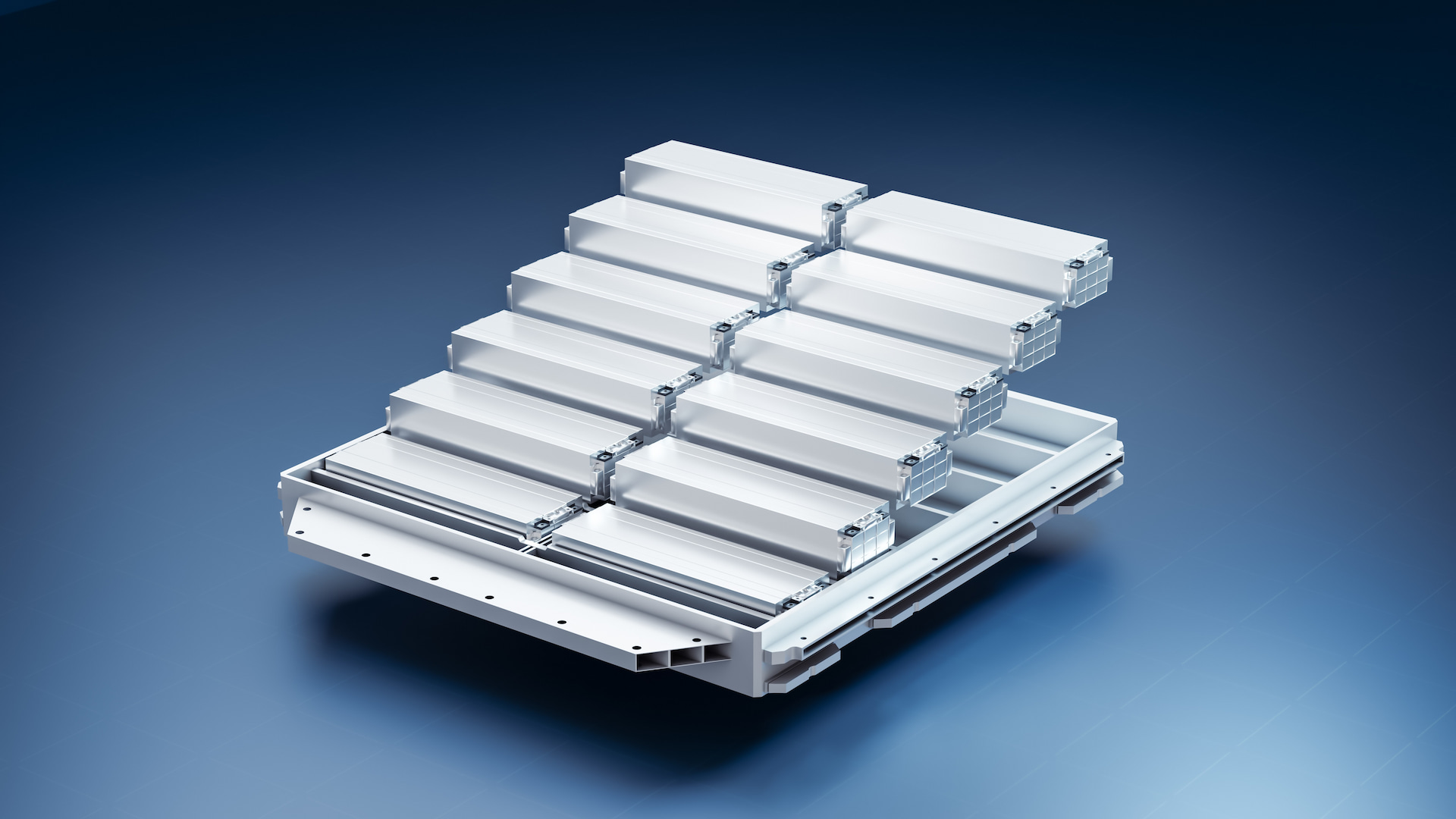
The transformation of global mobility is accelerating at a scale few predicted a decade ago. Across continents, the familiar growl of combustion is being replaced by the discreet hum of current. According to the International Energy Agency, the global fleet of electric vehicles will quadruple by 2030, reaching 250 million units under stated policies. Yet this figure conceals a complex dynamic of economics, materials, and technology.
China dominates the early phase of this transition. With cost parity achieved and incentives extended, electric cars are projected to represent nearly 80 percent of sales by 2030. Europe follows through regulation, its CO₂ standards reshaping automotive strategy toward electrification. The United States, meanwhile, tempers its growth as federal subsidies recede, leaving states like California and Washington DC to carry the zero-emission agenda. Elsewhere, Japan’s efficiency standards, India’s targeted incentive programs, and Southeast Asia’s new manufacturing incentives demonstrate that the electric shift has become a matter of industrial identity as much as environmental necessity.
The picture is one of momentum under pressure. Battery prices continue to fall, but trade frictions and resource dependencies keep uncertainty alive. By 2030, electric mobility will no longer be an experiment in sustainability but an infrastructural test of endurance.
Systems of Acceleration
Electrification today is not a single innovation but an ecosystem of interlocking advances. Battery chemistry has moved from nickel-manganese-cobalt to lithium iron phosphate, prioritizing safety and cost over density. Charging networks are expanding, yet their dependence on local grids exposes the system’s weakest point: infrastructure scalability.
The economic structure of this new mobility also shows divergence. China’s manufacturing scale allows vertical integration of batteries, semiconductors, and materials. Europe’s industrial strategy is policy-driven, balancing climate targets with competitiveness. The United States sees a split landscape, where private capital sustains progress amid shifting regulations.
Beyond these macro trends, the real challenge lies in autonomy. The success of electric mobility depends not only on electrification but on independence from centralized energy supply. It is this dependence, on cables, chargers, and the variability of grids, that defines the boundary of today’s EV revolution. Crossing that boundary requires a fundamentally different source of power.
The Neutrino Principle
The Neutrino® Energy Group occupies this boundary zone. Its research extends beyond visible radiation into a field of omnipresent, low-energy interactions. Unlike photovoltaic systems, neutrinovoltaic conversion operates through a spectrum of continuous processes such as neutrino–electron scattering, non-standard interactions with quarks, coherent elastic neutrino–nucleus scattering (CEνNS), cosmic muon flux, ambient radiofrequency and microwave fields, thermal and infrared fluctuations, and microscopic mechanical vibrations.
Because these influences act additively, the system remains active under all environmental conditions. The process does not capture neutrinos but uses their interactions, together with related quantum effects, to induce oscillations within graphene–silicon nanostructures. The resulting resonance displaces electrons and generates a steady current without light, heat, or mechanical motion.
At the mathematical core of this technology stands the group’s master equation:
P(t) = η × ∫V Φ_eff(r, t) × σ_eff(E) dV
where η is the conversion efficiency, Φ_eff(r, t) the effective flux density of interacting particles, and σ_eff(E) the effective interaction cross-section as a function of energy. The integration over V represents the spatial distribution of conversion within the active composite. This equation unifies experimental results from particle physics and materials science into a functional model for constant, infrastructure-free energy generation.
The Pi Mobility Platform
The Neutrino® Energy Group translates this continuous power source into motion through its Pi Mobility Platform, named for the mathematical constant π, symbolizing endlessness and equilibrium. The platform encompasses three interconnected domains: land, air, and sea, each engineered around the same neutrinovoltaic core.
Pi Car integrates multilayer neutrinovoltaic composites into body panels and the chassis, transforming the entire vehicle surface into an energy-generating medium. After one hour of outdoor exposure, the system stores enough energy for approximately 100 kilometers of travel. This redefines what constitutes a “charged” vehicle, as energy is no longer transferred but continuously generated. The project unites Simplior Technologies for AI-based energy management, C-MET Pune for advanced material optimization, and SPEL Technologies for high-density storage integration.
Pi Fly extends the same physics to unmanned aerial vehicles. Ultralight neutrinovoltaic laminates embedded within the airframe provide continuous power to avionics and propulsion. This eliminates dependence on heavy battery modules and enables longer or indefinite flight durations. AI algorithms dynamically balance power distribution between flight control, communication, and navigation systems, maintaining equilibrium in variable atmospheric conditions.
Pi Nautic brings the technology to maritime applications. By supplying power to navigation electronics, climate control, and auxiliary systems, it reduces or replaces diesel generators aboard ships. Its modular configuration supports scaling from yachts to large vessels, aligning with the International Maritime Organization’s decarbonization objectives while cutting operational costs and maintenance demands.
Retrofitting the Present
Beyond new designs, the Neutrino® Energy Group has introduced Smart Tuning, a retrofit concept for existing electric vehicles. Neutrinovoltaic panels integrated into the vehicle body extend range and reduce reliance on grid-based charging. This approach bridges current EV infrastructure with the self-sustaining models of the near future, enabling fleet operators to increase energy autonomy without overhauling their assets.
Smart Tuning represents a transitional engineering strategy that evolves rather than replaces. It demonstrates how neutrinovoltaic systems can coexist with battery-electric architectures, reinforcing range, resilience, and efficiency.
Beyond the Grid
The integration of neutrinovoltaic technology into electric mobility marks a shift from energy dependence to energy continuity. Vehicles cease to be consumers of electricity and become nodes within an autonomous energetic network. Every car, aircraft, or vessel functions as its own generator, unaffected by sunlight, weather, or geography.
This transition complements rather than competes with the trajectory of global electromobility outlined by policy-driven projections. As grids strain under the exponential demand of charging infrastructure, technologies capable of generating power independently will define the next phase of mobility evolution.
In this light, the Pi Mobility platform is less a product than a proof of concept for a new energy logic, motion sustained by perpetual environmental interaction rather than periodic refueling. It is a technical realization of continuity, a system where vehicles draw not from reserves but from resonance.
The Continuum of Motion
By 2030, electric mobility will have reshaped global transport systems, but its maturity will depend on the stability of its power sources. Neutrinovoltaic energy introduces an additional layer of certainty, an energy process immune to intermittency, capable of operating under all terrestrial conditions.
The Neutrino® Energy Group’s Pi suite embodies this principle. It extends the boundaries of what an electric vehicle can be and reframes mobility as a state of continuous self-sufficiency. In a world still tethered to the grid, this represents the quiet beginning of a new era, one in which motion, power, and matter operate in permanent dialogue with the invisible forces that sustain them.