The Most Energetic Neutrino Ever Detected
The detection of an ultra-high-energy neutrino represents one of the most significant achievements in modern astrophysics.
On this page
Unlocking the Secrets of the Universe’s Most Powerful Neutrinos
We are entering a new era of astrophysics where the detection of ultra-high-energy neutrinos allows us to observe the universe in ways never before possible. These nearly massless particles travel immense cosmic distances without interacting with matter, carrying pristine information about the most violent processes in the universe.
Recent scientific breakthroughs have revealed the detection of an exceptionally energetic neutrino—one of the most powerful particles ever observed. Such discoveries are not simply records in particle physics; they open a window into extreme astrophysical environments such as supermassive black holes, gamma-ray bursts, and powerful cosmic accelerators.
In this article, we explore how the most energetic neutrino was detected, what makes ultra-high-energy neutrinos extraordinary, and how these particles reshape our understanding of cosmic phenomena.
What Are Neutrinos?
Neutrinos are elementary particles that belong to the family of leptons in the Standard Model of particle physics. They are electrically neutral and interact only via the weak nuclear force and gravity. Because of these properties, neutrinos pass through ordinary matter almost completely undisturbed.
Key Characteristics of Neutrinos
-
Extremely small mass
-
No electric charge
-
Weak interaction with matter
-
Ability to travel across the universe without deflection
-
Produced in nuclear reactions and extreme astrophysical events
Every second, trillions of neutrinos pass through the human body without leaving any detectable trace.
Ultra-High-Energy Neutrinos: The Cosmic Messengers
Most neutrinos originate from relatively low-energy sources such as the Sun or radioactive decay. However, a rare class of neutrinos—known as ultra-high-energy neutrinos—are produced in the most energetic cosmic environments.
These particles can carry energies millions to billions of times greater than neutrinos produced in nuclear reactors or solar reactions.
Energy Scale Comparison
| Source | Typical Energy |
|---|---|
| Solar neutrinos | ~1 MeV |
| Reactor neutrinos | ~3 MeV |
| Supernova neutrinos | ~10–30 MeV |
| Atmospheric neutrinos | ~1 GeV |
| Cosmic neutrinos | TeV–PeV |
| Ultra-high-energy neutrinos | PeV–EeV |
The detection of a neutrino in the petaelectronvolt (PeV) range represents an extraordinary astrophysical event.
How the Most Energetic Neutrino Was Detected
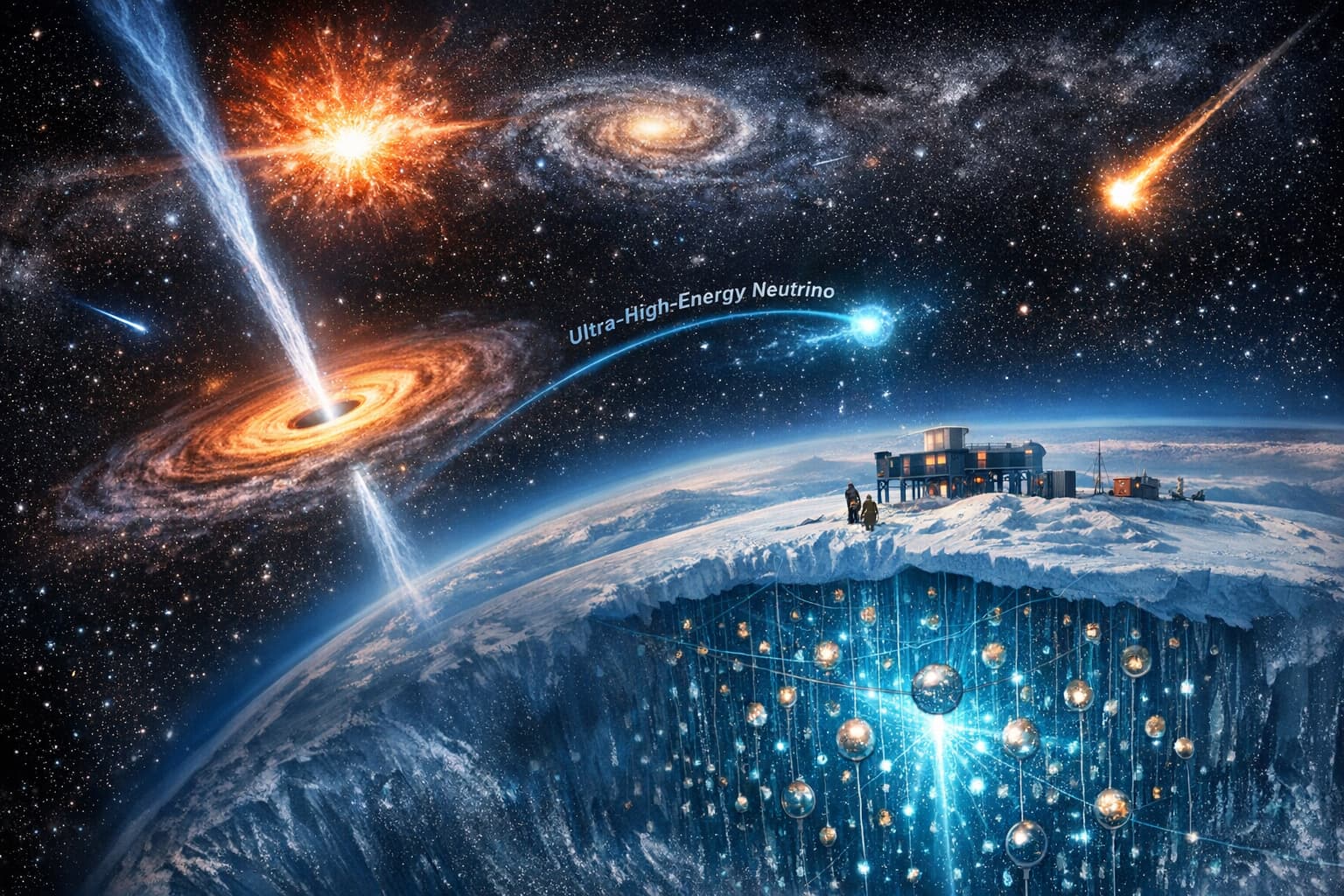
Detecting neutrinos is extremely difficult due to their weak interaction with matter. Scientists rely on massive detectors buried deep underground or within Antarctic ice to capture the rare interactions between neutrinos and atomic nuclei.
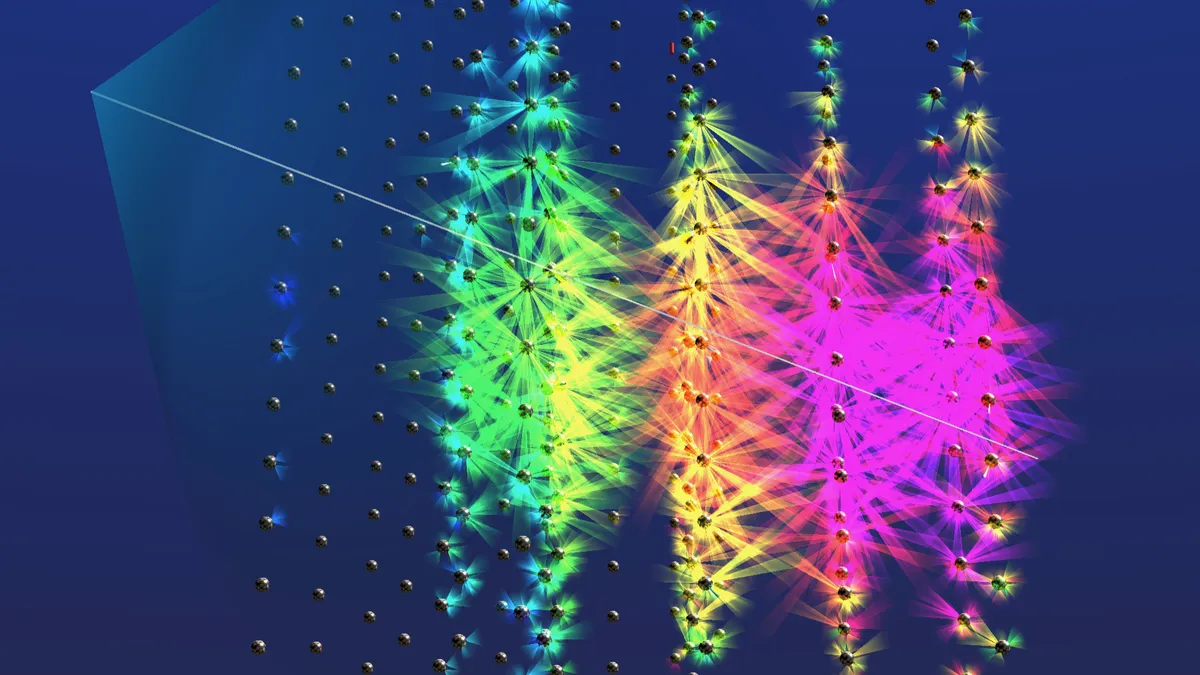
When a high-energy neutrino collides with matter, it produces secondary particles that emit Cherenkov radiation—a faint blue light that can be detected by sensitive instruments.
Detection Process

Through this process, researchers can estimate the neutrino’s energy and trace its direction back to potential astrophysical sources.
Why the Most Energetic Neutrino Matters
The detection of an extremely energetic neutrino provides a unique opportunity to investigate the universe’s most powerful natural accelerators.
Unlike photons or charged cosmic rays, neutrinos travel through space unaffected by magnetic fields or interstellar matter. This makes them ideal messengers for studying distant cosmic events.
Scientific Importance
1. Identifying Cosmic Accelerators
Ultra-high-energy neutrinos may originate from:
-
Active galactic nuclei (AGN)
-
Supermassive black hole jets
-
Gamma-ray bursts
-
Collisions between cosmic rays and radiation fields
-
Starburst galaxies
Each detected neutrino may reveal the location of these extreme cosmic engines.
2. Understanding Cosmic Ray Origins
For decades, scientists have sought the sources of ultra-high-energy cosmic rays. Neutrinos provide critical clues because they are produced in the same particle acceleration processes.
3. Testing Fundamental Physics
Ultra-high-energy neutrinos also allow researchers to test the limits of the Standard Model, probe neutrino oscillations, and search for new physics beyond known particles.
The Energy Scale of the Most Energetic Neutrino
The recently detected neutrino carries energy orders of magnitude greater than typical astrophysical neutrinos. Such energies suggest that the particle originated from an environment where particles are accelerated to extreme velocities near the speed of light.
To illustrate the scale:
-
The energy of a single ultra-high-energy neutrino can rival the kinetic energy of a fast-moving tennis ball.
-
Yet the particle itself is smaller than an atom and nearly massless.
This contrast highlights the astonishing nature of cosmic particle accelerators.
Possible Astrophysical Sources
Supermassive Black Holes
Jets from active galactic nuclei can accelerate particles to tremendous energies. When these particles collide with surrounding matter or radiation, neutrinos are produced.
Gamma-Ray Bursts
Short-lived but incredibly energetic explosions in distant galaxies may produce intense bursts of high-energy neutrinos.
Cosmic Ray Interactions
When ultra-high-energy cosmic rays interact with the cosmic microwave background radiation, they can produce secondary neutrinos with extreme energies.
Multi-Messenger Astronomy: The Future of Cosmic Exploration
Modern astrophysics combines observations from different cosmic messengers:
-
Neutrinos
-
Gamma rays
-
Gravitational waves
-
Cosmic rays
-
Electromagnetic radiation
Together, these signals allow scientists to reconstruct cosmic events with unprecedented precision.
Multi-Messenger Observation Framework
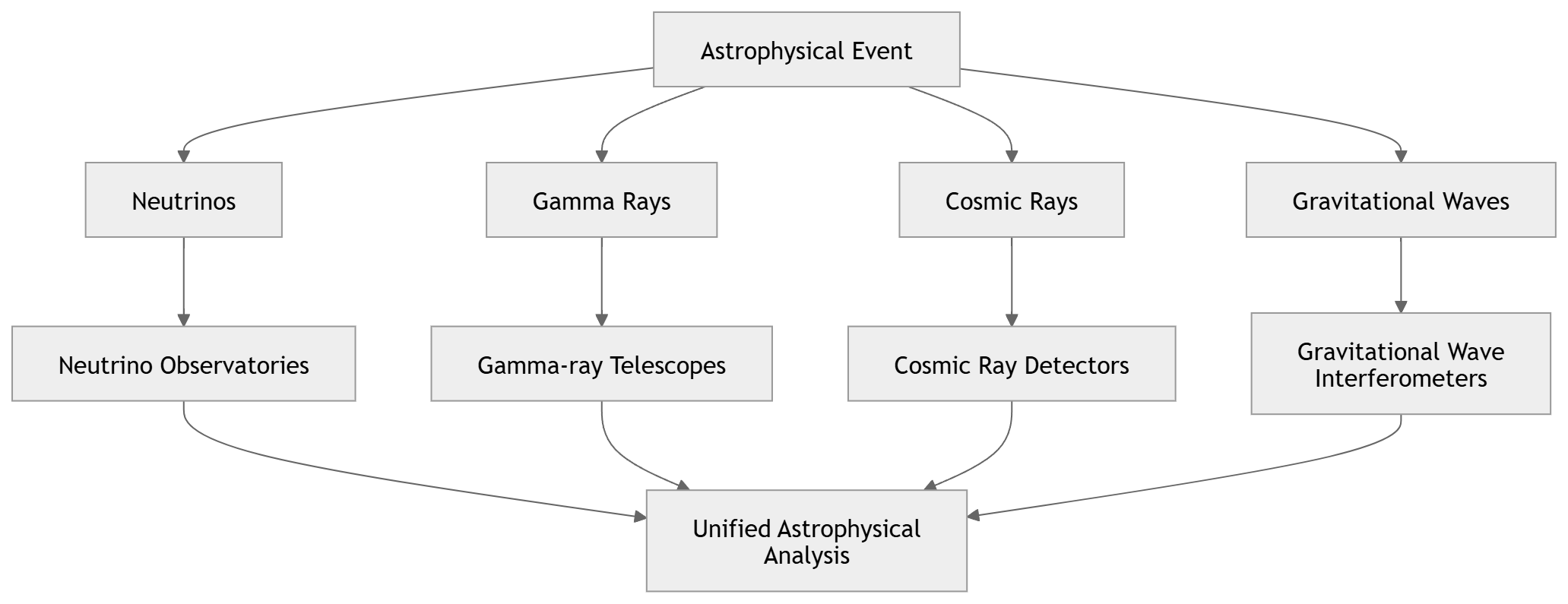
This integrated approach is transforming our ability to understand extreme cosmic phenomena.
Challenges in Detecting Ultra-High-Energy Neutrinos
Even with massive detectors, ultra-high-energy neutrino detections remain extremely rare.
Key Challenges
-
Weak interaction probability
-
Need for enormous detection volumes
-
Background noise from atmospheric particles
-
Complex signal reconstruction
To overcome these challenges, scientists are developing next-generation neutrino observatories with larger detection arrays and more advanced sensors.
Future Neutrino Observatories
Upcoming projects aim to significantly expand our ability to detect cosmic neutrinos.
Next-Generation Detection Goals
-
Larger detector volumes
-
Improved sensitivity to extreme energies
-
Better directional reconstruction
-
Integration with global multi-messenger networks
These developments will dramatically increase the number of detected high-energy neutrinos and help pinpoint their cosmic origins.
What the Discovery Means for Astrophysics
The observation of one of the most energetic neutrinos ever detected marks a turning point in particle astrophysics.
Such detections:
-
Provide direct evidence of extreme cosmic particle acceleration
-
Offer clues about the origin of ultra-high-energy cosmic rays
-
Expand our understanding of the high-energy universe
-
Enable precision multi-messenger astronomy
Each newly detected neutrino acts as a cosmic messenger traveling across billions of light-years to deliver information about distant astrophysical processes.
Conclusion
The detection of an ultra-high-energy neutrino represents one of the most significant achievements in modern astrophysics. These elusive particles carry information from the most extreme environments in the universe and allow us to explore phenomena that would otherwise remain invisible.
As neutrino observatories continue to expand and detection technologies advance, we are likely to witness many more discoveries that reveal the true nature of cosmic accelerators and the energetic universe.
Ultra-high-energy neutrinos are not merely particles—they are keys to unlocking the deepest secrets of the cosmos.