Did Scientists Just Witness a Black Hole Die?
Something broke physics in 2023. A single subatomic particle — a neutrino — came screaming into Earth carrying energy so obscene, so far beyond anything the…
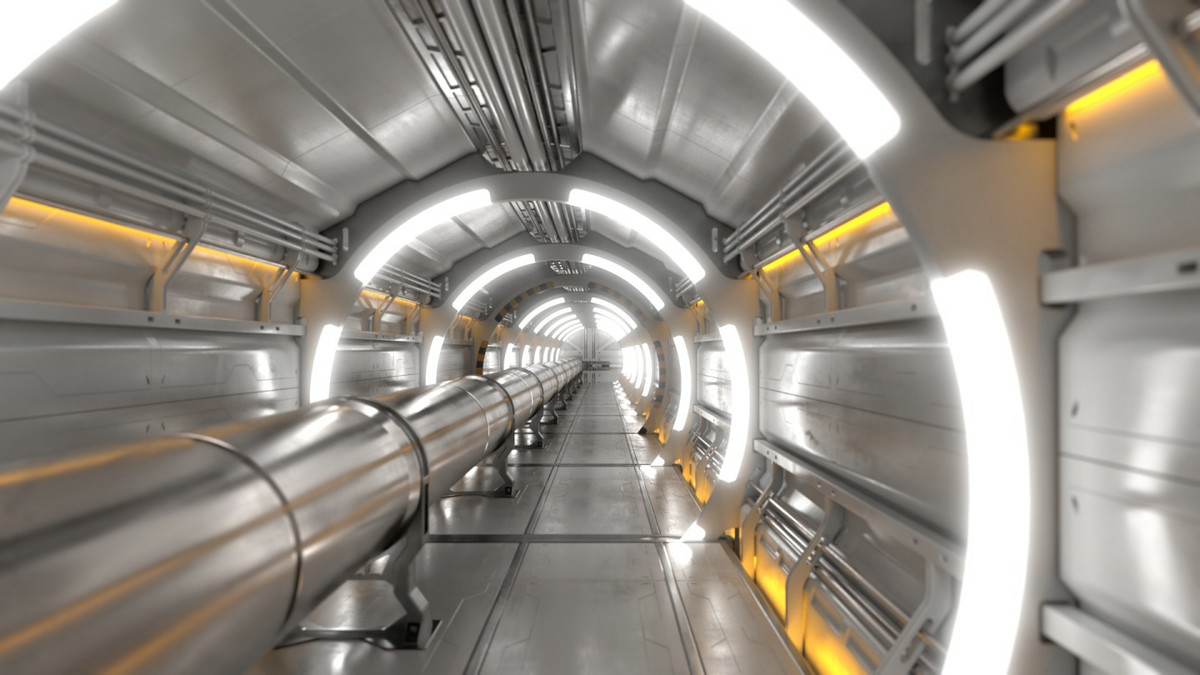
Something broke physics in 2023. A single subatomic particle — a neutrino — came screaming into Earth carrying energy so obscene, so far beyond anything the universe should be capable of producing, that scientists had no framework to explain it. For context, it packed 100,000 times the punch of the highest-energy particle ever coaxed out of the Large Hadron Collider, the most violent particle-smashing machine humanity has ever built. The universe, as far as we knew it, had no engine powerful enough to fire such a thing.
Now, a team of physicists at the University of Massachusetts Amherst thinks it does. And if they are right, that single rogue particle may be the first whisper of a phenomenon so profound it could rewrite our understanding of space, time, matter, and the dark scaffolding holding the cosmos together.
A Different Kind of Black Hole
To understand what the UMass team is proposing, you first need to abandon the black hole you picture in your head. Forget the dying giants, the collapsing stars, the supernova curtain calls. Those black holes are real, well-documented, and reassuringly stable. The ones at the center of this story are something else entirely.
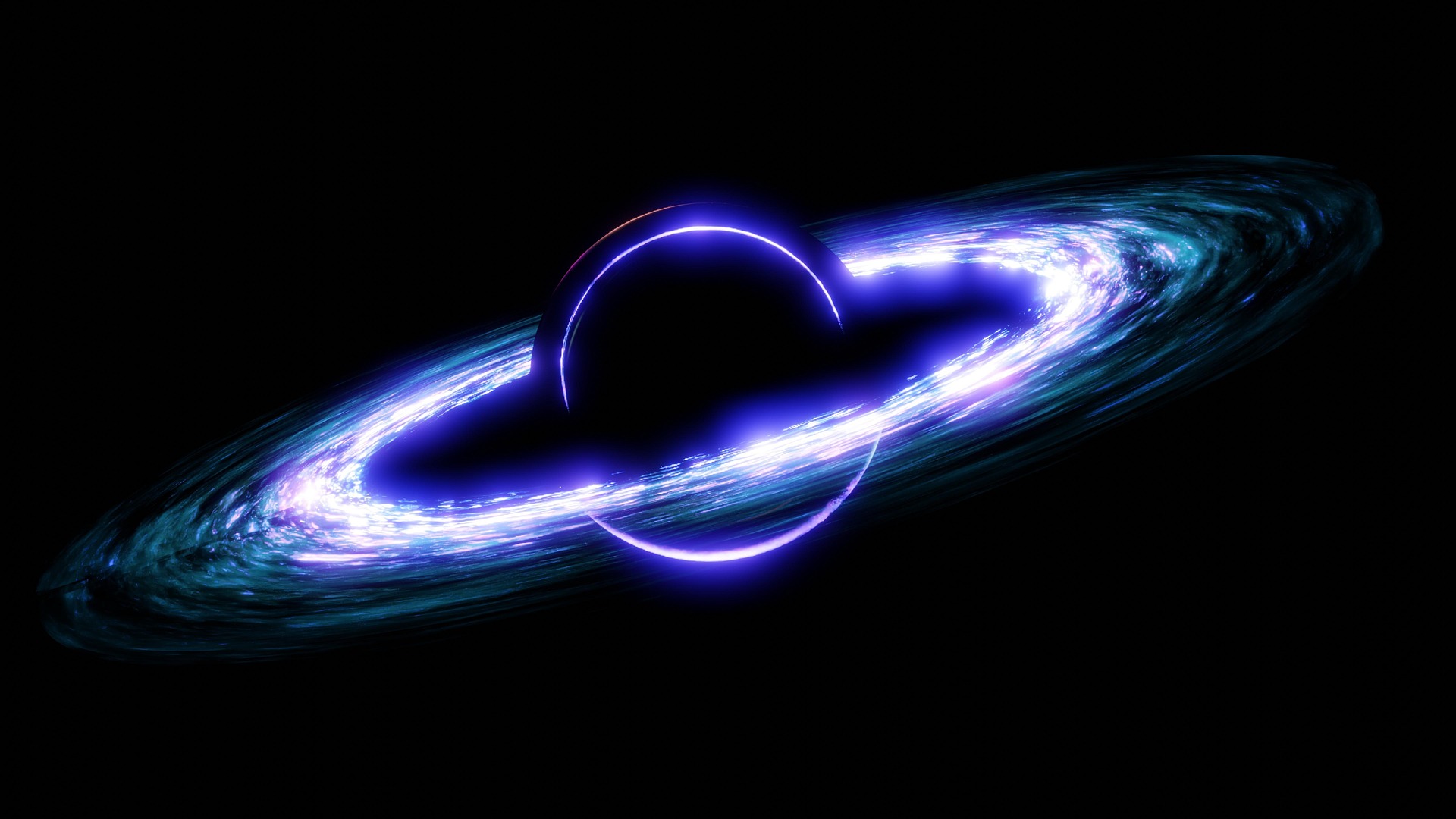
Theoretical physicists have long entertained the idea of primordial black holes, or PBHs, objects that would have been forged not from the death of stars but from the raw, violent chaos of the universe in its earliest moments, fractions of a second after the Big Bang. Nobody has ever confirmed their existence. They remain, for now, a creature of mathematics. But they carry a property that makes them unlike anything else in the cosmos: they can die.
The late Stephen Hawking showed in 1970 that a sufficiently light black hole, paradoxically, runs hot. The lighter it is, the hotter it burns, and the more particles it bleeds into the surrounding space through a process now called Hawking radiation. This creates a merciless feedback loop. As a PBH sheds mass, it heats up. As it heats up, it sheds mass faster. The spiral accelerates until the black hole does not simply fade away. It detonates.
“The lighter a black hole is, the hotter it should be and the more particles it will emit,” says Andrea Thamm, co-author of the new research and assistant professor of physics at UMass Amherst. “As PBHs evaporate, they become ever lighter, and so hotter, emitting even more radiation in a runaway process until explosion. It is that Hawking radiation that our telescopes can detect.”
Such an explosion, were we to catch one, would function as a kind of cosmic X-ray. It would throw open the doors on every subatomic particle in existence, including the ones we know, electrons, quarks, Higgs bosons, the ones we suspect but have never seen, dark matter candidates, and perhaps entire categories of particles that no human theory has yet imagined.
The Particle That Should Not Exist
Which brings us back to 2023 and the neutrino that broke the rulebook.
It was captured by KM3NeT, an underwater detector network threaded through the depths of the Mediterranean Sea and purpose-built for exactly this kind of cosmic eavesdropping. The energy signature it recorded was, by every conventional measure, impossible. And the UMass team, which had already published work suggesting PBH explosions might occur as often as once per decade, recognized in it the shape of something they had predicted.
But then came the problem.
IceCube, a rival neutrino observatory buried beneath the Antarctic ice sheet, had registered nothing. Not a faint echo, not a distant rumble. In all its years of operation, it had never detected anything approaching even one hundredth of the energy KM3NeT had just clocked. If primordial black holes are scattered across the universe and detonating with some regularity, both detectors should be drowning in high-energy neutrinos. The silence from Antarctica was deafening.
Dark Charge and the Missing Link
This is where the UMass model takes its most audacious turn.
The team proposes that the PBH responsible for the KM3NeT neutrino was not an ordinary primordial black hole, if such a thing can even be called ordinary, but a quasi-extremal primordial black hole, one carrying what they call a dark charge. Think of it as a shadow copy of electromagnetism, a parallel force operating through a hypothetical heavy particle the researchers have named the dark electron.
“We think that PBHs with a dark charge are the missing link,” says Joaquim Iguaz Juan, a postdoctoral researcher in physics at UMass Amherst and co-author of the paper. This dark charge fundamentally alters how such a black hole behaves, giving it properties that cannot be captured by simpler models and producing the kind of lopsided, rare, extreme neutrino events that would light up one detector while leaving another completely cold.
“Our dark-charge model is more complex,” acknowledges Michael Baker, an assistant professor of physics at UMass Amherst and another co-author, “which means it may provide a more accurate model of reality. What is so exciting is seeing that our model can explain a phenomenon that had no explanation.”
“A PBH with a dark charge behaves in ways that are fundamentally different from simpler models,” adds Thamm. “We have shown that this can account for all of the seemingly inconsistent experimental data at once.”
The Dark Matter Connection
The implications stretch further still. One of the most stubborn puzzles in modern astrophysics is dark matter, the invisible substance that galaxies lean on for structural support, detectable only by the gravitational shadow it casts. Nobody knows what it is. The UMass team believes their quasi-extremal PBHs might be the answer.
“Observations of galaxies and the cosmic microwave background suggest that some kind of dark matter exists,” says Baker. If the dark charge is real, Iguaz Juan argues, then the universe could be populated by a significant number of these exotic black holes, enough to account for all the missing mass that has haunted cosmology for decades.
The paper was published in Physical Review Letters, and while the physics community will scrutinize every assumption buried in it, the timing is striking. For the first time, a detection has arrived that fits the shape of a prediction. An impossible particle showed up. A model was waiting.
“Observing that high-energy neutrino was an incredible event,” Baker says. “It gave us a new window on the universe. But we could now be on the cusp of experimentally verifying Hawking radiation, obtaining evidence for both primordial black holes and new particles beyond the Standard Model, and explaining the mystery of dark matter.”
Half a century after Hawking sketched the mathematics of a black hole’s death on a chalkboard, we may finally be close enough to hear the bang.