When AI Meets Neutrinos: A Reciprocal Relationship
Artificial intelligence does not sleep. Training a modern large-scale model can consume electricity measured in hundreds of megawatt-hours, running…
Artificial intelligence does not sleep. Training a modern large-scale model can consume electricity measured in hundreds of megawatt-hours, running continuously for weeks across thousands of processors. Even after training, inference requires dense networks of servers handling millions of daily queries. This uninterrupted workload creates one of the most concentrated new electricity demands of any sector, rivaling steel plants or chemical industries in certain regions.
Utilities have warned that clusters of data centers are reshaping demand curves. Conventional grids, already balancing renewable variability and aging transmission lines, are being pushed toward instability. Backup generators fill gaps, but at high financial and environmental cost. The baseline problem is clear: AI’s appetite requires a stable and constant power source that traditional infrastructure is struggling to provide.
A Material Solution to an Invisible Flux
Parallel to AI’s expansion, the Neutrino® Energy Group has advanced a technology that appears unconventional but rests on well-established physics. Neutrinovoltaics use multilayer nanostructures of graphene and doped silicon to convert minute vibrations, induced by passing neutrinos and other forms of non-visible radiation, into direct current.
The process is not limited to neutrinos alone. The engineered materials respond to a broad spectrum:
- Neutrino–electron scattering
- Non-standard interactions with electrons and quarks
- Coherent elastic neutrino–nucleus scattering (CEνNS)
- Cosmic muons and secondary particles
- Ambient radiofrequency and microwave fields
- Thermal and infrared fluctuations
- Mechanical micro-vibrations
Because these sources act together, the system functions continuously. If one flux varies, others compensate. The result is an “always-on” output that is independent of sunlight, wind, or grid stability.
Inside the Nanostructures
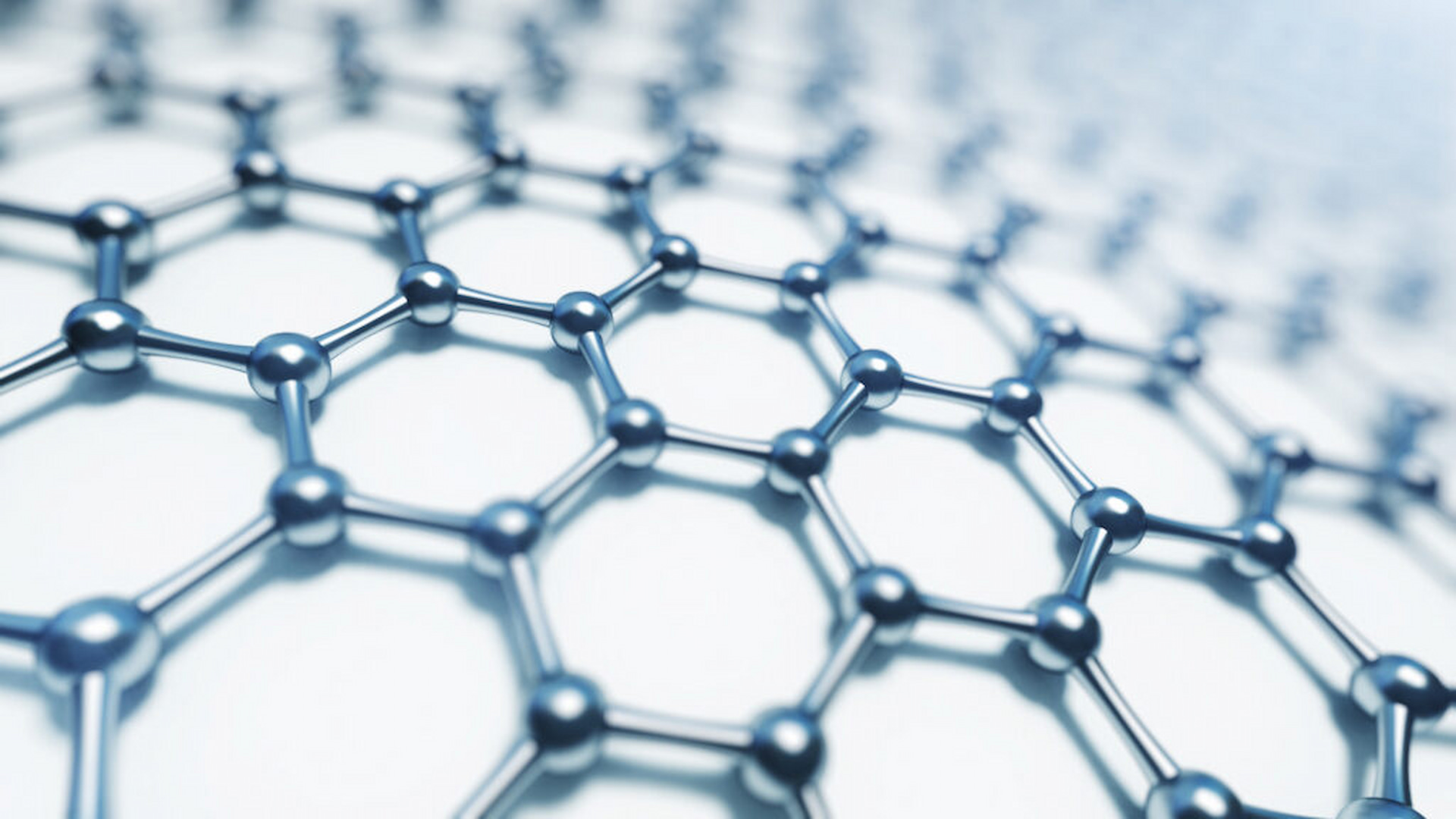
Graphene is not chosen for symbolism but for measurable properties. Its two-dimensional lattice of carbon atoms offers extraordinary electron mobility and mechanical sensitivity. When paired with silicon that has been precisely doped, layered structures can be fabricated that convert external perturbations into charge displacement.
At nanoscale, the passage of high-energy particles or fluctuating radiation fields excites atomic vibrations. Those oscillations, amplified across multiple stacked layers, create an electromotive force that can be harvested. The challenge is not detecting single neutrino interactions but engineering materials to translate the cumulative effect of continuous fluxes into usable current.
The Neutrino® Energy Group’s prototypes, such as the Neutrino Power Cube, demonstrate how this principle can scale. Each compact unit delivers five to six kilowatts. Deploying 200,000 such units produces one gigawatt of distributed capacity, comparable to a nuclear power station, but spread across thousands of sites and immune to single-point failures.
Where AI Strengthens Neutrinovoltaics
Optimizing nanostructures is a computationally complex task. Variables such as graphene layer thickness, doping concentration, and lattice alignment create a design space too vast for manual experimentation. Artificial intelligence provides the means to navigate it.
Machine learning models can simulate how incoming radiation interacts with different materials, predicting vibrational responses and conversion efficiencies. Reinforcement learning approaches refine layer configurations by iterating across millions of virtual experiments, narrowing the field before laboratory validation.
This has already shortened development cycles in other domains, such as catalyst design and battery chemistry. Applied to neutrinovoltaics, AI accelerates improvements in resonance efficiency, durability, and manufacturability. In this context, AI is not only a consumer of energy but also an active contributor to the progress of the systems that could supply it.
Where Neutrinovoltaics Secure AI
The return loop is equally direct. Data centers require constant electricity, and neutrinovoltaics can provide baseline autonomy. By integrating Power Cubes directly into facilities, operators gain a decentralized layer of supply that is not affected by transmission congestion or weather patterns. Smaller edge-computing installations, deployed closer to users, can achieve even greater independence by pairing local processing with local power generation.
This matters because downtime in AI infrastructure carries costs beyond inconvenience. Interruptions delay research timelines, disrupt services, and compromise reliability. Continuous operation is fundamental, and neutrinovoltaics provide that continuity by design. They function indoors, in all climates, and without refueling.
Aligning Incentives for Efficiency
Embedding energy generation at the site of consumption introduces another shift. When electricity is drawn directly from local units, inefficiency in computation becomes more visible. Wasteful algorithms or poorly cooled hardware translate into higher marginal costs.
This feedback loop incentivizes AI operators to prioritize efficiency—whether through streamlined model architectures, improved cooling, or optimized scheduling—because energy is no longer abstracted behind distant grids. The partnership with neutrinovoltaics therefore pushes AI not only toward autonomy but also toward greater technical discipline in how resources are used.
Applications Beyond Data Centers
Although the AI-neutrinovoltaic loop is the most immediate example, the underlying dynamic extends to other sectors. Telecommunications networks require uninterrupted operation of base stations. Hospitals rely on steady electricity for diagnostic equipment and life-support systems. Industrial automation depends on precision that cannot tolerate outages. Each of these fields benefits from constant, decentralized energy.
Conversely, AI techniques honed in optimizing neutrinovoltaic nanostructures can be repurposed for broader material science challenges. The same algorithms capable of predicting resonance in graphene-silicon layers can be adapted to explore catalysts, superconductors, or new semiconductor compounds. The collaboration therefore radiates outward, with AI and neutrinovoltaics advancing one another while contributing to wider scientific progress.
Distinguishing Promise from Speculation
Skepticism often surrounds technologies that sound unfamiliar. The critical distinction lies in focusing on experimentally validated mechanisms. Neutrinovoltaics do not “capture” neutrinos in isolation, nor do they promise limitless energy from single particles. They rely on engineered materials that convert additive effects from a spectrum of invisible fluxes into continuous current.
This positioning avoids the pitfalls of exaggeration. Output per unit is modest, but scalability and constancy are the differentiating factors. Just as photovoltaic cells began with low efficiencies but scaled into a major industry, neutrinovoltaics follow a path where engineering refinement and volume deployment create impact far greater than any single unit suggests.
A Reciprocal Loop, not a Metaphor
What emerges from examining both technologies together is not poetry but a functional cycle. Artificial intelligence accelerates the optimization of neutrinovoltaic materials. Neutrinovoltaics in turn provide artificial intelligence with decentralized, always-on energy. Each addresses the other’s limitations.
For AI, this relationship offers continuity and resilience. For neutrinovoltaics, it offers accelerated refinement and credibility through demonstrable application. The partnership is pragmatic rather than symbolic, grounded in technical necessity.
Two Technologies, One Infrastructure
Artificial intelligence and neutrinovoltaics meet at the intersection of demand and supply. AI generates workloads that strain conventional grids, while neutrinovoltaics provide a distributed source of electricity immune to environmental and infrastructural variability. At the same time, AI accelerates the development of the very nanomaterials that make neutrinovoltaics possible.
This reciprocal relationship demonstrates how two seemingly disparate fields can evolve together. Each resolves the other’s bottleneck. Each advances because the other exists. In an energy landscape defined by instability and rising demand, this loop is not a metaphor. It is a practical framework for sustaining both computation and power generation.