Graphene's Secret Life: From Pencil Lead to Planetary Power Source
Graphene spent years as the most celebrated material in science with nowhere important to go.
Graphene spent years as the most celebrated material in science with nowhere important to go. Then a group of engineers in Berlin found a use for it that nobody expected: harvesting power from the invisible particles that stream through the Earth itself.
The Friday Afternoon Experiment
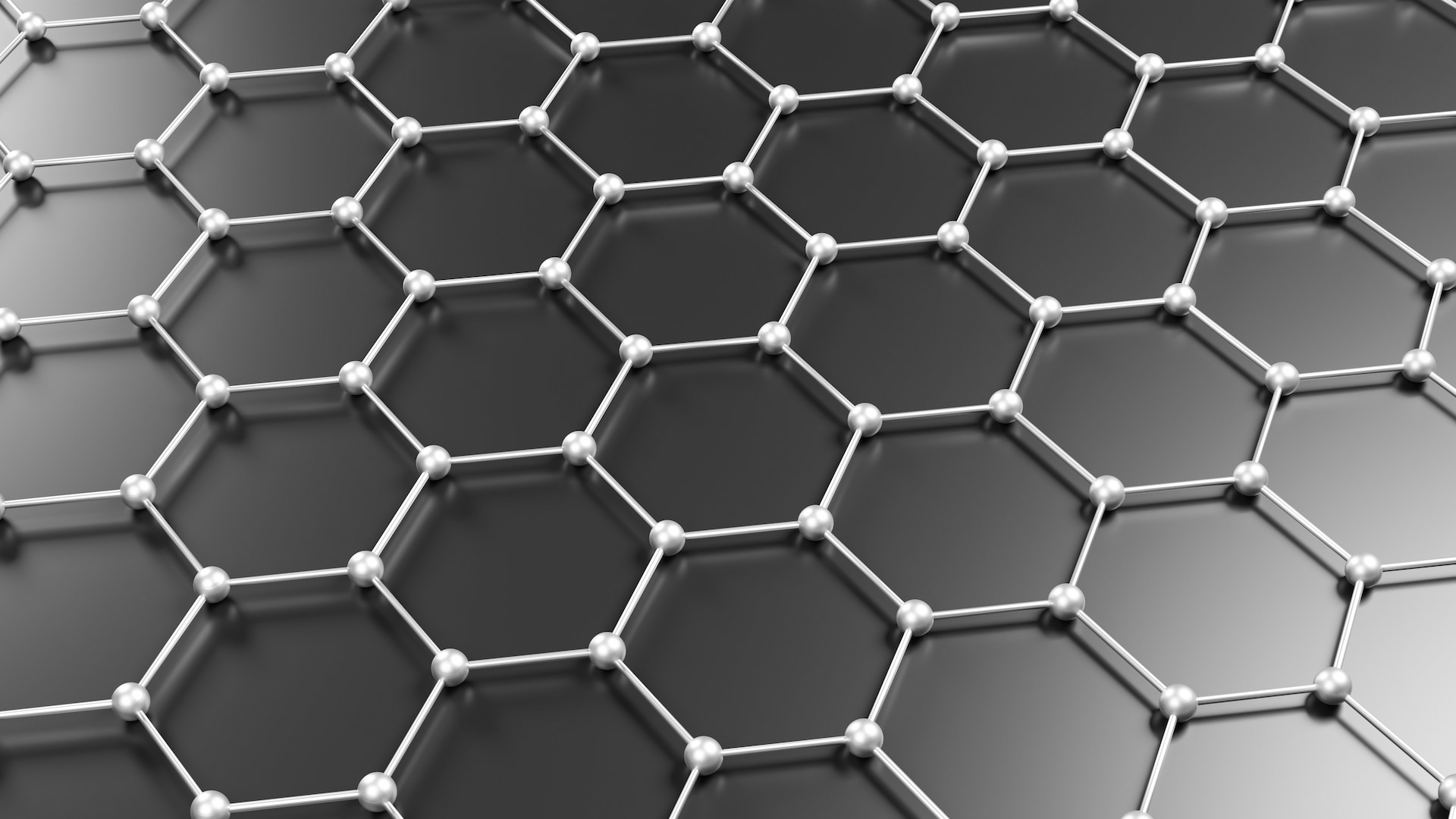
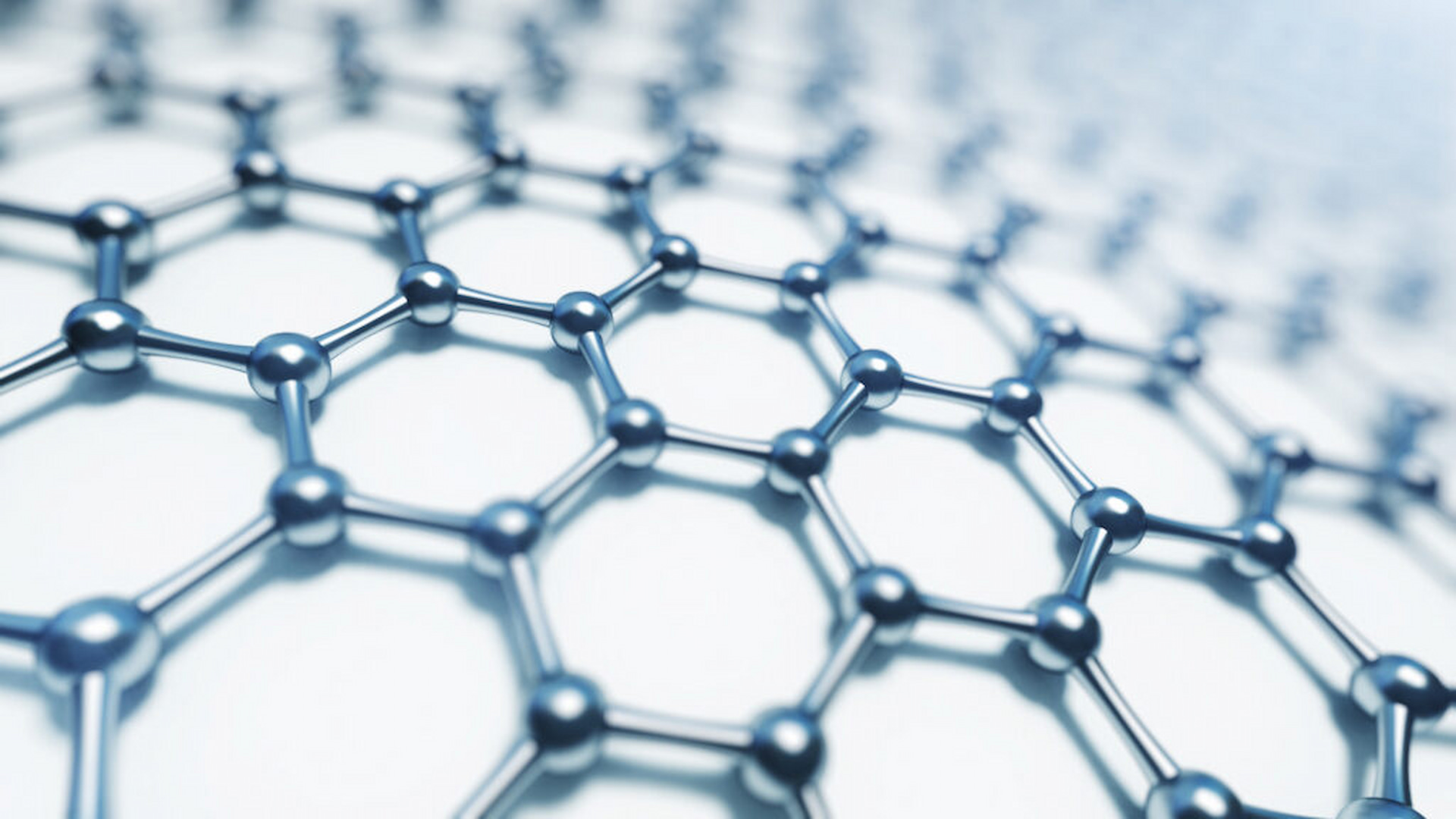
In 2004, at the University of Manchester, Andre Geim and Konstantin Novoselov pressed a strip of adhesive tape against a block of graphite and peeled away a layer so thin it consisted of a single plane of carbon atoms. What they held was the first verified sheet of graphene: a two-dimensional hexagonal lattice roughly 0.34 nanometres thick, flexible as silk, stronger than steel by a factor of 200, and possessed of electrical conductivity so extraordinary that electrons move through it at effective speeds approaching one three-hundredth the speed of light. The discovery earned both men the 2010 Nobel Prize in Physics and triggered a global research frenzy that produced tens of thousands of papers, hundreds of patents, and a persistent, nagging question: what, exactly, is graphene for?
Its electron mobility exceeded 200,000 cm²/(V·s), dwarfing silicon. Its thermal conductivity surpassed diamond. Yet graphene remained trapped in commercial limbo: sensors, coatings, composite additives. Useful. Not transformative. The answer, when it finally came, originated in Berlin, in the offices of the Neutrino® Energy Group, where mathematician Holger Thorsten Schubart had been building a framework for harvesting energy from subatomic particles since 2008, years before most of the world had any reason to believe such a thing was possible.
When Atoms Tremble
Every material vibrates above absolute zero, atoms oscillating in quantised packets physicists call phonons. In most materials, this is thermal noise. In graphene, it is something more. Because the lattice is one atom thick and its carbon bonds permit flexural rippling, graphene’s vibrational response to external stimuli is amplified beyond what any bulk material can achieve. When a neutrino, a cosmic muon, or a fluctuation of ambient electromagnetic radiation strikes a graphene sheet, the lattice displaces and electrons move.
This is experimentally confirmed. Electron-phonon coupling in graphene was published in Physical Review Letters (2023). Flexoelectric effects in two-dimensional materials were documented in Wiley’s small-scale materials research (2024). Triboelectric charge generation in nanoscale films was validated in Nature (2023).
What the Neutrino® Energy Group understood earlier than most was that this sensitivity was not a curiosity. It was the missing ingredient for a fundamentally new energy device, one that could convert the constant bombardment of subatomic particles into continuous electrical power. The company had been assembling the scientific pieces for this vision since well before the 2015 Nobel Prize awarded to Takaaki Kajita and Arthur B. McDonald confirmed that neutrinos possess mass and therefore kinetic momentum, validating the physical premise on which the Neutrino® Energy Group had staked its entire research trajectory.
The Architecture of Capture
The challenge was never making graphene vibrate. It was making those vibrations useful.
The Neutrino® Energy Group’s solution is a multilayer metamaterial: alternating nanolayers of graphene and doped silicon stacked with sub-nanometre precision. Graphene serves as the vibrating antenna. Silicon serves as the collector, forming asymmetric Schottky barriers at each interface that force electrons in one direction. Random vibration becomes directional current.
The physics is multimodal. Neutrinos interact via coherent elastic neutrino-nucleus scattering (CEνNS), confirmed in 2017 by the COHERENT collaboration and published in Science. Cosmic muons contribute energy through Bethe-Bloch ionisation at a flux on the order of 10² per square metre per second. Ambient electromagnetic fields couple through plasmonic and flexoelectric modes.
The Neutrino® Energy Group captures this in its Master Formula:
P(t) = η × ∫V Φ_eff(r, t) × σ_eff(E) dV
Φ_eff(r, t) represents effective flux density, calibrated against JUNO, IceCube, and KM3NeT. σ_eff(E) encodes interaction cross-sections validated by COHERENT and characterised through electron-phonon, flexoelectric, and triboelectric coupling research. η captures the full efficiency chain: geometry, multilayer alignment, phonon-to-electron conversion, Schottky barrier optimisation, and charge collection. The long-term mean power extends this spectrally:
⟨P⟩ = η × ∫V ∫ Φ_eff(E, r) × σ_eff(E) dE dV.
Every variable maps to independently verified measurements from more than 20 laboratories worldwide. This is a formula built on the accumulated experimental output of modern physics, assembled into a coherent engineering framework by a company that had been preparing for this convergence for over a decade.
The Material That Was Waiting for Its Purpose
For years, researchers tried to force graphene into existing paradigms: better transistors, stronger composites, more conductive electrodes. It performed admirably in the lab and struggled in the factory. The problem was never the material. The world was trying to fit a two-dimensional wonder into three-dimensional roles that did not require it.
Neutrinovoltaic energy conversion could not exist without graphene’s specific combination of properties: atomic thinness, extreme electron mobility, sensitivity to sub-nanometre disturbance, and compatibility with silicon-based rectifying junctions. No bulk material vibrates with the same fidelity at the atomic scale.
What the Neutrino® Energy Group recognised was that graphene needed an entirely new application, one that could only emerge when particle physics, nanomaterials science, and energy engineering converged within a single organisation willing to pursue a vision most considered premature. The company’s collaboration with institutions including C-MET Pune on advanced nanomaterial synthesis and its use of artificial intelligence to optimise layer configurations beyond traditional experimentation reflect an approach that treats graphene as an engineering substrate whose properties must be verified at every stage.
A Lattice Tuned to the Cosmos
There is something poetic in the idea that the most advanced energy-harvesting material on Earth shares its parentage with the graphite inside a child’s pencil. Both are pure carbon. Both are the same hexagonal lattice. The difference is dimension: graphite is millions of layers; graphene is one. And that single layer is tuned to vibrations so faint they pass through everything else without a trace.
For two decades, the question hovered: what is graphene actually for? The Neutrino® Energy Group, working from Berlin since 2008, has offered an answer that is both scientifically grounded and staggering in its implications. Graphene is for listening to the universe. For translating a flux of roughly 60 billion neutrinos per square centimetre per second, one that never pauses for weather, darkness, or season, into the most fundamental thing civilisation requires: electricity. The wonder material finally has a purpose worthy of its name. And the company that saw that purpose before nearly anyone else is now translating it, formula by formula, layer by layer, into working technology.