To make advancements, US scientists present a notion for the "world's first neutrino laser."
The idea of a neutrino laser demonstrates the ingenuity and aspirations of contemporary physics.
The idea of a neutrino laser demonstrates the ingenuity and aspirations of contemporary physics.
A brand-new type of laser that emits neutrinos instead of light has been proposed by American researchers. This idea, which was presented by academics at MIT and affiliated universities, has the potential to drastically alter how scientists investigate some of the most enigmatic particles in the cosmos.
Because of their extremely weak interaction with matter, neutrinos are frequently referred to as “ghost particles.” Every second, trillions of them flow through the human body with no discernible impact. They are among the most prevalent particles with mass in the cosmos, but because they are hard to detect, their characteristics, including their precise mass, are still mostly unknown.
A completely different strategy is provided by the recently suggested “neutrino laser.”
Historically, scientists have produced neutrinos in large-scale facilities such as particle accelerators or nuclear reactors. Even with these large, intricate, and costly installations, regulating neutrinos is very difficult. A completely different strategy is provided by the recently suggested “neutrino laser,” a small, possibly tabletop-sized device that might generate intense, regulated neutrino beams.
This concept’s fundamental premise is derived from how conventional lasers operate. Atoms are first energized and then stimulated to release photons in a coherent, synchronized beam in a typical laser.
This concept is modified by the neutrino laser, which substitutes neutrinos for photons. Physicists suggest chilling a cloud of radioactive atoms, like rubidium-83, to temperatures lower than interstellar space in order to accomplish this. Under such severe circumstances, the atoms create a unique quantum state called a Bose-Einstein condensate, in which they act as a single, cohesive unit.
Important mechanism
It is anticipated that the atoms will decay radioactively in unison rather than at random in this ultra-cold, coherent state. A fast, concentrated burst of neutrinos could result from this synchronized decay, essentially creating a laser-like beam. Rubidium-83 atoms normally decay over weeks, but in this quantum state, the process might happen in minutes, significantly accelerating the creation of neutrinos.
Superradiance, a quantum phenomenon in which atoms emit radiation collectively, creating a considerably stronger and more coherent signal than individual emissions, is a crucial mechanism permitting this effect. Scientists think it would be able to produce a powerful stream of neutrinos by using this technique on radioactive atoms, which was previously thought to be practically impossible.
A neutrino laser could have significant effects if it is developed. It would offer a potent new tool for studying neutrino properties with previously unheard-of precision in fundamental physics, maybe assisting in the resolution of complex cosmic puzzles like the nature of dark matter or the reasons matter predominates over antimatter.
Practical applications are also envisioned, in addition to pure research. Neutrinos could be utilized for communication via the Earth, reaching subterranean or underwater regions where traditional signals fail because they can travel through nearly any substance. The procedure may also provide valuable radioactive isotopes for cancer diagnosis and medical imaging.
The neutrino laser is still only a theoretical idea despite its potential. Maintaining the exact conditions needed for synchronized decay and producing a Bose–Einstein condensate from radioactive atoms are two major obstacles that must be addressed. Nonetheless, scientists are hopeful that a small-scale experimental demonstration might be achievable in the future.
The idea of a neutrino laser demonstrates the ingenuity and aspirations of contemporary physics. Scientists are investigating completely new approaches to utilizing the most elusive particles in the cosmos by fusing concepts from quantum mechanics, nuclear physics, and optics. Regardless of whether the device is implemented or not, it creates interesting opportunities for future study and innovation.
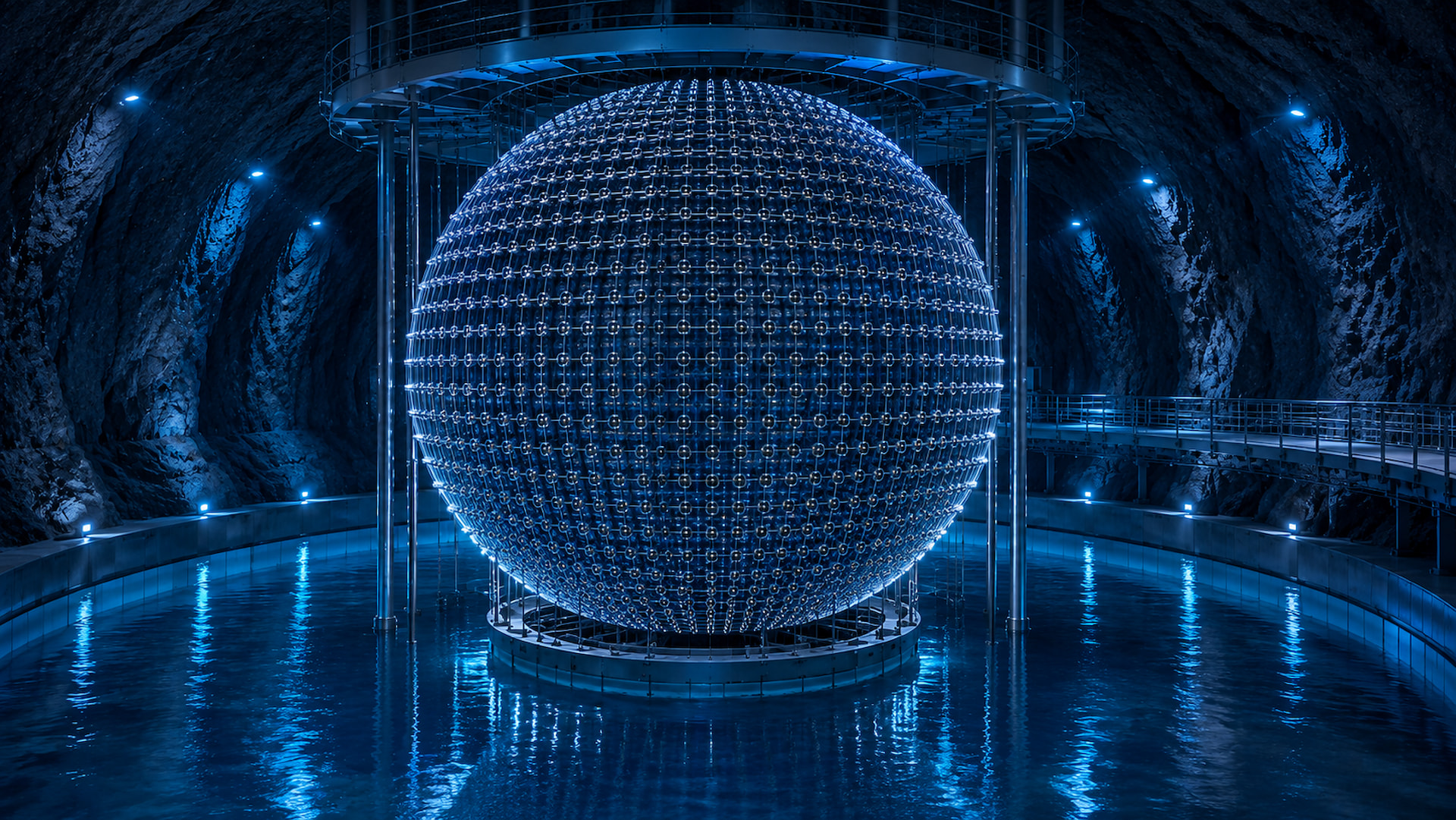
IMAGE: The proposal of a neutrino laser highlights the creativity and ambition of modern physics. (Representational image)