The first neutrino detector in space is launched into orbit to investigate the sun's core
The world’s first space-based neutrino detector has reached orbit, opening a direct observational channel to the interior of the sun and other high-energy…
On this page
The world’s first space-based neutrino detector has reached orbit, opening a direct observational channel to the interior of the sun and other high-energy astrophysical sources. The instrument launched this month aboard a Chinese space mission, marking the first time a neutrino detector has operated outside Earth’s atmosphere. Researchers described the deployment as akin to “putting a microscope into the core of the sun” — a phrase that captures the precision these measurements could eventually deliver.
Why neutrinos are so difficult to detect
Neutrinos are subatomic particles with near-zero mass and no electric charge, produced in enormous quantities by nuclear fusion reactions inside stars. Roughly 65 billion solar neutrinos pass through every square centimeter of Earth’s surface every second, yet they interact so weakly with matter that most pass straight through the planet without leaving a trace. That ghostly quality is precisely what makes them scientifically valuable. Because neutrinos escape the sun’s core without deflection or absorption, they carry direct information about conditions at the point of their creation — unlike photons, which take tens of thousands of years to scatter their way from the solar interior to the surface. Ground-based neutrino observatories such as Japan’s Super-Kamiokande and the IceCube detector buried in Antarctic ice have demonstrated the science, but they rely on massive shielding to suppress background cosmic-ray noise at Earth’s surface. Operating in orbit removes the overlying atmosphere as a radiation shield, which presents engineering challenges but also changes the geometry of detection in ways researchers believe can be exploited.
The detector’s technical architecture
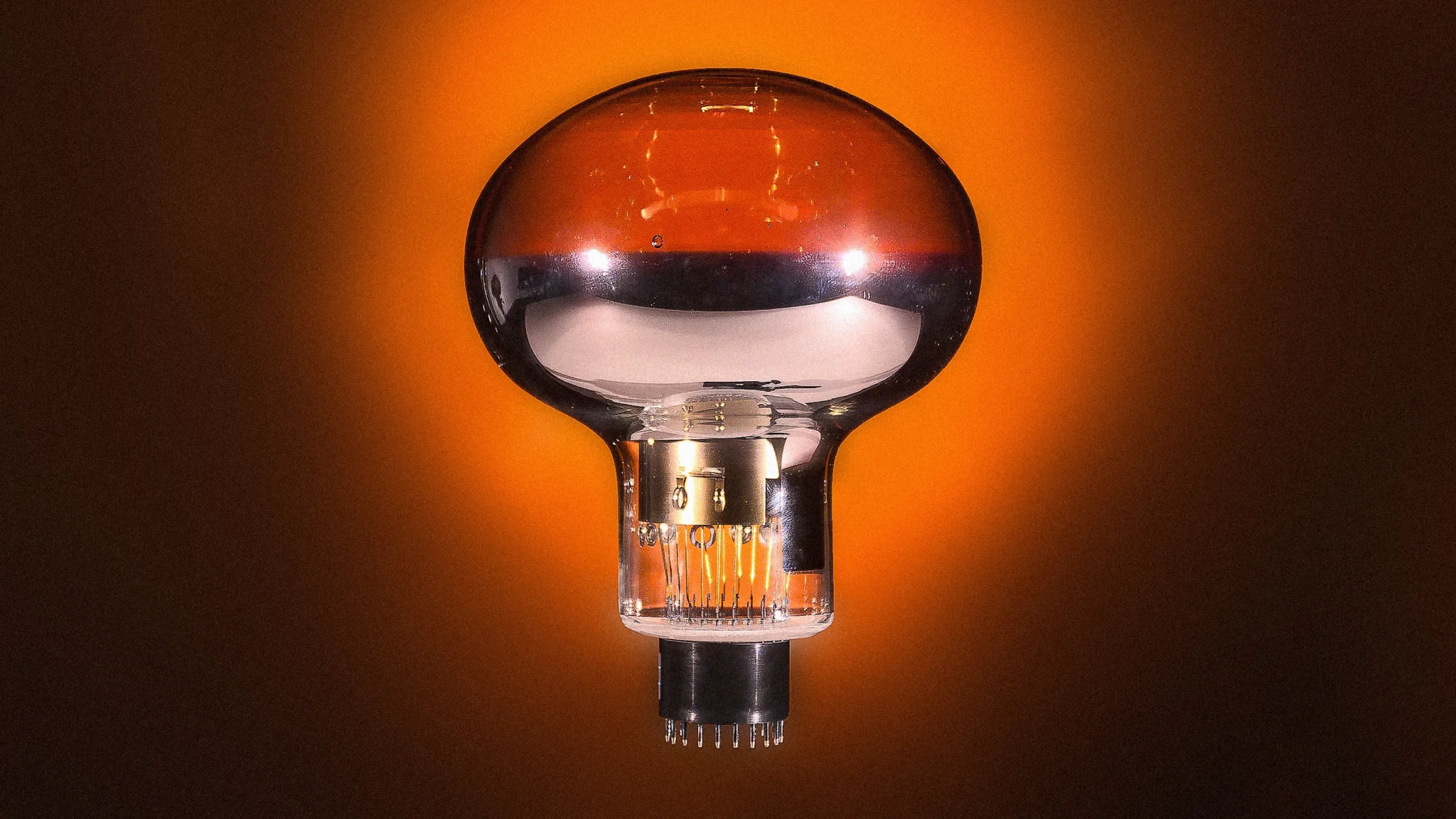
The space-based detector uses scintillator material — a medium that emits a faint flash of light when a neutrino does interact with an atomic nucleus. Photomultiplier tubes surrounding the scintillator volume convert those flashes into electrical signals, which are then analyzed to reconstruct the neutrino’s energy and, probabilistically, its direction of origin. The core engineering constraint is detector mass. Neutrino detection probability scales directly with the amount of target material, and existing ground-based facilities use volumes measured in kilotons of water or ice. A spacecraft payload operates under far tighter mass limits, which means the space instrument captures far fewer interaction events. Scientists involved in the project have framed the mission as a proof-of-concept — demonstrating that space-based neutrino detection is technically feasible before scaling up future hardware. Radiation hardening of onboard electronics is a separate concern. Components must withstand prolonged exposure to cosmic rays and solar particle events in the orbital environment. NASA recently debuted a radiation-hardened processor chip rated at 500 times the performance of previous space-qualified processors, illustrating how the broader push for radiation-tolerant electronics is maturing in parallel with missions like this one.
What the mission could reveal
The primary science targets include low-energy solar neutrinos produced by the proton-proton chain — the dominant fusion pathway in the sun — along with higher-energy neutrinos from rarer reaction branches that constrain models of solar composition and temperature. Any discrepancy between detected neutrino flux and theoretical predictions would point to gaps in the Standard Solar Model or hint at new neutrino physics, such as additional oscillation modes beyond those already confirmed. Beyond the sun, the detector’s orbital vantage gives it an unobstructed view of the full sky, enabling it to monitor transient sources such as supernovae. A stellar collapse within the Milky Way would produce a millisecond burst of neutrinos detectable even by a small space instrument, providing an early warning before optical light arrives. The mission carries inherent limitations. Its small detector mass constrains statistical significance for any single observation, meaning results will likely require extended accumulation time or corroboration from ground-based counterparts. Data downlink bandwidth and orbital lifetime are additional variables that will shape what the instrument can realistically accomplish. If the detector performs as modeled, it would lay the engineering groundwork for a larger follow-on observatory — one where the sensitivity gap with ground-based facilities narrows enough to make space the preferred platform for certain neutrino measurement regimes.