Scientists believe that the mass of ghost particles may be stored in a hidden dimension
When you read this story, you will discover the following: Researchers may be able to locate right-handed neutrinos with the aid of the ongoing KATRIN…
When you read this story, you will discover the following:
- Researchers may be able to locate right-handed neutrinos with the aid of the ongoing KATRIN experiment.
- Because neutrinos are so small even among particles, neutrino detectors require sophisticated equipment.
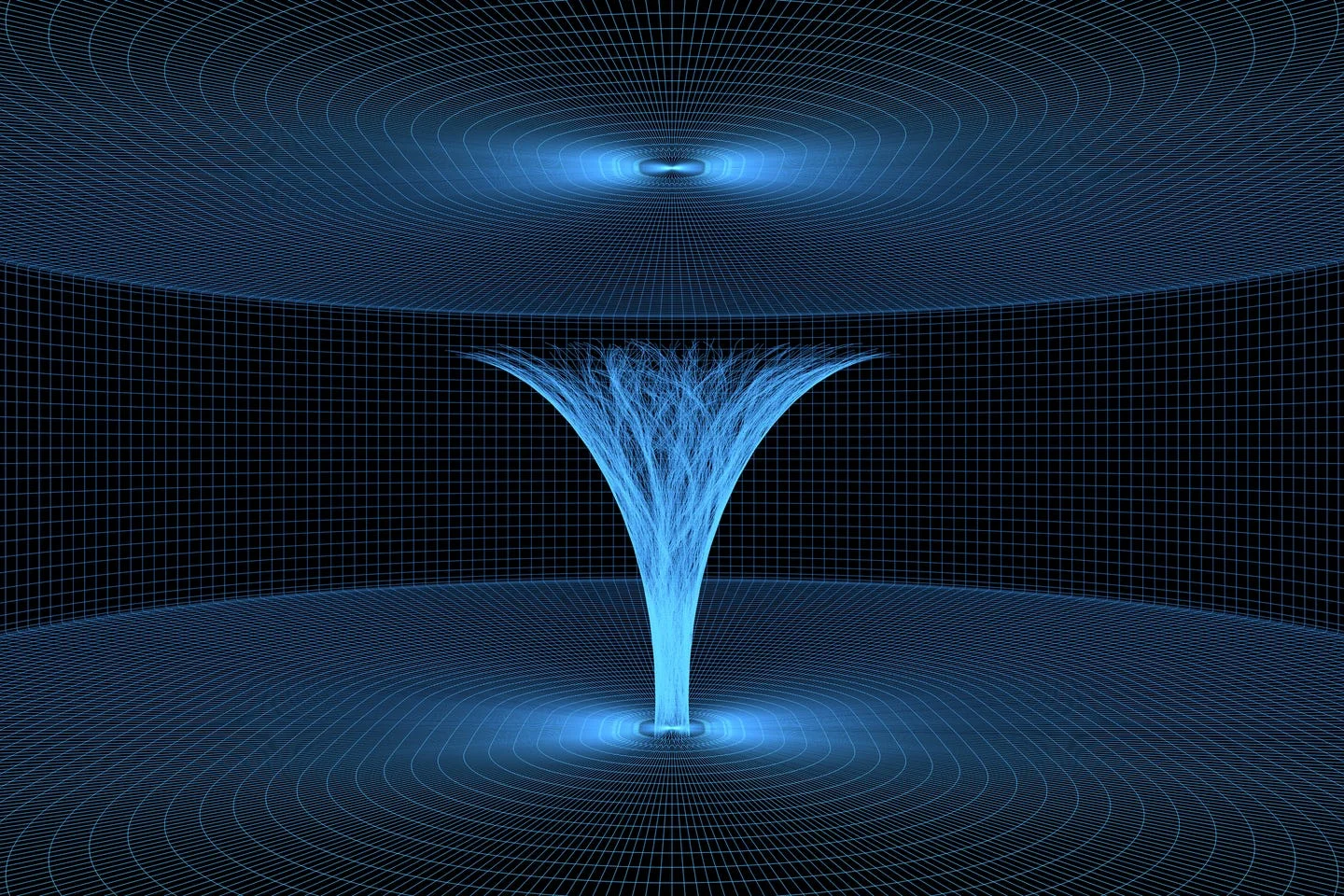
- Right-handed neutrinos might exist in “dark dimensions” that are difficult for us to locate.
Using a state-of-the-art mega spectrometer in Germany, researchers have theorized about a bizarre theory that can assist solve a significant question in the field of neutrino particles and dark energy: Is it possible that some neutrinos, referred to as right-handed neutrinos, are storing their masses in a pocket the size of a micron? If this is the case, these neutrinos would fit into a more comprehensive theory known as the Dark Dimension Proposal, which aims to integrate concepts such as energy and dark matter with the notion of the (potentially shifting) cosmological constant.
Scientists can begin working with a major new concept in mind, such as the Dark Dimension theory, the right-handed neutrino, or the shifting cosmological constant. This raises concerns such as: What sort of experiment will yield results that support or refute that theory?
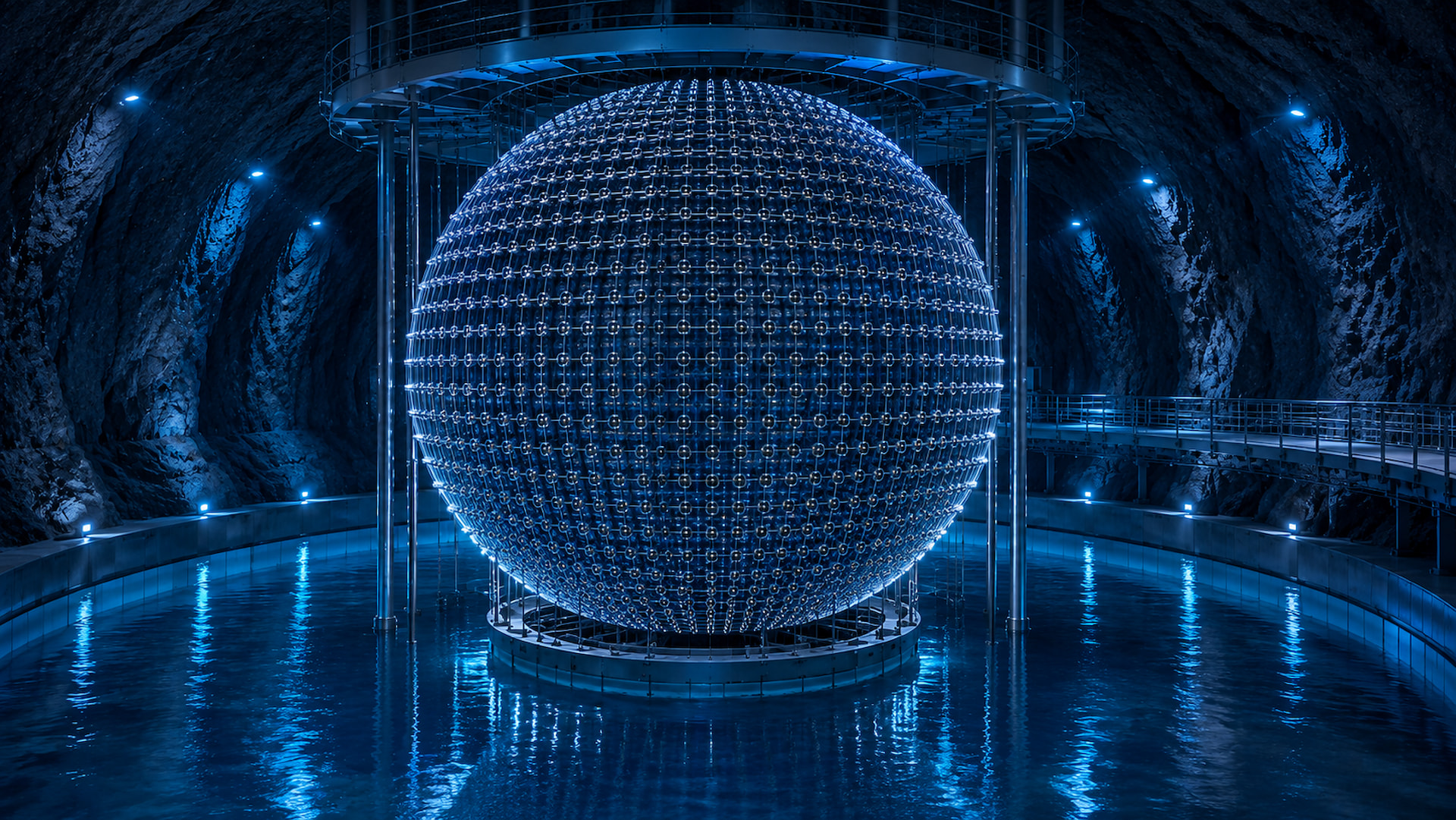
Researchers then create experiments such as the Karlsruhe Tritium Neutrino Experiment, or KATRIN. Weighing more than 200 tons, KATRIN is a massive mass spectrometer apparatus that generates vast amounts of data that may be examined to evaluate different hypotheses. In an effort to separate neutrinos, scientists examine one of the lowest-energy radioactive decay cycles of the hydrogen isotope tritium.
The High Energy Physics Research Unit of Chulalongkorn University (Chula) in Bangkok, Thailand, is represented by Ignatios Antoniadis, Auttakit Chatrabhuti, and Hiroshi Isono. In this study, which is now published in the Journal of High Energy Physics, the scientists describe how they analyzed their KATRIN data to look for indications of a right-handed neutrino, an extra-elusive neutrino that may be associated with dark matter. We refer to the chirality (spin orientation) of every particle as left- or right-handed. Although theory indicates that right-handed neutrinos exist, all known neutrinos are left-handed, suggesting that right-handed neutrinos may belong to a distinct paradigm.
It is incredibly difficult to separate neutrinos since they are so small and almost massless. However, as of this spring, we know that neutrinos are “at least a million times lighter than electrons,” and we are certain that they are created by the reactions occurring at KATRIN (via the U.S. Department of Energy).
The scientists described in the report how they were able to test for the additional dimensions idea using KATRIN data. It is said that the dimensions are “stacked” according to mass, with neutrinos being the heaviest rather than the lightest. Plotting neutrino masses over a large, divided line reveals the dimension that each neutrino is most likely to belong to. In order to see the signature of that scenario, the scientists mapped out a scenario in which neutrinos behaved in a particular way and compared it to the actual KATRIN data:
As a function of electron energy, the beta decay spectrum should show a kink due to neutrino generation. Within the sensitivity of KATRIN, we have found two different regions in the parameter space where straightforward analytic formulations may be constructed, resulting in qualitatively unique experimental fingerprints.
In other words, there are two locations inside the KATRIN study region where researchers could search for a kink in the energy level corresponding to a right-handed neutrino working in accordance with Dark Dimension theory. Better yet, there are two benefits: other researchers can now use similar methods to analyze KATRIN data and create new configurations to provide data that incorporates these bandwidths.
CREDIT IMAGE: Ghost Particles May Hide Mass in a Dark Dimensionmarian – Getty Images