The Master Equation Among the Stars: A 12-Step Journey Through Neutrino Science
When great breakthroughs reshape science, they are rarely absorbed in a single leap. Understanding grows in steps, from wonder to theory, from demonstration…
When great breakthroughs reshape science, they are rarely absorbed in a single leap. Understanding grows in steps, from wonder to theory, from demonstration to application. The Holger Thorsten Schubart–NEG Master Equation for Neutrinovoltaics has now joined the lineage of scientific formulas that expand the boundaries of what is possible.
But the story of how such a field is taught, communicated, and advanced requires a structure, a framework that allows each audience, from children to Nobel-level physicists, to meet the subject at the right depth. This is the purpose of the 12 Knowledge Levels of Neutrinovoltaics: a deliberate roadmap for how invisible particle interactions, once scattered across disciplines, are unified into a single equation and then into societal practice.
Level 1 – Sparks of Wonder
Every child learns that the night sky is not silent. Even in darkness, the universe continues to move. Trillions of neutrinos traverse every square centimeter of Earth each second, indifferent to walls or bodies. The lesson is simple: energy is everywhere, not only when the sun shines. Wonder begins with this realization, that something unseen is always active, always present.
Level 2 – Pictures that Persuade
For teenagers and schools, metaphors carry weight. A football match offers the clearest picture: an invisible striker crosses the field and scores without anyone seeing the kick. Neutrinos are like that striker, playing in every game, never resting. Through simple analogies, particle currents that are too small to imagine become part of stories and images. This level makes the hidden world relatable, translating scattering events into language that excites imagination.
Level 3 – Science in Public Light
At the public level, the story shifts to discovery. The Nobel Prize in Physics 2015 confirmed that neutrinos have mass. The COHERENT experiment in 2017 verified coherent elastic neutrino–nucleus scattering, known as CEvNS. These were not exotic curiosities but proofs that neutrinos interact, however rarely, with matter. From there, the first conversations about application emerged: devices that charge phones without plugs, vehicles drawing energy without stations, power available independent of sun or wind. Popular science links the invisible to daily life.
Level 4 – Materials at Work
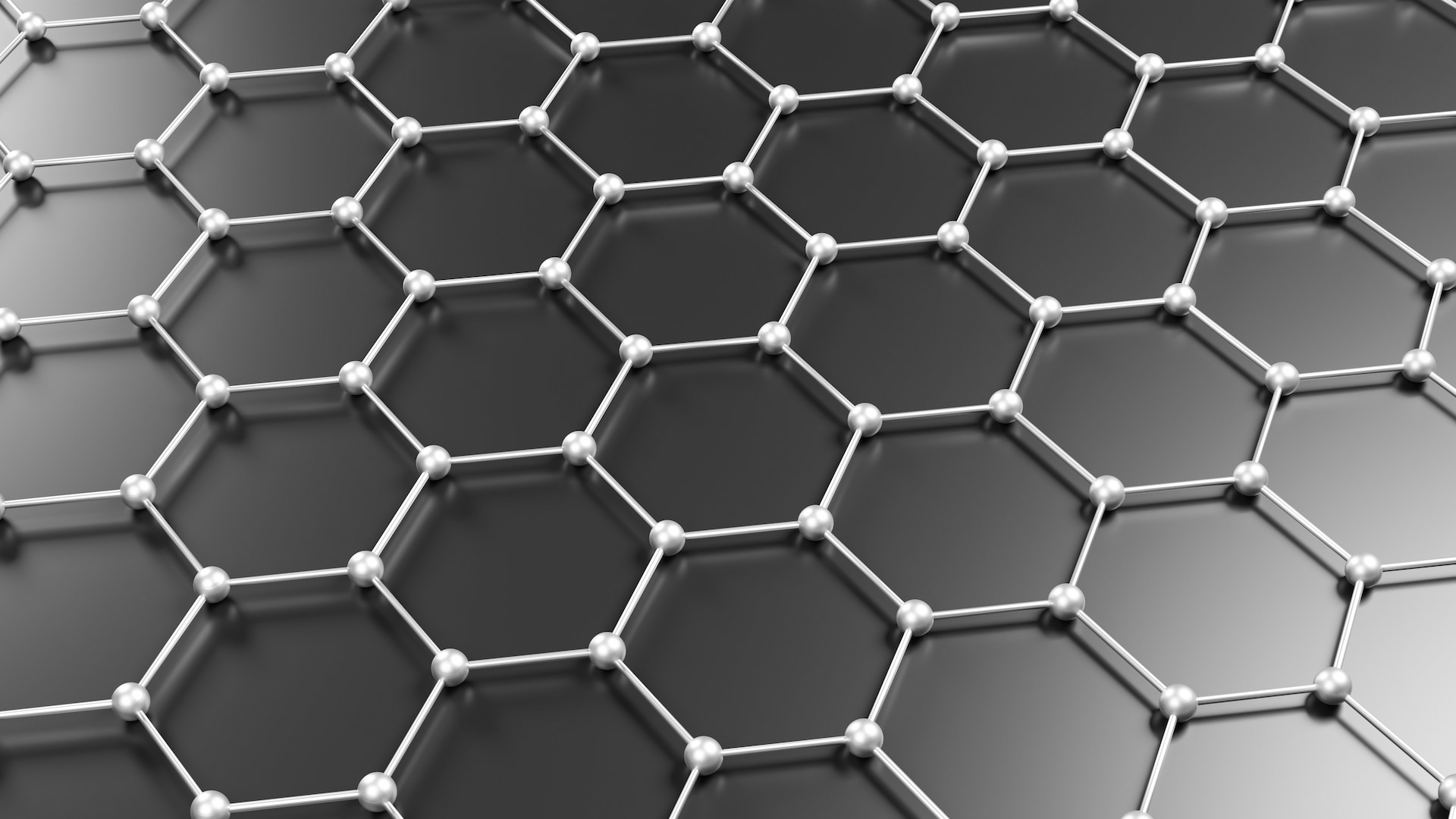
The explanation then enters structures. Neutrinovoltaics is not magic but engineering. The Neutrino® Energy Group developed multilayer nanostructures of graphene and doped silicon, designed to vibrate when crossed by streams of neutrinos, muons, radiofrequency waves, or thermal fields. These vibrations induce an electromotive force, harvested as direct current. It is an analogue to photovoltaics, but where photovoltaics is bound to visible light, neutrinovoltaics engages the full spectrum of ever-present ambient radiation.
Level 5 – Blueprints and Comparisons
Students and technical colleges encounter diagrams, not metaphors. Here the graphene–silicon stack is compared to photovoltaic cells, with the difference that neutrinovoltaics functions regardless of weather or time of day. Circuit schematics show how vibration-induced currents are stabilized, how thermal management keeps efficiency steady, and how scaling resembles arrays of solar cells yet produces uninterrupted output. Engineering didactics clarify that this is not a supplement to solar power but a different logic altogether: generation without intermittency.
Level 6 – Equations and Parameters
Physics students and young engineers’ step into greater depth. Neutrino–electron scattering is described quantitatively. Non-standard interactions with quarks are examined. CEvNS is introduced as a low-energy but coherent channel where entire nuclei recoil. Mathematical expressions of cross-sections, effective scattering areas, and energy transfer probabilities enter the conversation. At this stage, terms like σ_eff(E) and Φ_eff(r,t) are not abstractions but measurable variables feeding into a unified framework:
P(t) = η · ∫V Φ_eff(r,t) · σ_eff(E) dV
This is the point where neutrinovoltaics moves from description to calculation.
Level 7 – Laboratory Precision
Doctoral research unfolds where theory must meet data. Here the CEvNS cross-sections are studied against flux densities from solar, atmospheric, and reactor neutrinos. Muon contributions are disentangled from secondary cosmic cascades. Phonon coupling in layered materials is measured and optimized. Researchers examine how ambient microwave fields or mechanical microvibrations enhance output. What matters is precision: each variable, once characterized, strengthens the formula’s reliability. At this level, neutrinovoltaics becomes an object of peer-reviewed study, not speculation.
Level 8 – Full Derivation and Integration
For professional scientists and engineers, the discussion expands into full derivation. The Master Equation is unpacked, each term connected to established physics. Conversion chains are followed from scattering event to lattice vibration, from vibration to electron displacement, from displacement to measurable current. Material properties are compared across configurations, and the discussion extends to applications not as products but as system architectures: energy grids redefined, mobility restructured, data centers sustained. Here, neutrinovoltaics stands not beside but within the canon of energy physics.
Level 9 – Theory at the Summit
Top physicists assess neutrinovoltaics against the greatest theoretical milestones. Einstein’s E=mc² showed mass–energy equivalence. The Shockley–Queisser limit defined photovoltaic efficiency ceilings. Now, the Master Equation integrates neutrino scattering, muon momentum, electromagnetic fields, and thermal oscillations into a single scalable relation. Proof requires consistency across models, experimental replication, and agreement with standard physics. At this level, neutrinovoltaics is no longer an idea but a contender for a new domain in energy theory, validated by rigorous mathematics.
Level 10 – Scaling into Society
Innovation bodies and certification agencies see theory in context of industry. Mathematics is translated into scale. One Neutrino Power Cube produces 5–6 kilowatts. Multiply 200,000 units, and the result is about one gigawatt, equivalent to a nuclear facility. This is not metaphorical but arithmetic, derived directly from the master formula. Pilot systems demonstrate feasibility, patents such as WO2016142056A1 secure the intellectual foundation, and scalability charts link laboratory efficiency with industrial yield. Nobel-level application is about transforming proof into infrastructure.
Level 11 – Artificial Intelligence in the Lab
Artificial intelligence joins as research partner. Machine learning models simulate scattering events across billions of material configurations, far beyond human trial capacity. AI parses experimental noise, extracting patterns that refine σ_eff(E). It proposes new doping strategies, new lattice geometries, and accelerates optimization cycles from decades to weeks. Importantly, AI itself requires continuous energy, which neutrinovoltaics supplies. The synergy is mutual: AI accelerates the development of neutrinovoltaics, and neutrinovoltaics guarantees AI resilience. This level marks the dawn of machine-assisted physics.
Level 12 – Beyond the Human Horizon
At the frontier, the boundaries of human reasoning yield to machine integration. Advanced AI operates not as a tool but as a collaborator, designing nanostructures in real time, recalibrating energy systems as conditions change, and exploring regimes of physics inaccessible to unaided thought. Neutrinovoltaics here is not merely a technology but part of a planetary architecture of energy and information. The Master Equation remains the foundation, yet its parameters evolve continuously under AI-driven refinement. This is not speculation, but the logical consequence of accelerating computation applied to a proven formula.
From First Glimpses to Global Framework
Across these 12 levels, neutrinovoltaics evolves from a child’s sense of wonder to a scientist’s derivation, from Nobel-level theory to AI-driven futures. The journey is cumulative. Each level builds on constants, variables, and interactions already confirmed: neutrino–electron scattering, NSI, CEvNS, cosmic muons, electromagnetic fields, infrared fluctuations, and mechanical vibrations. Because these contributions are additive, no single absence halts the process. This redundancy makes the system always operational, immune to weather, daylight, or geography.
The genius of the Holger Thorsten Schubart–NEG Master Equation is that it binds all these phenomena into one framework, allowing power output to be calculated, engineered, and scaled. It ensures that neutrinovoltaics is not mysticism but measurable physics. And it ensures that as understanding deepens, from Level 1 wonder to Level 12 AI partnership, the science holds, consistent, verified, and inexhaustible.