The Light Sterile Neutrino: Experimental Evidence, Theoretical Implications, and the Future of Neutrino Physics
Neutrinos remain among the most mysterious particles in modern physics. Their tiny mass, weak interactions, and oscillation behavior have already forced…
On this page
Neutrinos remain among the most mysterious particles in modern physics. Their tiny mass, weak interactions, and oscillation behavior have already forced revisions to the Standard Model of particle physics. Within this frontier, the light sterile neutrino hypothesis has attracted enormous attention.
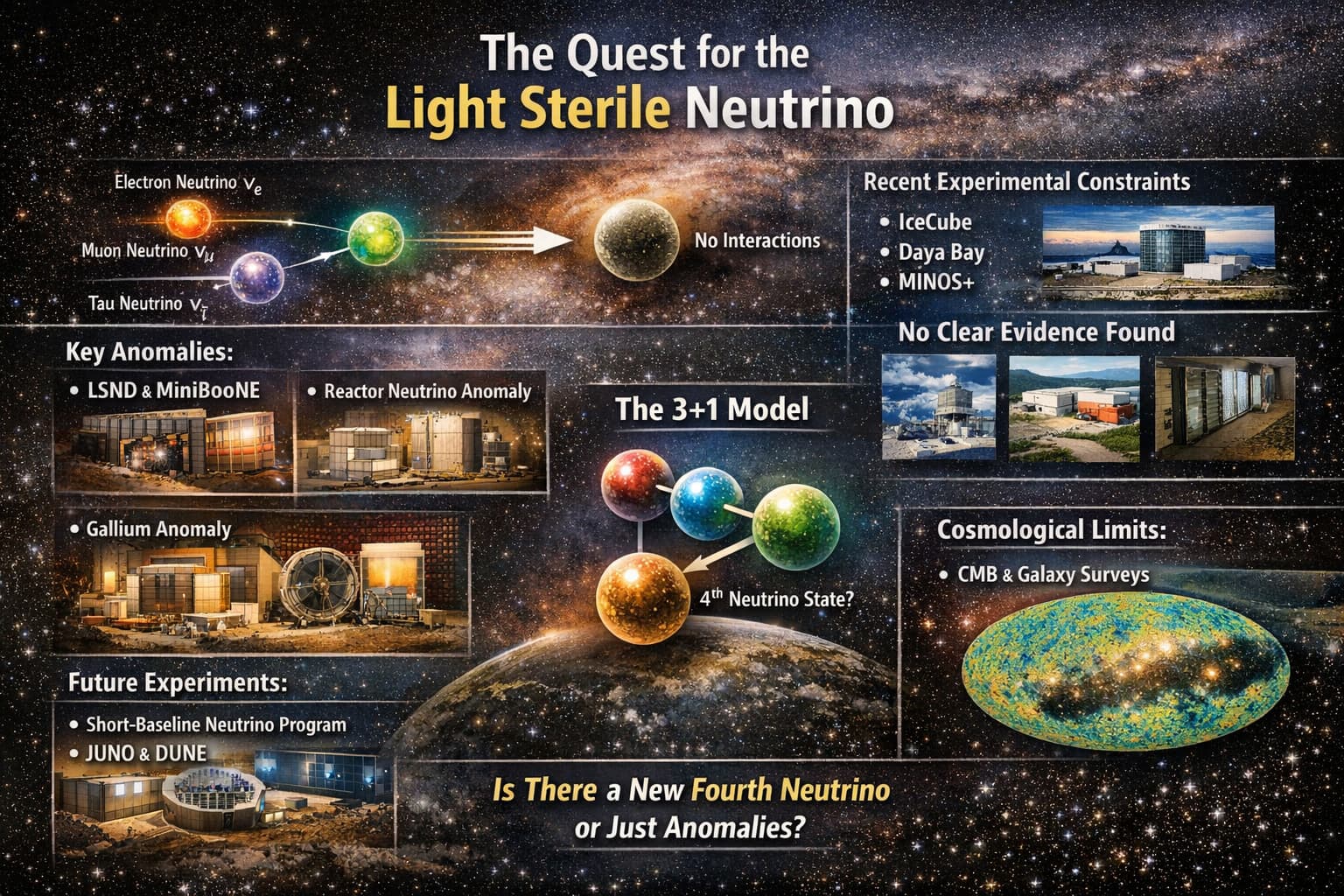
In this comprehensive analysis, we examine the theoretical foundation, experimental evidence, recent constraints, and future research directions related to light sterile neutrinos, providing a deeper and more technically complete perspective on this crucial topic in particle physics.
Understanding Neutrinos in the Standard Model
Within the Standard Model, neutrinos exist in three active flavors:
-
Electron neutrino (νe)
-
Muon neutrino (νμ)
-
Tau neutrino (ντ)
These neutrinos interact through the weak nuclear force and participate in a phenomenon known as neutrino oscillation, where one flavor transforms into another while traveling through space.
Oscillation experiments have confirmed that neutrinos possess non-zero mass, a discovery that required modifications to the Standard Model.
Neutrino Flavor Mixing
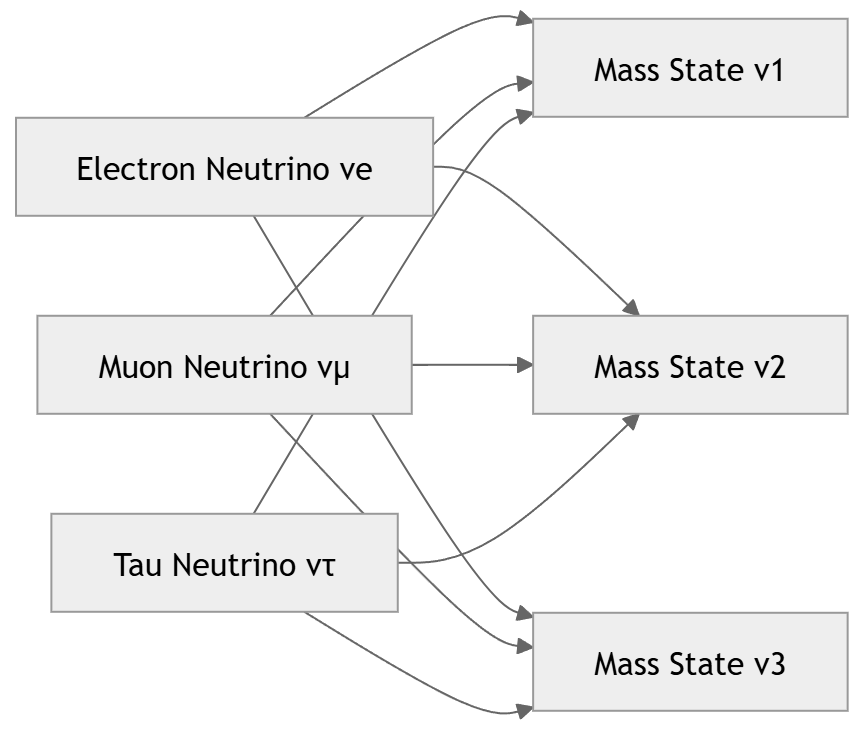
The transformation between neutrino flavors occurs through quantum mixing described by the PMNS matrix (Pontecorvo–Maki–Nakagawa–Sakata matrix).
Flavor eigenstates differ from mass eigenstates, leading to oscillations.
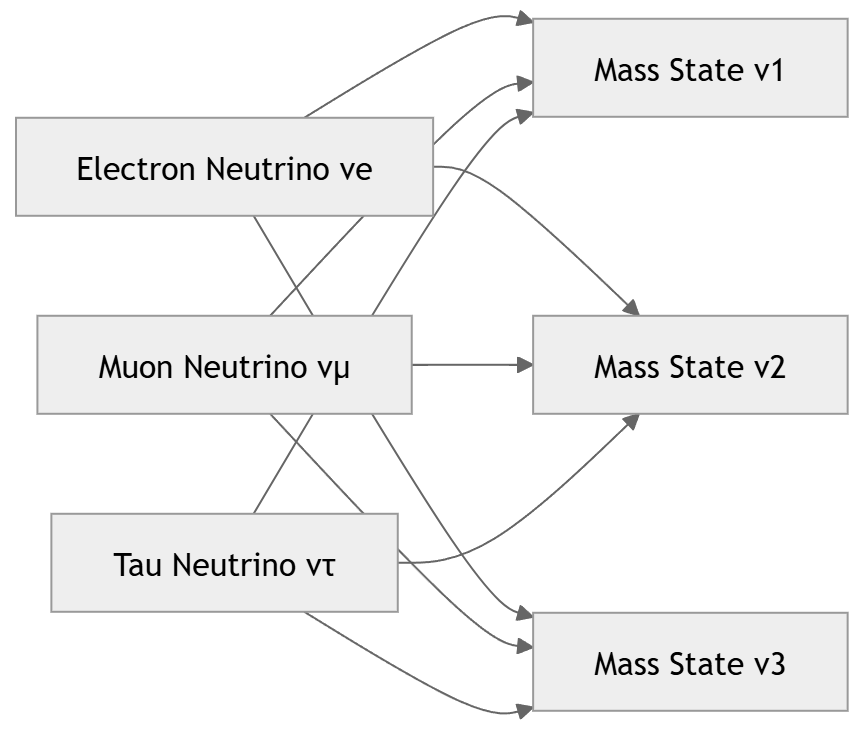
Oscillation measurements determine mass differences rather than absolute masses, leaving open the possibility of additional neutrino states.
What Is a Light Sterile Neutrino?
A sterile neutrino is a hypothetical neutrino that does not interact through the Standard Model forces, except gravity. Unlike active neutrinos, sterile neutrinos interact only through mixing with active neutrinos.
Key characteristics:
-
No weak interaction coupling
-
Detected only via oscillation anomalies
-
Could explain several experimental discrepancies
A light sterile neutrino typically refers to one with a mass around ~1 eV, comparable to active neutrino mass scales but not directly observable in detectors.
The Origin of the Light Sterile Neutrino Hypothesis
Several experimental anomalies triggered interest in sterile neutrinos.
LSND Experiment (Los Alamos)
The Liquid Scintillator Neutrino Detector (LSND) experiment observed excess electron neutrinos appearing in a muon neutrino beam.
This anomaly suggested oscillations with a mass-squared difference near 1 eV², far larger than the known atmospheric and solar oscillation scales.
Implication
Standard three-neutrino oscillations could not explain the signal.
A fourth neutrino state was proposed.
MiniBooNE Results
The MiniBooNE experiment at Fermilab was designed to test the LSND anomaly.
Instead of resolving the discrepancy, MiniBooNE reported:
-
Excess electron-like events
-
Signals consistent with sterile neutrino oscillations
These results intensified theoretical and experimental interest.
Reactor and Gallium Anomalies
Beyond accelerator experiments, additional hints emerged.
Reactor Neutrino Anomaly
Short-baseline reactor experiments detected fewer neutrinos than predicted.
Possible interpretation:
- Electron neutrinos oscillate into sterile neutrinos before detection.
Gallium Anomaly
Calibration experiments for solar neutrino detectors using radioactive sources showed a deficit of detected neutrinos, also compatible with sterile neutrino oscillations.
Together these anomalies created a consistent pattern suggesting new neutrino physics.
Experimental Constraints on Light Sterile Neutrinos
Despite earlier hints, recent high-precision experiments have placed strong limits on the existence of light sterile neutrinos.
Key experiments include:
-
IceCube Neutrino Observatory
-
MINOS/MINOS+
-
Daya Bay
-
NOvA
-
PROSPECT
These experiments searched for distortions in neutrino oscillation patterns that would signal additional neutrino states.
Two Critical Experimental Tests
-
Muon neutrino disappearance searches
-
Neutral current interaction measurements
If sterile neutrinos exist, active neutrinos would oscillate into states that do not produce detectable interactions, reducing observed event rates.
Why Recent Results Challenge the Sterile Neutrino Model
Recent global analyses indicate that many sterile neutrino interpretations fail to simultaneously explain all datasets.
The tension arises because:
-
Appearance experiments suggest oscillations
-
Disappearance experiments find no corresponding deficit
This inconsistency has led to strong skepticism toward the simplest 3+1 sterile neutrino model.
The 3+1 Sterile Neutrino Framework
The simplest extension introduces one sterile neutrino.
The oscillation model becomes:
-
Three active neutrinos
-
One sterile neutrino
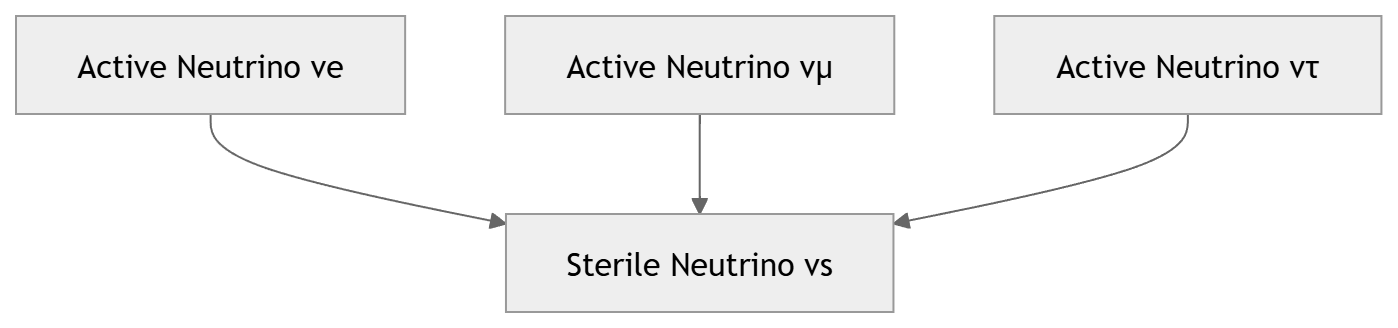
Key parameters include:
-
Additional mixing angles
-
New mass-squared difference (Δm² ~ 1 eV²)
However, global data increasingly constrains this parameter space.
Cosmological Constraints on Sterile Neutrinos
Cosmology provides independent tests.
Sterile neutrinos would influence:
-
Cosmic Microwave Background (CMB)
-
Big Bang nucleosynthesis
-
Large-scale structure formation
Measurements from:
-
Planck satellite
-
BAO surveys
limit the effective number of neutrino species (Neff).
Most cosmological analyses strongly restrict fully thermalized sterile neutrinos at the eV scale.
Alternative Explanations for Neutrino Anomalies
Because simple sterile neutrino models face tension with data, alternative interpretations are being explored.
Possible explanations
-
Detector systematics
-
Mis-modeled neutrino cross sections
-
Unknown nuclear physics effects
-
New exotic interactions
-
Non-standard neutrino interactions (NSI)
These possibilities remain active research areas.
Future Experiments Testing Sterile Neutrinos
Next-generation experiments will provide decisive answers.
Short Baseline Neutrino Program (Fermilab)
The SBN program includes:
-
SBND
-
MicroBooNE
-
ICARUS
These detectors measure neutrino interactions at multiple distances to precisely test oscillations.
JUNO Experiment
The Jiangmen Underground Neutrino Observatory (JUNO) in China will measure reactor neutrinos with unprecedented precision, sensitive to oscillation patterns from sterile neutrinos.
DUNE Experiment
The Deep Underground Neutrino Experiment (DUNE) will explore neutrino oscillations with long baselines and high statistics.
DUNE could detect:
-
Sterile neutrino mixing
-
Exotic neutrino interactions
-
Precision oscillation parameters
The Broader Impact of Sterile Neutrino Physics
The discovery of sterile neutrinos would transform particle physics.
Implications include:
-
Extension of the Standard Model
-
New dark matter candidates
-
Connections to the early universe
-
Insight into neutrino mass generation mechanisms
Sterile neutrinos could also relate to seesaw mechanisms used to explain the small masses of active neutrinos.
The Current Scientific Consensus
The global neutrino physics community remains cautious.
Evidence supporting sterile neutrinos exists but is inconsistent across experiments.
The emerging picture is:
-
Early anomalies remain unexplained
-
Simple sterile neutrino models face strong constraints
-
Future precision experiments will determine the final answer
Conclusion
The light sterile neutrino hypothesis represents one of the most intriguing open questions in particle physics. Experimental anomalies from LSND, MiniBooNE, reactor experiments, and gallium calibration studies sparked intense interest in the possibility of additional neutrino states beyond the Standard Model.
However, modern high-precision experiments and cosmological observations impose increasingly stringent constraints. The tension between appearance and disappearance measurements challenges the simplest sterile neutrino frameworks.
Upcoming experiments such as the Fermilab Short Baseline Neutrino program, JUNO, and DUNE will play a decisive role. Their results will determine whether sterile neutrinos represent a genuine new sector of particle physics or whether the anomalies arise from unresolved experimental or theoretical effects.
Until these measurements arrive, the light sterile neutrino remains one of the most compelling—and controversial—possibilities at the frontier of fundamental physics.