Neutrino Energy Technology: How Neutrinovoltaic Power and Blockchain Are Reshaping the Future of Clean Energy
The global energy transition is entering a decisive phase. As traditional renewables such as solar and wind face intermittency limitations, a new frontier in…
On this page
The global energy transition is entering a decisive phase. As traditional renewables such as solar and wind face intermittency limitations, a new frontier in power generation is emerging: neutrinovoltaic energy technology. By harnessing the constant flux of neutrinos and other non-visible radiation, this technology offers a continuous, decentralized, and fuel-free electricity source that could redefine how energy is generated and distributed worldwide.
At the same time, blockchain-based energy tokens are creating new frameworks for participation in energy infrastructure. By linking clean energy production with digital assets, decentralized models are expanding access to the future energy economy.
This article examines how neutrinovoltaic technology works, the engineering breakthroughs enabling it, and how energy-backed digital assets such as NET8 are positioning themselves within the evolving global energy ecosystem.
Understanding Neutrinovoltaic Energy Generation
Neutrinovoltaic technology converts ambient radiation and subatomic particle interactions into usable electrical energy. Unlike solar panels, which depend on sunlight, neutrinovoltaic materials respond to constant environmental energy flows including:
-
Neutrinos
-
Cosmic radiation
-
Thermal radiation
-
Electromagnetic fields
Advanced nanomaterial structures, particularly layered combinations of graphene and doped silicon, vibrate under the impact of these particles. These microscopic oscillations produce electrical current through a phenomenon known as resonant energy induction.
Key characteristics of neutrinovoltaic energy include:
-
Continuous energy generation (24/7)
-
Operation independent of weather or daylight
-
Silent, emission-free energy conversion
-
Scalability from microelectronics to grid-scale systems
Research teams developing this technology focus heavily on material science and quantum-scale engineering to maximize the efficiency of these interactions.
The Science Behind Neutrinovoltaic Materials
The foundation of neutrinovoltaic energy lies in multilayer nanostructured materials designed to amplify particle-induced vibrations. These structures create an environment where atomic oscillations are transformed into measurable electrical currents.
The process works through several stages:
-
Particle Interaction
Neutrinos and other radiation interact with layered nanomaterials. -
Atomic Oscillation
The atomic lattice within graphene-silicon layers begins to vibrate. -
Resonant Amplification
These oscillations resonate across the multilayer structure. -
Electric Current Induction
Mechanical oscillations generate electrical output through conductive pathways.
This principle allows energy extraction from a constant environmental energy flux, enabling electricity generation even in total darkness or extreme climates.
Diagram: Neutrinovoltaic Energy Conversion Process

The Neutrino Power Cube: A Fuel-Free Energy Generator
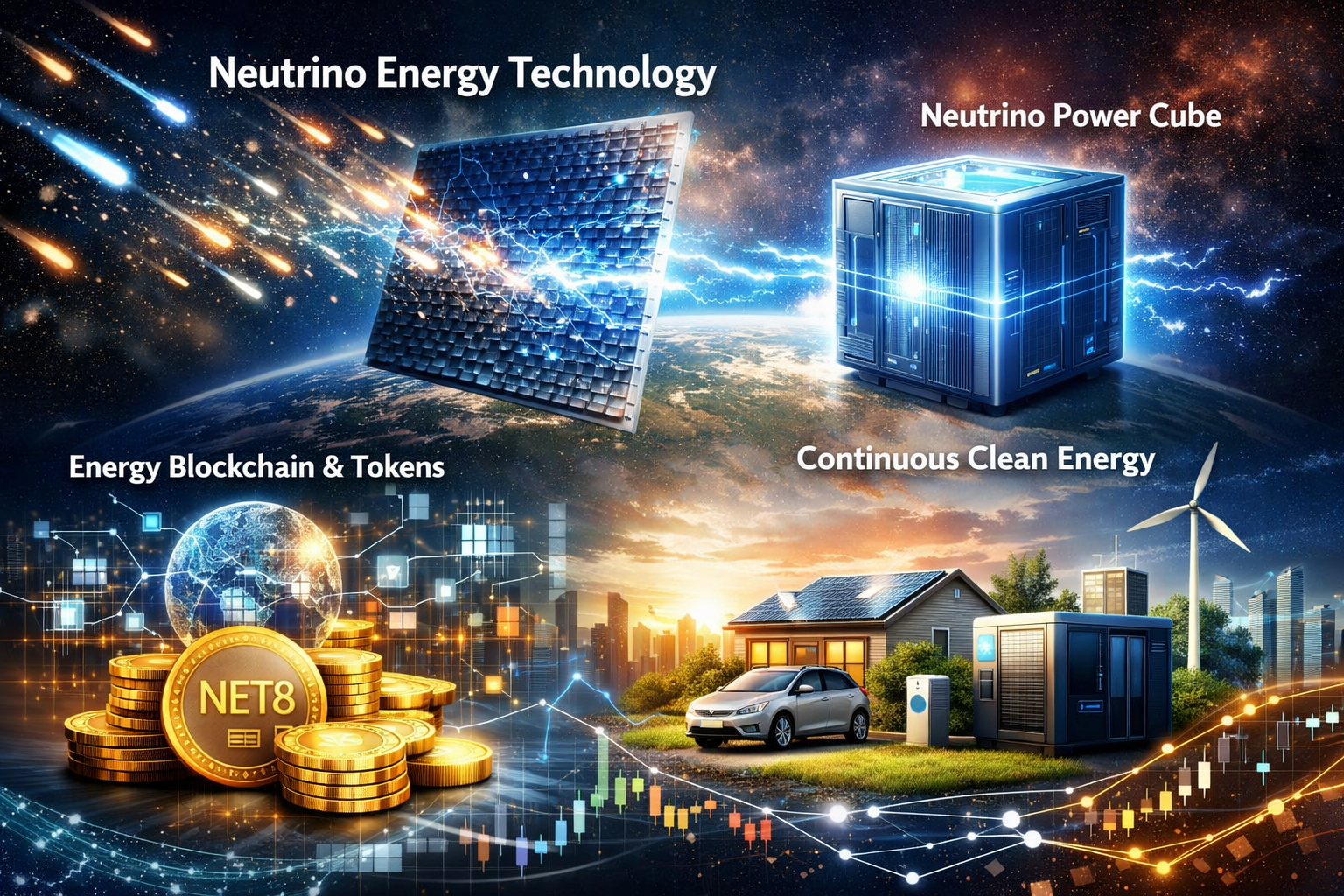
One of the most widely discussed applications of neutrinovoltaic technology is the Neutrino Power Cube, a compact energy generator designed to produce continuous electricity without fuel or grid connection.
The system is engineered to deliver several kilowatts of stable output through stacked neutrinovoltaic modules.
Key Technical Features
-
Continuous output independent of solar or wind conditions
-
Compact device architecture
-
Zero emissions and silent operation
-
Grid-independent energy generation
-
Scalable modular design
These characteristics make such systems particularly relevant for:
-
Off-grid communities
-
Disaster-resilient infrastructure
-
Smart city energy systems
-
Industrial backup power
-
Electric mobility platforms
Decentralized generation devices like this represent a shift away from large centralized power plants toward distributed micro-generation networks.
Why Continuous Energy Generation Matters
Most renewable technologies are intermittent. Solar and wind power depend heavily on environmental conditions, requiring storage or backup systems to stabilize supply.
Neutrinovoltaic technology addresses this limitation by producing electricity continuously, which offers several advantages:
Energy Reliability
Continuous output reduces dependency on energy storage and stabilizes supply networks.
Infrastructure Independence
Fuel-free generators can operate without pipelines, transport logistics, or centralized grids.
Climate Resilience
Energy generation continues during storms, night hours, and harsh environmental conditions.
Urban Integration
Compact devices can be embedded into buildings, vehicles, and infrastructure.
These features align strongly with emerging smart city and decentralized energy frameworks.
Blockchain Integration and Energy-Backed Tokens
Alongside advances in energy generation technology, blockchain systems are being introduced to digitize participation in energy ecosystems.
Energy-linked digital tokens represent a model where blockchain assets correspond to real-world energy production or infrastructure support.
Potential advantages of this approach include:
-
Transparent energy accounting through blockchain ledgers
-
Global participation in decentralized energy systems
-
Efficient energy trading and distribution mechanisms
-
Tokenized access to clean energy infrastructure
Energy tokens built on scalable blockchains—such as Solana—benefit from high transaction throughput, low fees, and energy-efficient validation mechanisms.
How Energy Tokenization Could Transform Energy Markets
Tokenization introduces a new layer of flexibility into energy systems. Instead of relying exclusively on centralized utilities, energy infrastructure can be supported through distributed digital participation models.
Potential Applications
-
Energy infrastructure financing
-
Distributed energy ownership models
-
Smart-grid micro-transactions
-
Global clean energy participation
Blockchain technology enables real-time settlement of energy value, opening the door for programmable energy economies.
The Role of Nanotechnology in Future Energy Systems
Material science innovations remain the core driver behind neutrinovoltaic progress. Future improvements are expected to focus on:
-
Optimizing graphene lattice structures
-
Improving electron mobility within nanomaterials
-
Enhancing resonance amplification efficiency
-
Reducing manufacturing complexity
Advancements in these areas could significantly increase energy output per unit area, enabling new applications in electronics, transportation, and infrastructure.
Decentralized Energy: The Next Phase of the Energy Transition
The global energy transition is moving beyond the first generation of renewables. The next phase emphasizes continuous energy generation, decentralization, and intelligent infrastructure integration.
Neutrinovoltaic systems represent a potential evolution toward:
-
Self-powered cities
-
Autonomous electric vehicles
-
Off-grid industrial operations
-
Climate-resilient infrastructure
When combined with digital energy platforms and blockchain-based participation models, these technologies may reshape the architecture of global energy systems.
Conclusion: A New Energy Paradigm Is Emerging
Energy generation is entering a transformative period driven by advances in nanotechnology, physics, and decentralized digital infrastructure. Neutrinovoltaic technology introduces the possibility of continuous power generation from the ambient environment, while blockchain systems enable new forms of global participation in energy ecosystems.
Together, these innovations are building the foundation for a distributed, resilient, and sustainable energy future—one in which electricity can be generated anywhere, anytime, without reliance on fuel or weather conditions.