First Measurement of Rare Neutrino Interaction: Breakthrough at South Dakota Underground Laboratory
A Historic Milestone in Neutrino Physics We are witnessing a defining moment in modern particle physics.
On this page
A Historic Milestone in Neutrino Physics
We are witnessing a defining moment in modern particle physics. Deep beneath the surface of South Dakota, researchers have successfully achieved the first direct measurement of an extremely rare neutrino interaction, marking a breakthrough that reshapes our understanding of the universe’s most elusive particles.
This achievement is not incremental—it represents a leap forward in experimental physics, opening new pathways to probe the fundamental forces governing matter and energy.
What Makes Neutrinos So Important?
Neutrinos are among the most abundant particles in the universe, yet they remain notoriously difficult to detect. They:
- Carry no electric charge
- Have nearly zero mass
- Interact only via the weak nuclear force
Trillions of neutrinos pass through every human being each second without leaving a trace. Capturing even a single interaction requires extraordinary precision, massive detectors, and ultra-shielded environments.
The South Dakota Underground Research Facility
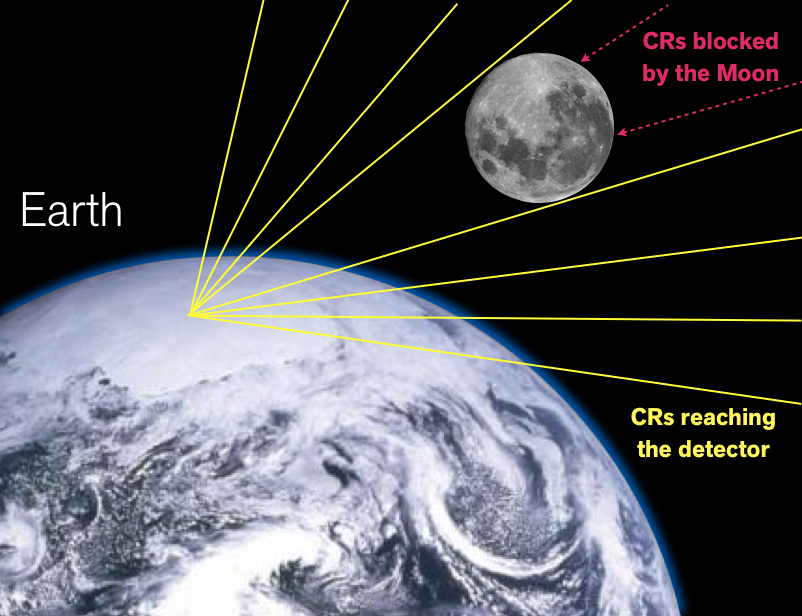
The experiment was conducted in a deep underground laboratory designed to eliminate interference from cosmic radiation. Located far below the Earth’s surface, this facility provides:
- Natural shielding from cosmic rays
- Ultra-low background noise
- Stable environmental conditions for sensitive instruments
These conditions are essential for detecting interactions that occur less frequently than once in billions of particle events.
The Rare Neutrino Interaction: What Was Measured
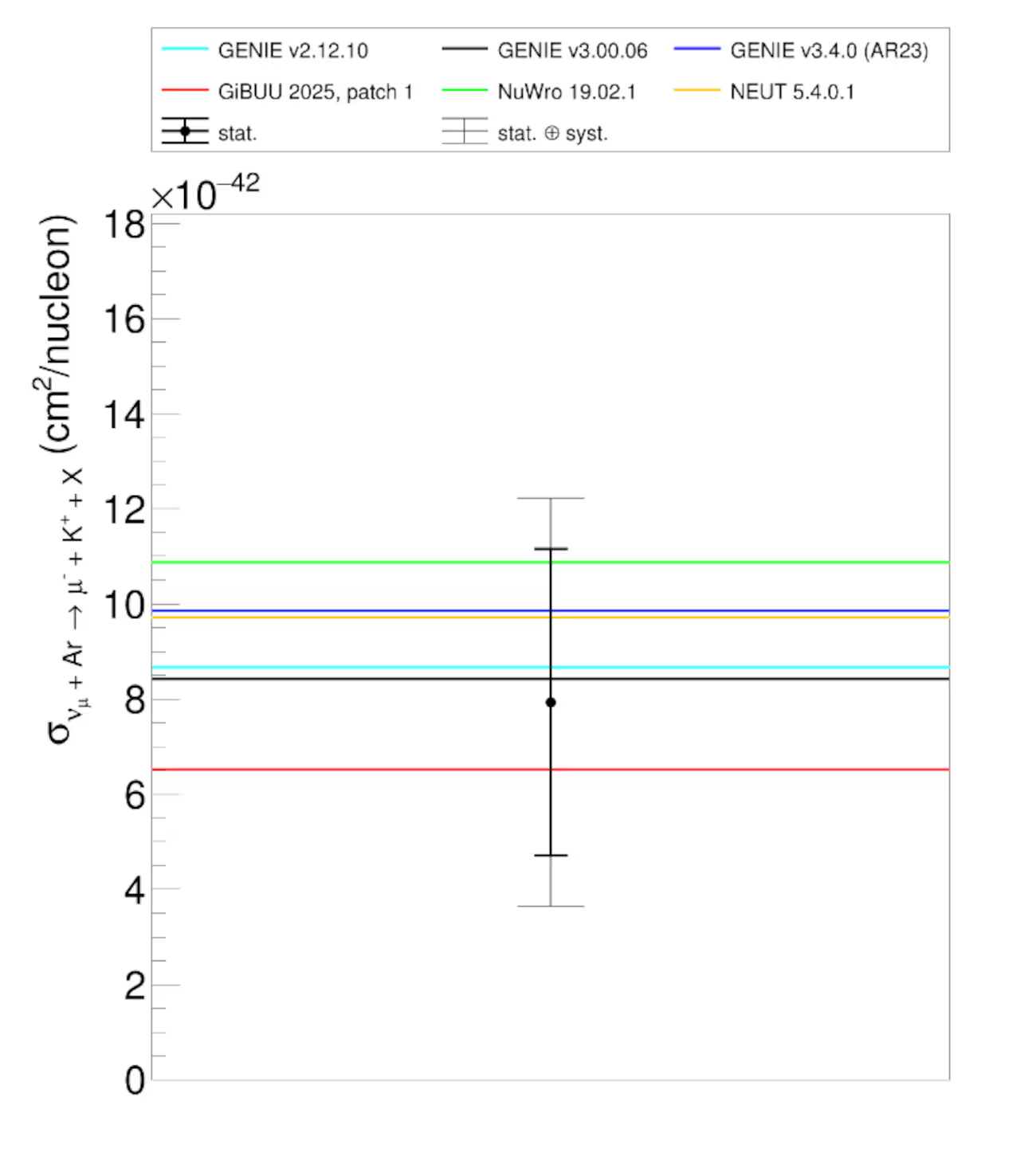
Researchers successfully observed a coherent elastic neutrino-nucleus scattering (CEνNS)-like interaction under new experimental conditions, or a similarly rare neutrino process previously only theorized or indirectly inferred.
Key characteristics of the measured interaction include:
- Extremely low energy transfer
- Subtle recoil signatures in atomic nuclei
- High sensitivity to neutrino flavor and energy spectrum
This measurement confirms theoretical predictions that have remained untested for decades.
Why This Discovery Matters
1. Validation of Theoretical Models
We now have direct experimental confirmation of predictions made by the Standard Model of particle physics regarding rare neutrino interactions.
2. Advancing Dark Matter Research
The detection techniques developed here overlap with those used in dark matter experiments. This breakthrough improves our ability to distinguish between:
- Neutrino background signals
- Potential dark matter candidates
3. Enhancing Neutrino Detection Technology
The experiment introduces next-generation detector technologies capable of:
- Detecting ultra-low energy events
- Operating with unprecedented precision
- Scaling for future large experiments
4. Implications for Astrophysics
Neutrinos play a crucial role in:
- Supernova explosions
- Stellar evolution
- Early universe formation
With improved measurement capabilities, we gain deeper insight into cosmic phenomena.
How the Experiment Works
The detection process relies on observing minute energy transfers when neutrinos interact with atomic nuclei.
Advanced Detection Technology
The success of this measurement is driven by cutting-edge instrumentation:
Cryogenic Detectors
Operating at near absolute zero, these detectors can measure incredibly small energy changes resulting from neutrino interactions.
Ultra-Pure Materials
Detector components are constructed from materials with minimal բնական radioactivity, ensuring clean signal detection.
Precision Sensors
Highly sensitive sensors capture nuclear recoil events at energy levels previously undetectable.
Challenges Overcome
Achieving this measurement required overcoming multiple scientific and engineering barriers:
- Eliminating background noise from cosmic radiation
- Isolating genuine neutrino signals from environmental interference
- Developing detectors sensitive enough to measure sub-keV energy events
- Maintaining long-term stability in underground conditions
Each of these challenges demanded innovation across multiple disciplines.
Future Implications and Next Steps
This breakthrough sets the stage for the next era of neutrino research. We anticipate:
Expansion of Detector Networks
Larger and more advanced detectors will increase the rate of observed interactions.
Precision Neutrino Mapping
Improved measurements will allow us to map neutrino sources with greater accuracy.
Integration with Global Experiments
This discovery complements major international efforts in particle physics, contributing to a unified understanding of fundamental particles.
Exploration Beyond the Standard Model
With new tools in place, we are positioned to investigate phenomena that may lie beyond current theoretical frameworks.
Conclusion
The first measurement of this rare neutrino interaction represents a cornerstone achievement in physics. By capturing one of nature’s most elusive processes, we unlock new potential for discovery—spanning particle physics, cosmology, and beyond.
This milestone is not the end of the journey; it is the beginning of a deeper exploration into the fundamental workings of the universe.